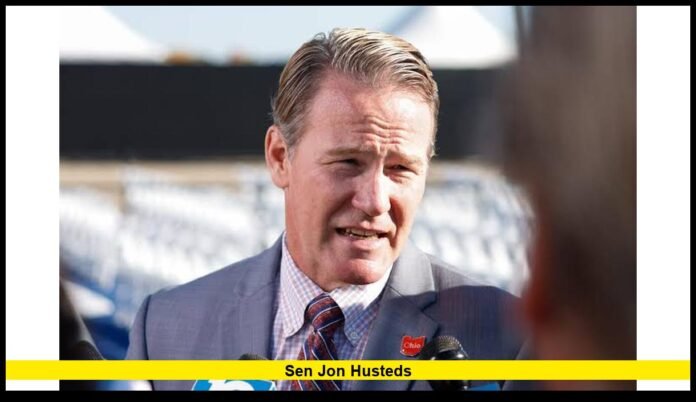

The latest developments surrounding sen jon husted highlight his growing role in national politics as he represents Ohio in the U.S. Senate and campaigns for a full term in the 2026 midterm elections. Appointed to the Senate in January 2025, Husted has focused on workforce protection, economic development, public safety, energy policy, and legislation affecting Ohio communities. His recent proposal to change H-1B visa wage requirements, work on human trafficking legislation, and involvement in the state’s energy sector have drawn attention as voters evaluate his record and political priorities.
Husted entered federal politics after serving in several prominent Ohio government positions, including lieutenant governor, secretary of state, and speaker of the Ohio House of Representatives. His experience in state government has shaped his approach to federal policymaking, particularly on employment, business investment, education, and government efficiency.
With Election Day approaching on November 3, 2026, Husted faces Democratic challenger Sherrod Brown in a closely watched Senate contest. The election could influence the balance of power in Washington, making Husted’s legislative record and campaign commitments important subjects for Ohio voters.
Key Points Summary
╔════════════════════════════════════════════════════════════════════╗
║ – Jon Husted is a Republican U.S. senator representing Ohio. ║
║ – He entered the Senate in January 2025 following JD Vance’s resignation. ║
║ – His recent legislative priorities include H-1B wage reform, public safety, and economic development. ║
║ – A proposal introduced in October 2026 seeks to update wage requirements affecting certain H-1B employers. ║
║ – Husted is running against Democrat Sherrod Brown in the November 2026 Senate election. ║
║ – His previous experience includes serving as Ohio lieutenant governor and secretary of state. ║
╚════════════════════════════════════════════════════════════════════╝
Who Is Jon Husted?
Jon Husted is an American Republican politician with decades of experience in Ohio public service. His career has included legislative leadership, election administration, workforce initiatives, and economic development programs.
Born on August 25, 1967, Husted grew up in northwest Ohio after being adopted by Jim and Judy Husted. His personal background has influenced his public emphasis on family, opportunity, and support for children.
Husted attended Montpelier High School before enrolling at the University of Dayton. He earned bachelor’s and master’s degrees from the university and played defensive back for its football team. He was part of the Dayton Flyers squad that won the NCAA Division III national championship in 1989.
Before entering elected office, he worked in economic development with the Dayton-area Chamber of Commerce. This experience introduced him to the challenges businesses face when expanding, recruiting workers, and investing in local communities.
His professional path eventually led him into the Ohio legislature, where he developed a reputation as a conservative Republican focused on taxation, education, and business growth.
Why Jon Husted Became an Ohio Senator
Husted entered the U.S. Senate on January 21, 2025, after Ohio Governor Mike DeWine appointed him to fill the vacancy created by JD Vance’s departure.
Vance resigned his Senate seat after becoming vice president of the United States. The appointment gave Husted an opportunity to move from state-level leadership to the federal legislature.
As a senator, Husted participates in decisions involving national spending, employment regulations, energy infrastructure, healthcare, education, immigration, and public safety. These responsibilities differ from those of Ohio’s state government because federal legislation can affect businesses, workers, and families across the entire country.
Husted’s appointment also set the stage for the 2026 election, when Ohio voters would decide whether to give him a full Senate term.
His performance in Washington, the legislation he supports, and his ability to address concerns affecting Ohio residents are now central parts of his public record.
Latest Senate Developments in October 2026
Several recent announcements provide insight into Husted’s priorities as the election approaches.
H-1B Visa Wage Reform Proposal
On October 6, 2026, Husted introduced the Protecting American Workers Through H-1B Modernization Act.
The proposal seeks to update the salary threshold used to determine when certain employers that rely heavily on H-1B workers must prioritize American workers in hiring.
The H-1B program allows U.S. employers to hire foreign professionals for qualifying specialty occupations. Businesses in technology, engineering, research, and other specialized fields use the program to recruit employees with skills that may be difficult to find domestically.
Under the rules discussed in Husted’s proposal, certain H-1B-dependent employers can avoid additional recruitment obligations if they pay workers at least $60,000 annually or employ qualifying workers with advanced degrees. That salary exemption was established in 1998 and has not been adjusted for inflation.
Husted argues that the threshold no longer reflects modern wage levels and should be updated to strengthen protections for American employees.
The proposal has implications for employers that depend on international talent, as well as workers concerned about wages, recruitment practices, and competition for specialized jobs.
However, introducing legislation is only the first step. The bill must proceed through Congress before any proposed changes can take effect. Its final impact will depend on the legislative process and the provisions ultimately enacted.
Human Trafficking Legislation
On October 5, 2026, Husted announced that legislation he supported to combat human trafficking had passed the Senate and was headed to the president’s desk.
Human trafficking involves the exploitation of people through force, fraud, coercion, or other prohibited means. Addressing the crime can require cooperation among federal investigators, local police departments, prosecutors, social service organizations, and victim-support programs.
Federal legislation in this area can strengthen enforcement tools, improve coordination, or address gaps in existing protections. The practical consequences depend on the specific measures included in the legislation.
The Senate’s action represents an important development in the legislative process. Final enactment and implementation remain important considerations when assessing what the measure will accomplish.
For Husted, the issue aligns with his broader emphasis on public safety and protecting vulnerable individuals.
Nuclear Energy and Ohio Jobs
Energy development has also featured in Husted’s recent activities.
On October 7, 2026, he visited Centrus with Senator Shelley Moore Capito to discuss the future of Ohio’s nuclear energy industry.
Nuclear energy is an increasingly prominent subject in debates about electricity reliability, industrial expansion, energy security, and growing power demand. Supporters argue that nuclear facilities can supply dependable electricity while supporting specialized manufacturing and technical employment.
Ohio’s nuclear-related industries also raise questions about investment, workforce training, supply chains, and the long-term competitiveness of domestic energy production.
Husted’s visit reflects his interest in connecting energy policy with economic development. The broader challenge is determining how new investments can support local employment while addressing energy costs, infrastructure requirements, and environmental considerations.
Husted’s Career Before Washington
Understanding Husted’s earlier work provides important context for his current Senate agenda.
Ohio House Speaker
Husted entered the Ohio House of Representatives in 2000 and became speaker in 2005, serving until 2009.
During his legislative leadership, he supported conservative fiscal policies, tax changes, and measures intended to encourage business investment. He also backed the EdChoice Scholarship program, which expanded educational options for eligible Ohio families.
His time as speaker established his standing within the state’s Republican Party and gave him experience negotiating legislative priorities.
Secretary of State
Husted served as Ohio secretary of state from 2011 through 2019. The office oversees important aspects of election administration and business filings.
During his tenure, he promoted initiatives designed to simplify business registration and improve government services. His administration also became involved in controversies over voter registration and election procedures.
One prominent dispute reached the U.S. Supreme Court in 2018. The Court upheld Ohio’s challenged voter-list maintenance process under the federal law involved in the case.
The dispute became part of the broader national debate over maintaining accurate voter rolls while protecting eligible citizens’ access to voting.
Lieutenant Governor
In 2019, Husted became Ohio’s lieutenant governor under Governor Mike DeWine. He remained in the position until joining the Senate in 2025.
His responsibilities included economic development, workforce training, technology initiatives, and regulatory reform.
One prominent program, TechCred, helped employers support workers seeking industry-recognized credentials. The initiative reflected an effort to connect workforce training with the skills businesses need.
Husted also worked on InnovateOhio, an initiative intended to improve government services through technology and reduce administrative burdens.
These programs demonstrate how his previous experience continues to influence his approach to economic policy and government efficiency.
What Are Husted’s Main Policy Priorities?
Husted’s agenda includes several issues with direct consequences for Ohio workers, businesses, and families.
Jobs and Economic Development
Husted has consistently emphasized job creation, investment, and workforce development.
His approach generally favors policies designed to make businesses more competitive, encourage employers to expand, and improve access to professional training.
Supporters argue that these measures can strengthen local economies and attract new investment. Critics may question whether particular tax incentives or development projects deliver enough public benefit.
Evaluating economic policies requires examining measurable outcomes, including employment growth, wage levels, public costs, and the durability of newly created jobs.
Public Safety
Public safety remains another important area of Husted’s political agenda. His work has included support for law enforcement, border security, and measures intended to combat fentanyl trafficking and online exploitation.
These issues are particularly significant in communities dealing with drug-related deaths, trafficking, and criminal activity.
The effectiveness of proposed policies depends on enforcement, funding, coordination among agencies, and the resources available to affected communities.
Education and Workforce Training
Husted’s experience with Ohio education initiatives and professional credential programs informs his interest in workforce preparation.
Employers increasingly need workers with technical, digital, manufacturing, and specialized professional skills. Education and training programs can help people qualify for these jobs, although their success depends on program quality and access to employment opportunities.
For Ohio residents, the central question is whether these policies lead to better wages, more stable careers, and stronger local economies.
Energy Affordability
Husted’s involvement in nuclear energy discussions comes as electricity demand and energy infrastructure become increasingly important economic issues.
New industrial facilities and data centers can generate investment and employment, but they may also increase demand on power systems.
Policymakers must consider who pays for infrastructure upgrades, how electricity prices are affected, and whether the benefits of major projects are distributed fairly among residents and businesses.
These questions are likely to remain relevant throughout the Senate campaign.
Ohio Senate Election 2026: Husted Versus Sherrod Brown
The 2026 Senate election is a defining moment in Husted’s political career.
He is facing Democrat Sherrod Brown, who previously served Ohio in the Senate and is seeking to return to Washington. The contest has attracted national attention because the outcome could affect the balance of power in Congress.
Husted’s campaign emphasizes conservative leadership, economic growth, workforce protection, public safety, and support for President Donald Trump’s broader political agenda.
Brown has emphasized affordability, labor protections, and concerns about the effects of major development projects on Ohio households. The candidates have also clashed over data centers, energy costs, and the responsibilities of businesses receiving public support.
The disagreement reflects a wider debate about how states should attract investment without placing unnecessary costs on residents.
President Trump has campaigned for Husted, demonstrating the national importance Republicans attach to retaining the seat. However, presidential endorsements and campaign appearances do not determine the final outcome. Voter turnout, candidate performance, economic conditions, and campaign organization will all matter.
Ohio voters will choose their senator on November 3, 2026.
Why the Election Matters Beyond Ohio
Senate elections determine more than individual political careers. They influence committee leadership, the consideration of legislation, federal spending priorities, and confirmation votes for judges and other government officials.
A victory for Husted would help Republicans defend their position in the Senate. A victory for Brown could strengthen Democratic efforts to change the chamber’s balance.
The race also gives voters an opportunity to assess Husted’s transition from state government to federal office.
His earlier career demonstrates extensive experience in Ohio politics, while his Senate tenure provides a developing record of legislative proposals, votes, and public positions.
For voters, the most useful assessment considers both campaign promises and documented actions. It also distinguishes between legislation that has been introduced, bills that have passed one chamber, laws that have been enacted, and policies that have produced measurable results.
Personal Life and Family
Husted is married to Tina Husted, and they have three children: Alex, Kylie, and Katie. The family has longstanding ties to Ohio and lives in Columbus.
He has spoken about how adoption shaped his childhood and influenced his views on family policy. His personal biography also highlights his religious faith and his interest in supporting parents and children.
Although his Senate responsibilities require time in Washington, his political identity remains closely connected to Ohio, where he has spent most of his professional life.
Frequently Asked Questions
Is Jon Husted currently a senator?
Yes. He serves as a Republican U.S. senator representing Ohio. Governor Mike DeWine appointed him in January 2025 after JD Vance resigned to become vice president.
What is Husted’s latest major bill?
One of his latest proposals is the Protecting American Workers Through H-1B Modernization Act, introduced in October 2026. It seeks to update wage requirements affecting certain H-1B-dependent employers.
Who is running against Husted in 2026?
Democrat Sherrod Brown is challenging Husted in the Ohio Senate election scheduled for November 3, 2026.
What did Husted do before entering the Senate?
He served as Ohio’s lieutenant governor, secretary of state, state senator, and speaker of the Ohio House. Before entering politics, he worked in economic development.
What issues define Husted’s political agenda?
His priorities include economic development, workforce training, public safety, immigration-related employment policy, energy investment, and government efficiency.
Conclusion
Jon Husted’s move from Ohio state government to the U.S. Senate has placed him at the center of debates over employment, economic investment, public safety, and national political leadership. His recent legislative proposals and public appearances demonstrate an effort to connect federal policymaking with issues affecting Ohio workers and communities.
As the 2026 election approaches, his contest with Sherrod Brown will test his political standing and give voters an opportunity to evaluate his record. The outcome will matter both for Ohio’s representation in Washington and for the national balance of power.
What are your thoughts on Jon Husted’s policies and his chances in the 2026 Ohio Senate race? Share your opinion in the comments and stay tuned for more political updates.