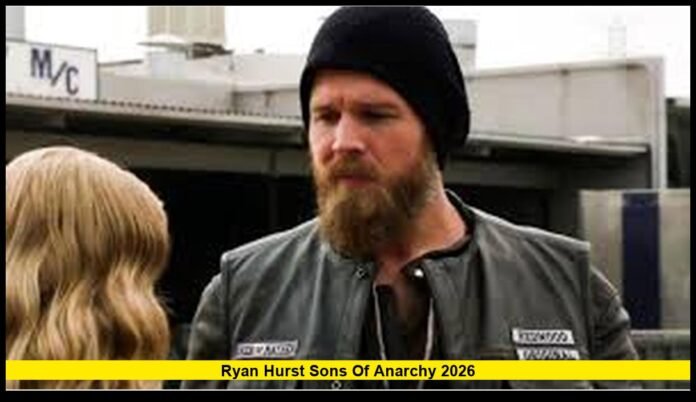

Ryan Hurst Sons of Anarchy continues to trend in 2026 as longtime fans and first-time viewers revisit the FX crime drama that defined a generation of cable television. More than a decade after the series finale aired in December 2014, Ryan Hurst’s portrayal of Harry “Opie” Winston remains one of the most powerful performances in the show’s seven-season run.
Streaming access across the United States has introduced the series to a new audience, reigniting discussion about Opie’s loyalty, loss, and ultimate sacrifice. His arc still stands as one of the most emotionally devastating storylines in modern television.
Here is a comprehensive look at Ryan Hurst’s role in Sons of Anarchy, the character’s narrative impact, and why Opie Winston continues to resonate with viewers in 2026.
The Beginning of Opie Winston’s Journey
Sons of Anarchy premiered on FX on September 3, 2008. Created by Kurt Sutter, the series follows the Sons of Anarchy Motorcycle Club Redwood Original, known as SAMCRO, operating in the fictional town of Charming, California.
Ryan Hurst joined the original cast as Opie Winston, a lifelong member of the club and best friend to Jackson “Jax” Teller, portrayed by Charlie Hunnam.
Opie entered the series after serving a five-year prison sentence. He went to prison to protect the club, refusing to cooperate with law enforcement. His release sets the stage for the tension that defines his storyline.
From the start, Hurst played Opie as a man torn between two worlds. He loved his family deeply, yet he remained bound to the club that shaped his identity.
Family, Loyalty, and Tragedy
Opie’s struggle centers on balancing loyalty to SAMCRO with responsibility to his wife Donna and their children. That tension explodes in Season 1.
In one of the show’s earliest major turning points, Donna Winston is mistakenly killed in a drive-by shooting intended for Opie. The hit was orchestrated by internal club manipulation fueled by suspicion that Opie had become an informant.
The aftermath devastates Opie. Hurst delivers a restrained performance that captures grief without melodrama. His quiet demeanor becomes even more withdrawn after Donna’s death.
This moment reshapes the series. It cements the cost of club politics and marks the beginning of Opie’s emotional isolation.
The Bond Between Opie and Jax
At the heart of the series lies the friendship between Opie and Jax. Their relationship mirrors brotherhood forged through shared history and hardship.
Hurst and Hunnam share strong on-screen chemistry. Scenes between them often revolve around leadership, trust, and the direction of the club.
When Jax begins questioning SAMCRO’s criminal direction, Opie stands by him. He supports Jax’s vision of steering the club away from certain illegal activities.
Despite internal disagreements, Opie’s loyalty never wavers. That devotion becomes both his strength and his downfall.
Piney Winston and Generational Conflict
Opie’s father, Piney Winston, is one of SAMCRO’s founding members. The father-son dynamic adds another emotional layer to Opie’s arc.
Piney struggles with the evolving direction of the club. His distrust of certain leadership decisions creates friction within SAMCRO.
When Piney is murdered in Season 4, Opie experiences another devastating loss. Hurst portrays his grief with simmering intensity.
These compounded tragedies isolate Opie further. Each loss reinforces his belief that the club demands sacrifice without offering protection.
The Defining Moment: Season 5
Opie’s story reaches its climax in Season 5. After being arrested alongside other club members, he faces an impossible decision inside prison.
To spare his brothers from execution, Opie volunteers himself as the sacrificial victim in a brutal prison fight. The scene unfolds with raw physicality and emotional gravity.
His final words to Jax echo with loyalty and acceptance. Hurst’s performance anchors the episode, delivering one of the most memorable exits in cable television history.
The episode aired in October 2012 and immediately sparked national conversation. Fans flooded social media with reactions, and entertainment coverage highlighted the emotional weight of the scene.
Opie’s death marked a tonal shift for the series. Jax’s transformation into a darker leader accelerates after losing his closest friend.
Ryan Hurst’s Acting Approach
Ryan Hurst stands over six feet tall, with a commanding build that suits physically imposing roles. However, his portrayal of Opie relies less on intimidation and more on emotional nuance.
He often conveys emotion through silence. A glance or subtle shift in posture carries meaning.
That understated approach differentiates Opie from other aggressive characters on the show. While violence surrounds him, Opie rarely seeks conflict for its own sake.
Hurst’s performance grounds the series during chaotic storylines. His presence adds authenticity to the portrayal of outlaw brotherhood.
Series Overview and Cultural Impact
Sons of Anarchy ran for seven seasons from 2008 to 2014. It became one of FX’s most successful original dramas.
Here is a quick snapshot of the series timeline:
- 2008: Series premiere
- 2010: International storyline in Ireland
- 2012: Opie Winston’s death in Season 5
- 2014: Series finale airs
The show explored crime, loyalty, corruption, and the cost of power. It drew strong ratings during its peak seasons and built a devoted fan base across the United States.
Opie Winston remains central to the show’s emotional legacy.
Streaming Era Resurgence
As of 2026, Sons of Anarchy continues to perform well on streaming platforms in the United States. Younger viewers who missed the original run are discovering the series.
Each new wave of viewers revisits Opie’s storyline. Reaction videos and episode breakdowns consistently highlight his sacrifice as a defining television moment.
The character’s arc remains one of the most searched elements related to the show. Online discussions continue to rank Opie among the most tragic characters in crime drama history.
This sustained interest explains why searches for Ryan Hurst Sons of Anarchy remain strong more than a decade after the finale.
Career After Sons of Anarchy
Following his departure from the series, Hurst continued building a diverse career.
He portrayed Beta in The Walking Dead, another physically imposing character with emotional complexity. He also took on roles in Bates Motel and later entered the gaming world through performance capture work in God of War Ragnarök.
Despite these varied roles, Opie Winston remains his most iconic character.
Fans frequently approach Hurst at conventions to discuss the impact of Opie’s journey. The role continues to shape his public recognition.
Why Opie Winston Still Resonates
Several factors contribute to the lasting impact of Opie’s character:
Emotional Authenticity
Hurst avoided exaggerated dramatics. His restrained delivery made the pain feel real.
Moral Conflict
Opie constantly struggled between loyalty and conscience.
Sacrifice
His final act underscored the show’s exploration of brotherhood and consequence.
Relatable Vulnerability
He displayed grief, doubt, and fear without abandoning strength.
These elements create a character who feels human within a world defined by crime and violence.
The Enduring Power of Character-Driven Drama
Crime dramas often focus on action and shock value. Sons of Anarchy succeeded because it invested deeply in character arcs.
Opie Winston exemplifies that strength. His journey demonstrates how personal loss shapes choices and loyalty.
Hurst’s portrayal elevated the narrative, giving weight to each turning point.
In a television era filled with antiheroes, Opie remains distinct for his quiet integrity.
Final Thoughts
Interest in Ryan Hurst Sons of Anarchy reflects the enduring impact of Opie Winston’s story. More than ten years after his final episode, the character continues to spark conversation and emotional response.
Ryan Hurst delivered a performance that balanced toughness with vulnerability, creating one of the most unforgettable arcs in modern television.
What moment from Opie’s journey still stays with you today? Share your thoughts and keep the conversation going.