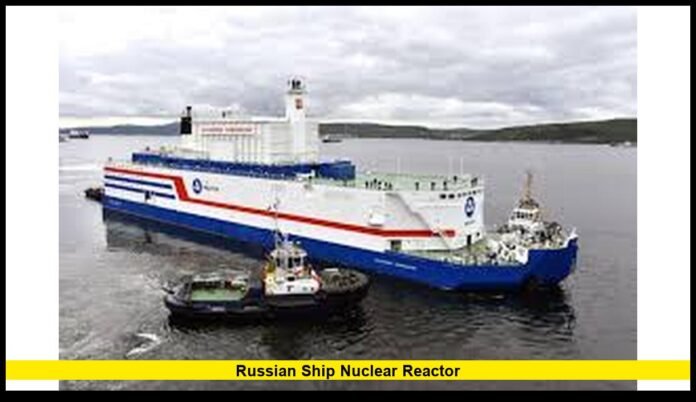

The global spotlight is once again turning toward russian ship nuclear reactors as Moscow accelerates construction of nuclear-powered icebreakers, floating power plants, and compact reactor systems designed for Arctic operations. Russia’s expanding nuclear maritime fleet has become a central part of its economic and strategic plans in the far north, where melting sea ice is opening new shipping lanes and increasing competition over energy and mineral resources.
Over the past year, Russia has continued advancing several large-scale projects tied to the Northern Sea Route, a passage stretching across the Arctic coastline that officials hope will become one of the world’s most important trade corridors. Nuclear-powered ships now sit at the center of that vision, helping escort cargo vessels through frozen waters while also supporting industrial projects in isolated Arctic territories.
At the same time, Russia is pushing ahead with floating nuclear energy systems capable of powering remote mining operations and Arctic settlements without relying on traditional fuel infrastructure. The country’s reactor technology has also sparked growing international debate over the future of maritime nuclear propulsion and small modular reactors.
As global energy demand rises and Arctic activity increases, Russia’s nuclear fleet is becoming one of the most closely watched developments in the shipping and energy sectors.
Readers following global shipping, energy security, and Arctic development are increasingly paying attention to how nuclear-powered vessels may transform trade routes and industrial operations over the next decade.
Russia’s Arctic Ambitions Continue to Grow
Russia controls the world’s largest Arctic coastline and has invested heavily in expanding infrastructure across the region. Ports, military facilities, mining operations, and energy projects have all received increased attention in recent years, but nuclear-powered icebreakers remain the backbone of Arctic transportation plans.
Unlike diesel-powered ships, nuclear icebreakers can operate for long periods without refueling. That capability is essential in remote Arctic areas where fuel deliveries are difficult and weather conditions remain extremely harsh for much of the year.
Russia currently operates the world’s only fleet of civilian nuclear-powered surface vessels. The country has decades of experience running nuclear icebreakers dating back to the Soviet era, beginning with the launch of the Lenin, the first nuclear-powered surface ship in history.
Modern vessels now far exceed the capabilities of earlier designs. The newest generation of Russian icebreakers uses advanced RITM-series reactors that deliver more power while taking up less space than previous systems.
Officials view these ships as critical tools for keeping Arctic trade routes open year-round.
Project 22220 Icebreakers Lead the Expansion
The centerpiece of Russia’s current icebreaker fleet is the Project 22220 program, which includes some of the most powerful nuclear-powered vessels ever constructed.
Ships in this class include Arktika, Sibir, Ural, and Yakutia, while additional vessels remain under construction. Each ship uses two RITM-200 nuclear reactors designed specifically for Arctic maritime operations.
These icebreakers can break through extremely thick sea ice while escorting commercial cargo ships along Arctic routes. Their dual-draft design also allows them to operate in both deep Arctic waters and shallower river estuaries, increasing flexibility for cargo movement.
Russian officials have repeatedly emphasized that Arctic shipping traffic continues to grow, particularly as energy exports and mineral projects expand across northern regions.
The icebreakers support that growth by ensuring vessels can safely travel through frozen waters during long winter seasons.
The Project 22220 fleet also reflects a broader push to modernize Russia’s nuclear maritime infrastructure. Several older Soviet-era vessels are gradually being replaced with more efficient ships equipped with updated reactor systems and improved automation technology.
The Massive Lider Icebreaker Project
Russia is also constructing the enormous Project 10510 Lider icebreaker, known internationally as the Rossiya project.
Once completed, the vessel is expected to become the most powerful nuclear-powered surface ship in the world. The ship will use two RITM-400 reactors capable of producing dramatically more power than current systems.
The Rossiya icebreaker is designed to cut through ice up to four meters thick while creating wide channels for large cargo vessels traveling through Arctic waters.
Construction delays have affected the timeline, but work on the project continues as Russia pushes to strengthen its long-term Arctic shipping capacity.
The RITM-400 reactors themselves represent a major engineering milestone. Russian state nuclear companies have highlighted their increased output and improved operational efficiency compared with previous reactor generations.
Training systems for future crews are also moving forward. Simulator technology designed specifically for the Rossiya reactor systems recently entered operation, allowing operators to train for both standard navigation and emergency scenarios.
The development shows how central nuclear propulsion has become to Russia’s Arctic strategy.
Floating Nuclear Power Plants Expand Into Remote Regions
One of the most unusual parts of Russia’s Arctic energy program involves floating nuclear power plants.
The Akademik Lomonosov, currently operating in the Arctic port of Pevek, remains the world’s only active floating nuclear power station. The facility supplies electricity and heat to remote communities and industrial operations in Russia’s far northeast.
The plant uses marine reactor technology adapted from nuclear icebreakers. Officials describe the system as an alternative to large land-based plants in remote areas where infrastructure development remains difficult and expensive.
Russia is now building additional floating power units using upgraded RITM-200M reactors. These new facilities are expected to support large industrial projects, including the massive Baimsky copper mining operation in Chukotka.
Several floating units are planned for the region, reflecting Russia’s broader effort to use compact nuclear systems for industrial expansion across isolated Arctic territories.
The newer reactor variants are smaller and more efficient than earlier designs while requiring less support infrastructure.
Russian officials argue that floating nuclear plants can reduce reliance on diesel fuel shipments and improve energy reliability in remote northern regions.
The concept has drawn interest from some countries exploring alternative energy systems for isolated communities or mining projects.
Small Modular Reactors Gain Global Attention
Russia’s maritime reactor technology has become part of the wider international conversation surrounding small modular reactors, often known as SMRs.
These compact nuclear systems are attracting global interest because they can potentially deliver reliable low-carbon electricity in locations where traditional nuclear plants are impractical.
The RITM reactor family is now considered one of the world’s most mature small modular reactor technologies because it has already been deployed in operational maritime systems.
Russia is also adapting the technology for land-based projects. The RITM-200N reactor, derived from icebreaker designs, is being developed for ground installations in remote regions.
International energy companies and governments are closely watching these developments as competition in the SMR sector intensifies.
Several countries are pursuing their own compact reactor programs, but Russia currently holds a significant operational advantage in maritime nuclear technology due to decades of experience with reactor-powered vessels.
Northern Sea Route Becomes More Important
The expansion of Russia’s nuclear fleet is directly connected to the Northern Sea Route, which stretches along the country’s Arctic coastline.
The route can significantly reduce travel distances between Europe and Asia compared with traditional shipping lanes through the Suez Canal.
Climate change has increased seasonal accessibility in parts of the Arctic Ocean, encouraging governments and shipping companies to examine the economic potential of northern trade routes.
Russia sees the Northern Sea Route as both an economic opportunity and a strategic asset.
Nuclear-powered icebreakers are essential for maintaining reliable access because Arctic conditions remain unpredictable even during warmer months.
The government has invested billions of dollars into Arctic ports, shipping infrastructure, and support systems intended to increase commercial activity along the corridor.
Officials expect shipping volumes on the route to continue growing during the coming years, particularly as Arctic energy exports expand.
Environmental Concerns Continue
Environmental groups and nuclear safety advocates continue raising concerns about Arctic reactor operations and floating nuclear plants.
Critics argue that accidents in remote Arctic regions could create serious environmental challenges due to difficult weather conditions and limited emergency response infrastructure.
There are also concerns about the long-term storage and transportation of nuclear fuel in sensitive Arctic ecosystems.
Supporters of the projects counter that modern reactor systems include extensive safety features and that nuclear-powered operations reduce the need for large-scale diesel fuel transportation in isolated regions.
Russia has repeatedly stated that its Arctic nuclear infrastructure meets international safety standards and undergoes strict monitoring procedures.
The debate remains active as countries worldwide continue exploring compact nuclear reactor technology for maritime and remote energy use.
Global Competition Over Arctic Resources
Russia’s nuclear maritime expansion is unfolding during a period of increasing geopolitical competition in the Arctic.
The region contains vast reserves of oil, gas, minerals, and rare earth materials. Melting sea ice has also increased interest in future shipping opportunities and military positioning.
Several countries have announced plans to strengthen Arctic operations, though Russia currently maintains the world’s most advanced nuclear icebreaker fleet by a wide margin.
The United States, Canada, and Nordic countries have all increased discussions about Arctic infrastructure and shipping security.
At the same time, commercial shipping companies continue evaluating whether Arctic routes can become economically viable on a larger scale.
Russia’s nuclear-powered fleet provides a significant advantage because it allows year-round access to areas that remain inaccessible to conventional vessels.
Future of Nuclear Maritime Technology
Interest in nuclear-powered commercial shipping is growing beyond the Arctic.
Shipping companies worldwide face increasing pressure to reduce emissions while maintaining long-distance cargo operations. Nuclear propulsion is being discussed more frequently as one possible long-term solution.
While major regulatory and political challenges remain, Russia’s experience operating nuclear-powered civilian vessels has become increasingly relevant in those conversations.
Modern reactor systems can operate for years without refueling, offering a level of endurance impossible for traditional cargo ships.
However, questions surrounding security, insurance, international regulation, and public acceptance continue slowing broader adoption.
Even so, the growing attention surrounding russian ship nuclear reactors shows how maritime nuclear technology is moving back into the global spotlight after decades of limited commercial discussion.
With Arctic trade routes expanding and energy demands increasing, nuclear-powered maritime systems may play a larger role in global shipping than many experts predicted just a few years ago.
The next phase of Russia’s Arctic expansion will likely determine how quickly the rest of the world moves toward similar technologies in the decades ahead.