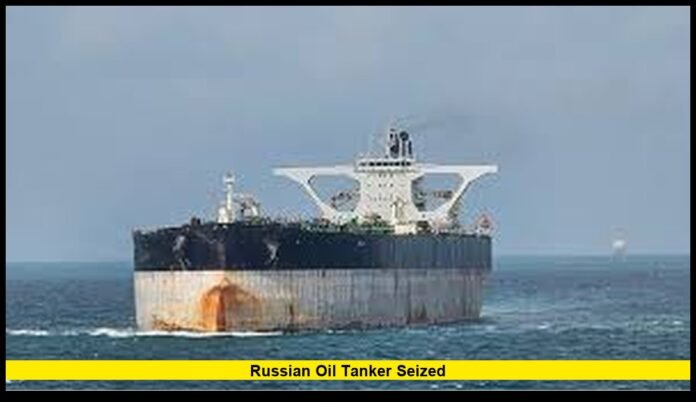

In a major escalation of sanctions enforcement and maritime security, a russian oil tanker seized by U.S. authorities in the North Atlantic has triggered intense global attention. The operation, carried out by the United States Coast Guard with military coordination, involved the interception and takeover of a Russian-flagged tanker after a prolonged pursuit across international waters. The seizure marks one of the most significant maritime enforcement actions in recent years and underscores the growing tensions surrounding energy trade, sanctions compliance, and global shipping routes.
How the Seizure Unfolded at Sea
The tanker, operating under the Russian flag at the time of interception, had been under close monitoring for weeks. U.S. authorities tracked the vessel as it crossed vast stretches of open ocean, changing course multiple times in what officials described as attempts to evade enforcement. The pursuit ultimately ended in the North Atlantic, where U.S. forces boarded the ship and took control without reported injuries.
The boarding followed a legal authorization connected to sanctions violations. Once secured, the vessel was placed under U.S. control, and its crew was detained for questioning as part of standard maritime enforcement procedures. The tanker was then redirected toward a secure location pending further legal action.
Why the Tanker Drew U.S. Attention
U.S. officials identified the tanker as part of a broader network of vessels used to move oil in ways designed to bypass international restrictions. These ships often change names, flags, and ownership records to conceal their true operations. Such practices have become increasingly common as sanctioned states and affiliated entities look for ways to continue exporting oil despite financial and trade restrictions.
According to U.S. authorities, the seized tanker had previously been linked to oil shipments connected to sanctioned entities. Its movements, documentation, and operational behavior raised red flags that prompted heightened surveillance and, ultimately, direct intervention.
The Growing Focus on Shadow Fleets
The seizure highlights the expanding role of so-called shadow fleets in global oil markets. These fleets consist of aging tankers that operate with limited transparency, often avoiding major ports and insurers. By operating in this gray zone, they attempt to move oil outside established regulatory systems.
U.S. enforcement agencies have increasingly targeted these vessels, arguing that they undermine sanctions, distort global energy markets, and pose environmental risks due to poor maintenance and oversight. The Atlantic operation reflects a broader strategy aimed at disrupting these networks before they can deliver their cargoes.
Russia’s Response and Diplomatic Fallout
Russia strongly criticized the seizure, calling it unlawful and accusing the United States of violating international maritime norms. Russian officials argued that the tanker was operating legally under its flag and that the interception in international waters set a dangerous precedent.
The incident has added strain to already tense relations between Washington and Moscow. While no direct military confrontation occurred during the operation, the political reaction has been swift, with Russian leaders demanding explanations and assurances regarding the treatment of the crew.
Role of Allied Support
The operation also underscored the importance of allied coordination in modern maritime enforcement. U.S. partners provided logistical and intelligence support that helped maintain continuous tracking of the tanker across multiple regions. This cooperation reflects shared concerns among allied nations about sanctions evasion and the security of international shipping lanes.
Such joint efforts signal that enforcement actions of this scale are unlikely to be isolated events. Instead, they point to a coordinated approach among like-minded countries to uphold sanctions regimes and maritime rules.
Connection to Broader Energy and Sanctions Policy
The tanker seizure fits into a wider U.S. strategy aimed at controlling the flow of oil tied to sanctioned governments. Energy exports remain a crucial source of revenue for several sanctioned states, making oil transport a focal point of enforcement policy.
By intercepting vessels far from U.S. shores, authorities are sending a clear message that sanctions enforcement is not confined to ports or territorial waters. The approach reflects an evolving view that globalized energy markets require equally global oversight mechanisms.
Legal Questions and Maritime Implications
The seizure raises complex legal questions that are likely to be debated for months, if not years. International maritime law generally protects freedom of navigation on the high seas, but sanctions enforcement introduces additional layers of authority and dispute.
Shipping companies, insurers, and flag states are watching closely. The outcome of this case could influence how vessels assess risk when operating in or near sanctioned trade routes. It may also accelerate changes in how ships document ownership and compliance to avoid similar actions.
Additional Enforcement Actions Signal Broader Campaign
On the same day as the Atlantic interception, U.S. authorities confirmed the seizure of another tanker in international waters elsewhere, described as operating without a valid national flag and tied to sanctioned trade. That vessel was also placed under U.S. control for further proceedings.
These parallel actions suggest a sustained campaign rather than a one-off operation. Together, they reinforce the message that maritime sanctions enforcement is becoming more assertive and far-reaching.
Impact on Global Shipping and Energy Markets
The immediate impact on global oil prices has been limited, but industry analysts note that repeated seizures could affect shipping availability and insurance costs over time. Tanker operators may become more cautious, particularly those involved in trades that carry legal or political risk.
For energy markets, the operation highlights the fragile balance between supply, enforcement, and geopolitics. Even a single high-profile seizure can reshape perceptions of risk and influence future trading behavior.
What Comes Next
The seized tanker now faces a legal process that will determine its final disposition. Possible outcomes include forfeiture, repurposing, or release under specific conditions, depending on court rulings. The crew’s status will also be resolved through legal and diplomatic channels.
As governments and industry stakeholders assess the consequences, one thing is clear: maritime enforcement has entered a more assertive phase. The Atlantic operation serves as a powerful example of how far nations are willing to go to enforce economic policy on the open seas.
What do you think this seizure means for global shipping and energy politics? Share your perspective below and stay with us as this story continues to unfold.