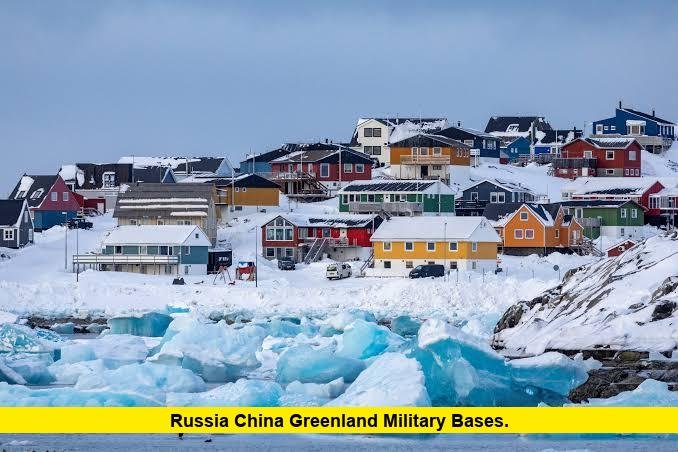

Russia China Greenland military bases have moved to the center of a sweeping new security agreement that the United States finalized with Denmark and Greenland this week. The deal permanently bars Moscow and Beijing from ever stationing troops or building installations on the strategically vital Arctic island.
President Donald Trump announced the agreement following months of quiet negotiations that concluded around the 2026 NATO Leaders Summit in Ankara, Turkey. The pact grants the U.S. permanent basing, access, and overflight rights across Greenland with no expiration date attached.
What The New Agreement Actually Changes
Unlike previous frameworks discussed earlier this year, this agreement locks in permanent terms rather than a temporary understanding. Secretary of State Marco Rubio confirmed the deal guarantees U.S. security interests in the Arctic without costing American taxpayers a single dollar.
The United States already operates Pituffik Space Base in northern Greenland under a defense relationship dating back to 1951. This new deal expands that footprint substantially, giving Washington authority to build additional military installations whenever officials determine they’re necessary.
Denmark and Greenland retain sovereignty over the territory. However, they no longer hold approval power over new U.S. military construction. Officials say Washington will consult with local leaders but doesn’t need their formal buy-in going forward.
Key provisions of the agreement include:
- Permanent U.S. basing, access, and overflight rights with no expiration
- A total ban on Russian or Chinese military bases, troops, or installations
- Restrictions on adversary investment in ports, undersea cables, and telecom infrastructure
- U.S. authority to expand installations without requiring Danish or Greenlandic approval
- Continued Danish sovereignty over the island itself
Why Russia And China Became The Focus
Trump has argued for years that Chinese and Russian ships were operating throughout Arctic waters near Greenland, framing the island as essential to American defense. That argument became the backbone of this week’s announcement.
The agreement specifically blocks China, Russia, and any other non-NATO country from maintaining troops or installations anywhere on Greenlandic territory. It also closes off a separate pathway: adversarial investment in critical infrastructure like ports, undersea cables, and telecommunications networks.
Administration officials compared this concern directly to the Panama Canal situation, where Chinese commercial interests fueled ongoing U.S. security worries. They want to prevent a similar dynamic from taking root in the Arctic.
Rubio described the deal as removing Greenland from contention entirely, framing it as excluding any adversary from the surrounding strategic defense area of North America going forward.
How Moscow Has Responded So Far
Russia’s reaction has evolved considerably since Trump first raised the idea of controlling Greenland last January. Early on, the Kremlin stayed almost entirely silent on the matter, even as Chinese officials pushed back publicly against Washington’s rhetoric.
That changed as negotiations progressed throughout the year. Russian President Vladimir Putin addressed the issue directly this week at the NATO summit, warning that NATO’s growing Arctic activity concerns Moscow and won’t go unanswered.
Kremlin spokesman Dmitry Peskov acknowledged separately that dialogue between Washington and Moscow on Arctic security issues remains necessary going forward. Russian state media outlets have also accused Western nations of militarizing the Arctic region in recent months.
Moscow has spent two decades building up its own Arctic military infrastructure independent of the Greenland dispute. Since 2005, Russia has reopened and modernized dozens of Soviet-era bases across its northern territories and outlying islands.
Russia’s existing Arctic military assets include:
| Asset | Location | Purpose |
|---|---|---|
| Nagurskoye air base | Franz Josef Land | Hosts nuclear-capable strategic bombers |
| Novaya Zemlya facility | Arctic archipelago | Nuclear testing readiness site |
| Zircon hypersonic missiles | Kola Peninsula fleet | High-speed strike capability |
| Nuclear submarine fleet | Arctic waters | Strategic patrol and deterrence |
Russia’s deputy foreign minister, Sergei Ryabkov, warned earlier this year that Moscow stood ready to respond militarily if the U.S. moved its Golden Dome missile defense system into Greenland. That warning came as the New START nuclear treaty lapsed without renewal between the two countries.
Beijing’s Position On The Arctic Dispute
China’s Foreign Ministry pushed back sharply when Trump first framed his Greenland ambitions around countering Chinese influence. Spokesperson Lin Jian accused Washington of manufacturing a threat narrative to justify its own territorial goals in the region.
Beijing has separately pursued economic interests in Greenland tied to rare earth minerals and emerging Arctic shipping routes created by melting sea ice. Those commercial ambitions now face direct legal barriers under the new U.S. agreement.
China and Russia have also conducted joint military exercises in Arctic waters in recent years, a pattern that shaped much of the Trump administration’s justification for pursuing permanent basing rights rather than a temporary arrangement.
Denmark And Greenland’s Long Road To Agreement
The path to this week’s deal wasn’t smooth. Danish Prime Minister Mette Frederiksen delivered a defiant message defending Greenland’s sovereignty at the NATO summit even as the final agreement came together behind the scenes.
Danish and Greenlandic officials initially rejected Trump’s suggestions that the U.S. needed to formally own the territory. Negotiations that started quietly in February eventually shifted the conversation toward shared security interests instead of outright American ownership.
Rubio explained that Danish and Greenlandic leaders ultimately recognized their own resource limitations. Neither government maintains the military capacity to defend Greenland independently if the island ever came under serious external threat.
Crucially, the agreement is structured to remain binding even if Greenland eventually votes for full independence from Denmark, a right the territory has held since 2009. That detail addresses long-term uncertainty around the island’s political future.
Arctic Strategy Beyond Greenland
The Greenland agreement fits into a broader pattern of Arctic competition that has intensified over the past two years. Melting ice is opening new shipping lanes and exposing mineral deposits that weren’t previously accessible to any nation.
Eight countries hold Arctic territory: Russia, the United States, Canada, Denmark, Norway, Sweden, Finland, and Iceland. Russia alone controls roughly half of all Arctic landmass, giving Moscow a natural head start on regional military infrastructure.
NATO’s expansion to include Finland and Sweden has already reshaped the alliance’s northern footprint, a shift Putin cited directly when discussing why Russia views the region as increasingly contested territory.
Analysts point to several factors driving the current standoff:
- Melting Arctic ice creating new commercial shipping corridors
- Untapped rare earth mineral deposits becoming accessible for the first time
- Russia’s decades-long head start on regional military infrastructure
- China’s growing economic interest in polar shipping routes
- The planned Golden Dome missile defense system’s Arctic component
What Comes Next For The Region
With the agreement now finalized, attention shifts toward implementation. The U.S. hasn’t detailed a timeline for new installations, though officials say construction will proceed based on strategic necessity rather than a fixed schedule.
Russia’s response beyond Putin’s summit remarks remains uncertain. Moscow has signaled it will strengthen its own Arctic military capabilities in reply, though it hasn’t announced specific new deployments tied directly to the Greenland deal.
China hasn’t issued a fresh statement responding to this week’s finalized terms, though its earlier objections to the broader U.S. strategy suggest continued diplomatic friction ahead.
For now, the agreement represents the most significant American security expansion in the Arctic in decades, permanently reshaping who can and cannot operate on Greenlandic soil.
What do you think this deal means for Arctic security going forward? Share your thoughts and keep checking back for updates as this story develops.