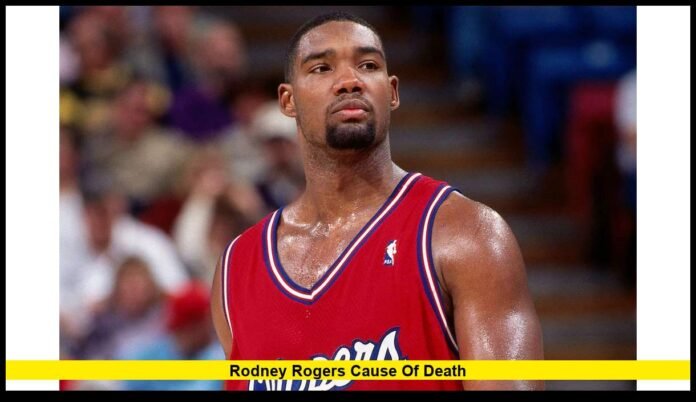

News broke on November 22, 2025, confirming that Rodney Rogers cause of death has been officially attributed to natural causes stemming from long-term complications related to a spinal-cord injury he sustained in 2008. The former NBA forward passed away at age 54 after years of battling health issues tied to the life-altering accident.
Background of the Final Chapter
Rodney Rogers had been living with the consequences of a serious all-terrain vehicle (ATV) accident that occurred on November 28, 2008. That incident left him paralyzed from the shoulders down, and the family’s statement makes clear that his passing is connected to the chronic medical challenges the injury introduced into his life. His wife noted that he died peacefully, surrounded by his loved ones, with his body ultimately succumbing to complications linked to the injury.
Although no new acute trauma triggered his death, the cumulative effect of the injury’s long-term consequences — including mobility loss, heightened risk of infection, and systemic strain — caused his health to deteriorate over time. Thus, the phrase “natural causes related to the spinal-cord injury” aptly summarizes his passing.
Understanding the Medical Pathway to His Passing
Spinal-cord injuries, especially those involving paralysis from the shoulders down, set off a mix of long-term medical risks:
- Significantly decreased respiratory capacity and lung strength
- Greater susceptibility to chest infections, pneumonia, and other respiratory complications
- Diminished cardiovascular conditioning and circulation challenges
- Increased risk of blood-clots, pressure sores, urinary infections and other secondary issues
- Ongoing need for intensive health management, adaptive care, and equipment
In the case of Rogers, who lived nearly 17 years after his accident, the body’s capacity to cope gradually eroded. The official statement places the cause of death within this broader health decline rather than a specific sudden event.
Timeline: From Career Peak to Health Battle
Here’s a short timeline illuminating the key moments that frame the story of Rodney Rogers cause of death:
| Year | Event |
|---|---|
| 1993 | Drafted 9th overall in the NBA by the Denver Nuggets |
| 1993–2005 | Played 12 seasons in the NBA across seven franchises |
| 1999–2000 | Named NBA Sixth Man of the Year with the Phoenix Suns |
| November 28, 2008 | ATV accident leads to paralysis from the shoulders down |
| November 21, 2025 | Died at age 54; family cites natural causes tied to injury |
This sequence highlights how an elite athlete’s life and health trajectory was radically changed by a single accident — and how that change eventually contributed to his passing.
How the Injury Changed His Life and Created the Condition That Led to His Death
Before the accident, Rogers was a powerful, mobile forward known for scoring, athleticism and versatility. After the crash, his world changed completely. He faced:
- The transition from full mobility and athletic competition to full-time reliance on medical technology and caregivers
- A shift from public playing career to a life of rehabilitation, adaptation and new purpose
- Chronic health management that continued until his final days
Over the years, the injury and its after-effects became central to his identity: the foundation he established, his advocacy role, his influence in disability circles — all born out of that 2008 crash. Without that traumatic event, the long-term health decline that ultimately caused his death would not have been set in motion.
Legacy in Light of His Passing
While the focus here remains on Rodney Rogers cause of death, it is impossible to separate that from the legacy he leaves behind. He is remembered for his:
- On-court excellence: Twelve seasons in the NBA, a Sixth Man award, a remarkable career after a standout college run
- Off-court strength: Resilience in the face of paralysis, founding a charity to help others with spinal-cord injuries
- Human impact: Inspiring teammates, fans, community members with his positive attitude and perseverance
His fight to embrace life despite debilitating injury serves as a reminder that the consequences of a traumatic incident can be both immediate and long-lasting. His death signals the end of that fight, but also the lasting impact of how he lived.
What This Means for Fans, Family and Supporters
For fans, fellow athletes, and the broader community, several points stand out regarding his cause of death and its meaning:
- It underscores how serious spinal-cord injuries can trigger medical decline long after the initial event.
- It draws attention to the need for comprehensive, long-term care for athletes and non-athletes alike who suffer such injuries.
- It invites reflection on how a person’s “cause of death” can reflect a lifelong struggle rather than a single incident.
- It highlights the importance of recognizing both the athletic achievements and the human story behind them.
For his family and loved ones, the passing brings profound loss, but also relief that his struggle has ended. For his community, it invites gratitude for his example and renewed support for the causes he championed.
Final Thoughts
The narrative of his life may have ended, but the conversation around it does not. The fact that his death was linked to earlier injury serves as both caution and inspiration. It reminds us that even the strongest athletes can face devastating health turns — and that how they react can define them as much as what they did on the court.
With the full story now confirmed, the focus shifts from shock to reflection. Rodney Rogers cause of death is more than a headline; it is a chapter in a life that touched many and persevered through immense hardship.
We invite you to share your thoughts or memories of Rodney Rogers below, and to stay connected for additional reflections as the basketball and wider communities honor his enduring impact.