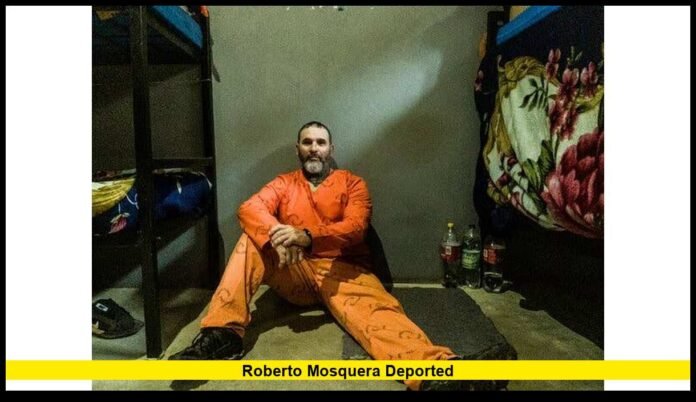

Roberto Mosquera deported became a major immigration story after the Cuban-born South Florida resident was removed from the United States and sent to Eswatini in July 2025. More than a year later, the latest confirmed information shows that Mosquera remains detained in Eswatini, while legal questions surrounding his detention and access to attorneys continue.
Mosquera was one of five men transferred from the United States to Eswatini on July 16, 2025. The men were held at the Matsapha Correctional Complex, a high-security prison in the southern African country. By July 16, 2026, the five original detainees had reached one year in Eswatini custody.
The case remains significant because Mosquera was not returned to Cuba, where he was born. Instead, U.S. authorities sent him to a country where he had no known established ties. His detention has also become part of a broader debate over the U.S. use of third countries for deportations.
What Happened to Roberto Mosquera?
Mosquera lived in South Florida before his removal from the United States. Immigration authorities detained him in 2025 during an immigration check-in.
His detention came as the Trump administration increased efforts to remove people who were subject to deportation orders but could not easily be returned to their countries of origin.
On July 16, 2025, U.S. authorities transferred Mosquera to Eswatini. He traveled with four other men: Kassim Saleh Wasil, Dung Tien Nguyen, Phone Chomsavanh and Orville Etoria.
The group represented several nationalities. Mosquera is Cuban, while the other men came from different countries.
After arriving in Eswatini, the men were taken to the Matsapha Correctional Complex. Their detention quickly became the focus of legal and human-rights concerns.
Orville Etoria was later released and returned to Jamaica in September 2025. Mosquera and the other three members of the original group remained detained.
The latest public information from July 2026 continued to identify Mosquera among those detained at Matsapha.
Why Was Mosquera Sent to Eswatini?
Mosquera’s removal was part of a U.S. policy involving deportation to third countries.
A third-country deportation does not necessarily send a person directly to the country where they hold citizenship. Instead, the United States may seek another country willing to accept the individual.
Eswatini became one of the countries involved in this approach during 2025.
The arrangement attracted attention because the people sent there did not have known ties to Eswatini. Instead of entering a familiar community, they were placed in custody after arriving.
Mosquera’s case became particularly visible because his family remained in the United States and because his attorney challenged the conditions surrounding his detention.
The program also continued after the first five men arrived.
In October 2025, another 10 people reportedly reached Eswatini. Four additional men reportedly arrived in March 2026.
On July 8, 2026, another group of 11 people reportedly arrived.
That brought the reported number of people transferred from the United States to Eswatini under the arrangement to at least 30.
Mosquera’s Criminal History Became a Central Issue
Mosquera’s criminal history has been discussed extensively since his removal.
U.S. authorities described him as a person with a serious criminal record. Government statements characterized his record as including a murder conviction and other offenses.
His attorney disputed that description.
She said Mosquera had been convicted of attempted murder rather than murder. She also said he completed his sentence in the United States before his later immigration detention.
That distinction has remained important in coverage of his case.
The two sides have presented different descriptions of his criminal history, but the basic point is not disputed: Mosquera had a criminal record and had served time in the United States.
The dispute centers on how his convictions should be described and whether his completed criminal sentence justified continued imprisonment after his transfer to Eswatini.
His attorney has argued that he completed his punishment in the United States and should not face another period of imprisonment in Eswatini without a separate legal basis.
U.S. officials, meanwhile, have emphasized his criminal history as part of the justification for his removal.
Mosquera’s Detention in Eswatini
The conditions of Mosquera’s detention became one of the most important aspects of the case.
He was held at Matsapha Correctional Complex rather than released into the Eswatini community.
The facility is a correctional institution used for people in custody. Mosquera and the other U.S. deportees were held there after their arrival.
His legal representatives repeatedly sought access to him.
According to human-rights reporting, lawyers initially encountered obstacles when attempting to arrange confidential, in-person meetings with the deportees.
That created additional concerns because confidential communication between an attorney and client is important in any legal proceeding.
The detainees also needed a way to challenge the legality of their continued confinement.
The situation eventually reached Eswatini’s courts.
A Major Court Development Came in 2026
A significant legal development occurred in April 2026.
Eswatini’s Supreme Court upheld a lower-court decision concerning legal access for people deported from the United States and detained at Matsapha.
The ruling confirmed that lawyers should have access to the detainees.
That decision was important for Mosquera because it strengthened his ability to communicate with legal representatives while he remained in custody.
However, the ruling did not mean that Mosquera was released.
Legal access and release are separate issues.
The court decision addressed the ability of lawyers to meet with detainees. It did not establish a public release date for Mosquera.
As a result, he remained in Eswatini after the ruling.
By July 2026, the latest confirmed reports still placed him among the original detainees.
The Hunger Strike in 2025
Mosquera also became known internationally after beginning a hunger strike in October 2025.
His attorney said he started refusing food on October 15, 2025, as a protest against his continued detention and the difficulties surrounding legal access.
At the time, his attorney expressed concern about his health and requested appropriate medical attention.
Eswatini authorities described the situation differently. Officials characterized his actions as fasting and prayer related to missing his family.
His attorney rejected that explanation and described the action as a protest.
The hunger strike became a major turning point in the public discussion surrounding Mosquera.
Reports about the hunger strike date from October 2025. They should not be treated as evidence that he is currently refusing food in August 2026.
The latest available information does not establish that Mosquera is currently on a hunger strike.
What remains confirmed is that he has continued to face detention in Eswatini.
Where Is Roberto Mosquera Now?
The latest confirmed public information places Mosquera in Eswatini.
On July 16, 2026, he reached one year since his transfer from the United States.
The five men originally transferred with him had remained detained at Matsapha Correctional Complex, except for Orville Etoria, who was repatriated to Jamaica in September 2025.
There has been no confirmed public announcement that Mosquera has been released.
There also has not been a verified announcement confirming that he has returned to Cuba.
No confirmed date has been publicly established for his departure from Eswatini.
That makes his case different from those involving deportees who have already returned to their home countries.
For now, the clearest verified status is that Mosquera remains in Eswatini after being transferred there by U.S. authorities in July 2025.
The Case Reached Its One-Year Mark
July 2026 marked an important milestone.
One year had passed since Mosquera and the other members of the original group arrived in Eswatini.
Their continued detention after such a long period became a central issue for organizations monitoring the case.
The development also occurred while the broader deportation arrangement was still operating.
At least 25 additional people had reportedly been transferred to Eswatini after the original group.
That means Mosquera’s case has unfolded alongside a larger immigration program rather than as an isolated transfer.
The arrival of another 11 people on July 8, 2026, just days before the one-year anniversary, showed that the arrangement was continuing.
For Mosquera, however, the most important question remained personal: when his own detention would end and where he would ultimately go.
Why the Case Matters to U.S. Readers
Mosquera’s story has attracted attention in the United States because it involves several issues that affect immigration enforcement.
The first is the use of third countries for deportation.
The second concerns detention after removal.
The third involves access to lawyers.
The fourth concerns the treatment of people who have already completed criminal sentences in the United States.
Mosquera’s case brings all four issues together.
He was removed from the United States and transferred to a country where he did not have known personal ties. After arriving, he was held in a correctional facility.
His attorney then challenged his detention and sought meaningful access to him.
The April 2026 court decision provided an important legal development by confirming attorney access.
Yet the ruling did not end his detention.
This distinction is essential when evaluating the latest status of the case.
The Deportation Arrangement Continued in 2026
The situation surrounding Mosquera cannot be separated from the continued U.S.-Eswatini transfer program.
The first group arrived in July 2025.
Ten more people reportedly arrived in October 2025.
Four more reportedly arrived in March 2026.
Another 11 reportedly arrived on July 8, 2026.
The reported total therefore reached at least 30 people by July 2026.
However, not every person’s identity and legal status have been publicly disclosed.
That lack of complete public information has made it difficult to establish the circumstances surrounding every transfer.
Mosquera’s identity is known because his family, attorneys and advocates have spoken publicly about his case.
His situation has therefore become one of the best-known examples of the U.S.-Eswatini deportation arrangement.
What Is Confirmed About Mosquera’s Case?
Several facts remain firmly established in the latest public record.
- Mosquera is a Cuban national.
- He lived in South Florida before his removal.
- U.S. immigration authorities detained him in 2025.
- He was transferred from the United States to Eswatini on July 16, 2025.
- He was part of an original group of five men.
- He was detained at Matsapha Correctional Complex.
- His attorney disputed the government’s description of his criminal record.
- He began a hunger strike in October 2025, according to his attorney.
- Eswatini’s Supreme Court addressed legal access for the U.S. deportees in April 2026.
- Mosquera remained in Eswatini after the one-year anniversary of his transfer.
- No confirmed public release date has been announced.
- No confirmed public announcement has established that he has returned to Cuba.
These facts provide the clearest picture of his current status without relying on unverified claims.
What Happens Next?
The central unresolved issue is Mosquera’s eventual release or transfer.
As of August 13, 2026, there is no publicly confirmed date for his release from detention.
There is also no verified announcement establishing his next country of residence.
The April 2026 court ruling gives his attorneys a stronger avenue for legal representation, but it does not itself determine when he will leave detention.
Meanwhile, the broader U.S.-Eswatini deportation arrangement continues to receive scrutiny.
New arrivals in 2026 demonstrate that the program has not ended. Mosquera’s case remains connected to that continuing policy.
For his family, however, the immediate concern remains his own status after more than a year away from the United States.
Roberto Mosquera’s Status Remains Unresolved
The latest information provides a clear answer to the most important question surrounding Mosquera: he has not been publicly confirmed as released.
More than a year after his July 2025 transfer, he remains associated with the detainees held at Matsapha Correctional Complex in Eswatini.
His case has moved through several stages, including immigration detention in the United States, transfer to a third country, detention in Eswatini, a hunger strike, legal challenges and a court ruling on attorney access.
The April 2026 decision improved access to legal representation, but it did not resolve his detention.
The wider deportation arrangement has also continued, with the reported number of people transferred to Eswatini reaching at least 30 by July 2026.
For U.S. readers following the case, the most important confirmed development is that Mosquera’s situation remains unresolved. His release, return to Cuba or transfer elsewhere has not been publicly confirmed as of August 13, 2026.
Roberto Mosquera’s case remains closely watched as questions over his detention, legal representation and eventual destination continue.