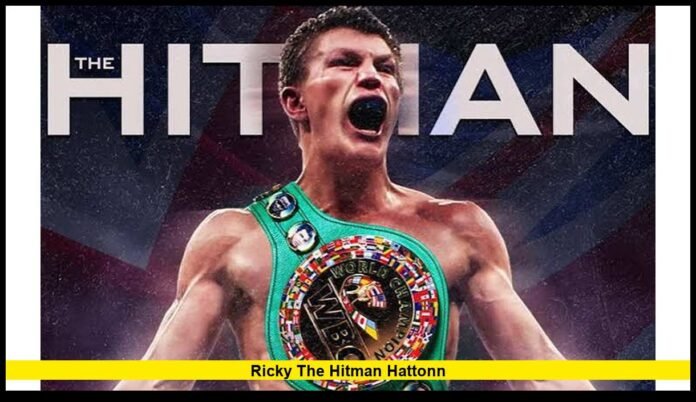

Ricky the Hitman Hatton remains one of the most influential British boxers of his generation, with his name still carrying enormous weight in Manchester and across the international boxing community. The former two-weight world champion built a remarkable career around pressure, toughness and an extraordinary connection with his supporters. More than a year after his death, tributes, family reflections and new honors continue to keep his legacy at the center of British boxing.
Hatton’s story was never limited to championship belts. His rise from the Manchester boxing scene to packed arenas in Las Vegas made him one of the most recognizable British fighters of the 21st century. His career included major victories, painful defeats, a difficult period after retirement and a later role as a trainer and mentor.
Ricky Hatton’s Early Life and Boxing Beginnings
Born in Stockport and raised in Greater Manchester, Hatton grew up in a family closely connected to boxing. The sport became an important part of his life from an early age, and he developed his distinctive style through years of amateur and professional competition.
Hatton turned professional in 1997 and quickly began building an unbeaten record. His approach was straightforward but extremely difficult for opponents to handle. He constantly looked to close the distance, pressure opponents against the ropes and attack the body.
The nickname “The Hitman” eventually became synonymous with his identity inside the ring.
Unlike some fighters who relied heavily on a single punch, Hatton’s effectiveness came from sustained pressure. He was physically strong, possessed excellent stamina and was willing to fight at an uncomfortable pace for his opponents.
Rise to World Champion
Hatton’s breakthrough on the world stage came in 2005 when he faced Kostya Tszyu in Manchester.
Tszyu entered the fight as one of the most respected fighters in the sport, while Hatton was the undefeated challenger attempting to establish himself among boxing’s elite.
The contest became one of the defining nights of Hatton’s career. Fighting in front of a passionate home crowd, he constantly pressured Tszyu and produced a performance built around physical strength and relentless work.
After 11 rounds, Tszyu did not come out for the final round, giving Hatton a major world championship victory.
The result transformed Hatton from a highly regarded British champion into an international boxing superstar.
A Massive Following in Manchester
His fights regularly attracted huge crowds, and fans from Manchester became famous for traveling to major events in large numbers. Hatton’s popularity was particularly visible when he fought in the United States.
Las Vegas became a second stage for some of his biggest nights, but the connection to Manchester never disappeared.
Hatton was proud of his hometown identity and frequently embraced the city’s culture. His ring walks, interviews and celebrations reflected the personality of a fighter who never attempted to distance himself from his roots.
That authenticity helped turn him into a sporting icon rather than simply another successful champion.
Hatton and Floyd Mayweather
Hatton’s undefeated record eventually led to one of the biggest fights possible.
In December 2007, he challenged Floyd Mayweather Jr. in Las Vegas.
The matchup attracted enormous worldwide attention. Hatton arrived undefeated and confident, while Mayweather was already regarded as one of boxing’s most technically gifted fighters.
Hatton applied pressure throughout the contest, but Mayweather’s defensive ability, accuracy and adaptability gradually changed the fight.
The American eventually stopped Hatton in the 10th round.
Although it was Hatton’s first professional defeat, the fight significantly increased his international profile. His willingness to challenge Mayweather during the peak of both fighters’ careers remains a major part of his historical significance.
Manny Pacquiao Defeat
Hatton’s next major challenge came against Manny Pacquiao in 2009.
The fight was expected to be another major test between elite fighters, but Pacquiao produced one of the most impressive performances of his career.
Hatton was stopped in the second round after being caught by Pacquiao’s speed and precision.
The defeat was particularly difficult because Hatton had entered the contest hoping to establish himself again at the highest level following the Mayweather loss.
Instead, it became another turning point.
Retirement and the 2012 Comeback
Hatton stepped away from professional boxing following the Pacquiao defeat, although his relationship with the sport continued.
In 2012, he returned for one final professional fight against Vyacheslav Senchenko in Manchester.
The comeback attracted substantial attention because fans were eager to see the former champion back in the ring. However, Senchenko stopped Hatton in the ninth round.
Hatton subsequently retired from professional competition.
His professional record ultimately stood at 45 wins and three defeats from 48 fights, with 32 victories coming by knockout.
Life After Boxing
Hatton’s post-boxing years were complicated.
Like many elite athletes, he experienced difficulties adjusting to life after competition. He later spoke publicly about periods of depression, alcohol and substance misuse and the emotional challenges that followed his retirement.
What made Hatton particularly influential was his willingness to discuss those problems openly.
Rather than presenting himself only as a former champion, he acknowledged that sporting success did not automatically protect someone from personal struggles.
His openness helped him connect with people outside boxing and contributed to his later involvement in mental health awareness.
A Trainer, Promoter and Mentor
Hatton’s contribution to boxing continued after his competitive career ended.
He established a boxing gym in Greater Manchester and became involved in training and developing other fighters.
His experience at world-title level gave him valuable knowledge that he could pass on to younger boxers. He understood the demands of professional competition, the pressures surrounding major fights and the importance of preparation.
Among the fighters associated with Hatton’s training career was Zhanat Zhakiyanov, who won a world championship under Hatton’s guidance.
Hatton also worked with heavyweight star Tyson Fury during an important period of Fury’s career.
His role as a trainer demonstrated that his boxing legacy was not dependent solely on his own record.
What Happened to Ricky Hatton?
Hatton died at his home in Hyde, Greater Manchester, on September 14, 2025, aged 46.
His death shocked the boxing world and generated an enormous response from fans, former opponents, fellow fighters and celebrities.
A March 2026 inquest examined the circumstances surrounding his death. The coroner returned a narrative verdict and said it was not possible to establish that Hatton had intended to take his own life.
The inquest also heard evidence of chronic traumatic encephalopathy, or CTE, a form of brain damage associated with repeated head impacts. The finding brought additional attention to the long-term physical risks associated with professional boxing.
Hatton’s death has therefore become part of a wider discussion about athlete welfare, brain health and the responsibilities of combat sports organizations toward current and former fighters.
His Family Continues His Legacy
Hatton’s family has remained at the heart of public tributes.
His son Campbell Hatton followed him into boxing, creating another chapter in one of Britain’s best-known boxing families.
Campbell has also spoken candidly about his own struggles and the impact of losing his father. His comments have helped reinforce the importance of discussing mental health and seeking assistance during periods of crisis.
Hatton was also a father to daughters and a grandfather. His family has repeatedly emphasized the private person behind the public boxing personality.
As the first anniversary of his death approaches, his parents Ray and Carol Hatton have publicly reflected on their grief and memories of their son. Their recent comments have highlighted how difficult the loss remains while also celebrating the joy Hatton brought to those around him.
2026 Tributes and Manchester Celebrations
Hatton’s hometown has continued to honor him throughout 2026.
A major tribute event at Manchester’s AO Arena brought together members of the boxing community, entertainers, friends and supporters to celebrate his life.
The venue held special significance because Hatton enjoyed some of his greatest victories there.
The arena has also commemorated Hatton through a dedicated suite and memorabilia celebrating his career. His connection with the venue demonstrates how closely his boxing story is tied to Manchester.
The events have not focused solely on sporting achievements. They have also highlighted Hatton’s personality, family life, charitable interests and commitment to mental health awareness.
The WBC Ricky Hatton Legacy Award
One of the most significant ways Hatton’s influence is being preserved is through a new World Boxing Council legacy honor carrying his name.
The Ricky Hatton Legacy belt is designed to recognize a British fighter who demonstrates qualities associated with Hatton, including determination, courage and a strong fighting spirit.
Dalton Smith became the inaugural recipient following his world-title victory over Subriel Matias.
For the boxing community, the award provides a direct connection between Hatton’s generation and Britain’s future champions.
It also ensures that his name can remain part of the sport without reducing his legacy to memories of his biggest fights.
Why Ricky Hatton Remains So Popular
There are several reasons Hatton continues to command such strong affection.
First, his boxing style was easy for fans to understand. He attacked, pressured and rarely took a backward step.
Second, he remained closely connected to his Manchester roots even after becoming internationally famous.
Third, his openness about personal difficulties made him relatable to people who had never followed boxing.
His career also unfolded during a particularly exciting period for British boxing. Fighters such as Hatton, Joe Calzaghe, Carl Froch and later Tyson Fury and Anthony Joshua helped maintain Britain’s position as a major force in professional boxing.
For fans searching for Ricky the Hitman Hatton, however, the statistics tell only part of the story. His greatest legacy may be the emotional connection he created with supporters who saw him as one of their own.
Hatton’s Influence on Future Fighters
Hatton’s training career and the continued success of his gym have helped extend his influence.
Young fighters can study his career as an example of how an aggressive style can succeed at the highest level when combined with conditioning, discipline and tactical preparation.
His victories also demonstrated the importance of developing a strong identity.
Hatton did not attempt to imitate another champion. He built his career around his own strengths and created a style that supporters immediately recognized.
That authenticity remains one of the most valuable lessons associated with his career.
A Legacy Beyond Championship Belts
Ricky Hatton’s life ultimately combined extraordinary sporting achievement with very human struggles.
He became a world champion, fought some of the greatest names of his generation and competed in front of enormous international audiences.
He also experienced difficult periods away from boxing and later used his platform to speak about issues that many people find difficult to discuss.
The tributes following his death show how widely his influence reached.
Manchester remembers him as a local hero. British boxing remembers him as a world champion. International fans remember the huge fight nights and passionate supporters who followed him around the world.
His family remembers a father, son and grandfather whose public image represented only one part of his life.
As new fighters enter the ring and new generations discover his fights, Hatton’s name is likely to remain part of British boxing history for many years.
Final Thoughts
Ricky Hatton’s career was defined by ambition, pressure fighting, major victories and an extraordinary relationship with boxing fans.
His win over Kostya Tszyu remains one of the defining achievements of British boxing in the 2000s, while his battles with Floyd Mayweather and Manny Pacquiao placed him on the sport’s biggest international stages.
His later work as a trainer and mentor showed that his contribution to boxing continued long after his final professional fight.
Now, through family tributes, Manchester events, mental health advocacy and the new WBC legacy honor, his influence is continuing in a different form.
For a fighter whose identity was always closely tied to his supporters and his hometown, perhaps the strongest measure of his legacy is the fact that fans continue to remember not only what he achieved in the ring, but also the personality that made those achievements meaningful.