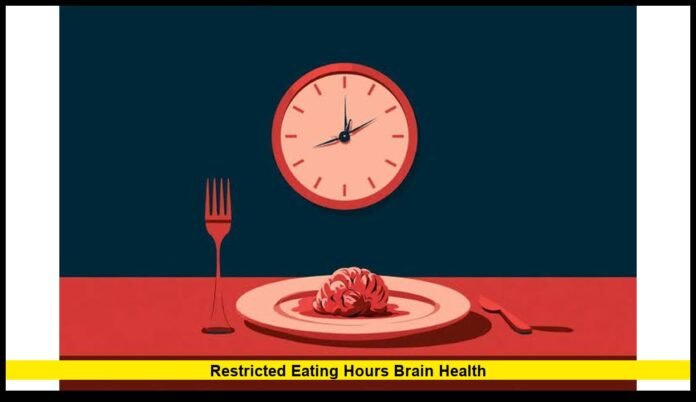

Restricted eating hours brain health has become one of the most talked-about topics in nutrition research after new findings presented in late July 2026 suggested that limiting daily eating to a shorter window may help preserve certain thinking skills in older adults. The latest research found that older women who consumed all of their meals within about eight to nine hours each day performed better on several cognitive tests than those who ate over a much longer period, even though both groups lost a similar amount of weight. Scientists emphasize that the findings are encouraging but still preliminary, and larger studies are needed before meal timing becomes part of formal brain health recommendations.
Why Scientists Are Paying More Attention to Meal Timing
For decades, nutrition advice focused mainly on calories, vitamins, and food quality. Today, researchers are increasingly studying another factor that may influence long-term health: the timing of meals.
Time-restricted eating is a dietary pattern in which people consume all of their daily calories during a consistent window, often between eight and ten hours. Outside that period, only water or other calorie-free beverages are typically consumed.
Unlike many popular diets, this approach does not necessarily require counting calories or eliminating specific foods. Instead, it encourages eating in alignment with the body’s natural daily rhythm.
Researchers believe meal timing may influence several biological systems that are closely connected with healthy brain function.
These include:
- Blood sugar regulation
- Insulin sensitivity
- Hormone production
- Inflammation
- Sleep quality
- Circadian rhythm
Each of these factors plays an important role in maintaining healthy cognitive performance as people age.
Latest Study Shows Encouraging Results
The newest research was presented during the American Society for Nutrition’s annual scientific meeting in July 2026.
Researchers followed 47 women between 50 and 79 years old who had overweight or obesity while participating in a six-month weight-loss program.
Every participant reduced daily calorie intake.
The difference was how long they spent eating each day.
One group limited food intake to approximately 8.2 hours daily, while the comparison group continued eating across roughly 12.3 hours.
Many participants in the shorter eating window finished meals around early evening, leaving several hours before bedtime.
At the end of six months, both groups lost an average of about 15 pounds (6.8 kilograms).
However, researchers found meaningful differences during cognitive testing.
Participants following the shorter eating schedule generally performed better on tasks involving:
- Planning
- Problem-solving
- Executive function
- Spatial reasoning
Researchers also observed promising trends in memory and learning, although improvements were not consistent across every test. Because the study involved a relatively small number of participants, scientists say the findings should be confirmed in larger clinical trials.
Why Eating Earlier May Benefit the Brain
Scientists believe several biological processes may explain why meal timing could influence cognitive health.
Better Circadian Rhythm Alignment
The body’s internal clock controls much more than sleep.
It regulates:
- Digestion
- Hormone release
- Metabolism
- Body temperature
- Cellular repair
Eating late at night may interfere with these natural cycles.
Restricting meals to earlier hours may allow the body to operate more efficiently.
Improved Blood Sugar Control
Large swings in blood sugar over many years may damage blood vessels, including those supplying the brain.
Studies have consistently shown that better glucose regulation supports healthier aging.
Limiting eating to a shorter daytime window may improve insulin sensitivity for many individuals.
Reduced Inflammation
Long-term inflammation has been associated with several chronic diseases, including cardiovascular disease and cognitive decline.
Researchers continue studying whether time-restricted eating lowers inflammatory activity throughout the body.
Although more evidence is needed, several recent studies suggest favorable metabolic changes.
Healthier Sleep Patterns
Sleep remains one of the strongest predictors of long-term brain health.
Eating late in the evening may interfere with sleep quality.
Many nutrition experts recommend finishing dinner at least two to three hours before bedtime.
Earlier meal timing may improve overnight recovery while supporting memory consolidation during sleep.
Understanding Executive Function
The latest study did not examine Alzheimer’s disease directly.
Instead, researchers measured executive function.
Executive function refers to mental abilities that help people manage everyday life.
These skills include:
- Organizing information
- Planning activities
- Solving problems
- Managing attention
- Making decisions
- Adapting to new situations
Healthy executive function supports independence as people age.
Small improvements in these abilities can have meaningful effects on daily living.
Weight Loss Alone Did Not Explain the Results
One of the most interesting findings involved body weight.
Both study groups lost nearly the same amount of weight during the six-month program.
Despite similar weight loss, the shorter eating-window group demonstrated stronger performance on several cognitive assessments.
This suggests that meal timing itself may influence brain function independently of weight reduction.
Researchers are now exploring exactly why this difference occurred.
Who Participated in the Research?
The study focused on a specific population.
Participants were:
- Women
- Between 50 and 79 years old
- Living with overweight or obesity
- Following a structured calorie-reduction program
Because of these characteristics, researchers caution against assuming identical results for:
- Men
- Younger adults
- Healthy-weight individuals
- People with different medical conditions
Future studies involving larger and more diverse populations are already being planned.
How Does This Compare With Earlier Research?
Interest in time-restricted eating has grown steadily over the past several years.
Previous studies have linked structured eating schedules with improvements in:
- Insulin sensitivity
- Blood pressure
- Weight management
- Cholesterol
- Inflammation
- Metabolic flexibility
Research published during 2026 has also explored how earlier eating schedules may affect memory performance and brain imaging markers.
Some studies involving adults with metabolic syndrome reported improvements in memory tests and MRI measurements after one month of early time-restricted eating.
Although these studies involved different populations, they continue building evidence that meal timing may influence cognitive health alongside traditional nutrition strategies.
Can Time-Restricted Eating Prevent Dementia?
At this stage, the answer remains no.
Researchers have not demonstrated that time-restricted eating prevents Alzheimer’s disease or other forms of dementia.
Instead, scientists believe it may improve several health conditions that are themselves associated with cognitive decline.
These include:
- Obesity
- Type 2 diabetes
- Poor metabolic health
- Sleep disruption
- Chronic inflammation
Reducing these risk factors may contribute to healthier brain aging over time.
However, long-term clinical trials will be necessary before any direct conclusions about dementia prevention can be made.
What This Means for Americans
Millions of Americans already practice some form of intermittent fasting.
Popular eating schedules include:
| Eating Pattern | Daily Eating Window |
|---|---|
| 12:12 | 12 hours |
| 14:10 | 10 hours |
| 16:8 | 8 hours |
The newest findings suggest that consistency may be just as important as the length of the eating window.
Researchers also emphasize that healthy food choices remain essential.
Meal timing should not replace balanced nutrition.
Instead, it may become one additional lifestyle strategy for supporting healthy aging.
Who Should Talk With a Healthcare Professional First?
Although many healthy adults safely practice time-restricted eating, it is not appropriate for everyone.
Medical advice is especially important for individuals who have:
- Diabetes requiring medication
- Pregnancy
- Eating disorders
- Chronic kidney disease
- Low body weight
- Other medical conditions requiring scheduled meals
Healthcare professionals can help determine whether meal timing changes are appropriate for individual circumstances.
Other Habits That Protect Brain Health
Scientists consistently agree that cognitive health depends on multiple lifestyle factors.
The strongest evidence continues to support:
Regular Physical Activity
Exercise improves blood circulation throughout the brain.
Nutritious Foods
Vegetables, fruits, whole grains, fish, legumes, and healthy fats remain important for long-term health.
Quality Sleep
Most adults benefit from seven to nine hours of sleep each night.
Managing Blood Pressure
Healthy blood vessels help deliver oxygen and nutrients to the brain.
Controlling Blood Sugar
Stable glucose levels reduce long-term damage to blood vessels and nerves.
Mental and Social Activity
Learning new skills, reading, solving puzzles, and maintaining social connections continue supporting cognitive resilience.
Meal timing may complement these habits rather than replace them.
Questions Scientists Continue Studying
Researchers are now working to answer several important questions.
Among them:
- Is eight hours the ideal eating window?
- Does early eating produce better results than late eating?
- How long must people follow the schedule before cognitive benefits appear?
- Will similar improvements occur in men?
- Can healthy younger adults benefit?
- Which brain regions are affected most?
- Do benefits continue over many years?
Ongoing clinical trials are expected to provide additional answers in the coming years.
What We Know Today
Current research suggests that eating within a shorter daily window may offer benefits extending beyond weight management.
Scientists have found encouraging improvements in executive function among older women following structured eating schedules while maintaining similar weight loss compared with conventional calorie reduction.
The findings add to growing evidence that when people eat may influence metabolism, sleep, and cognitive performance.
Although larger studies remain necessary before official dietary guidelines change, the latest research has strengthened scientific interest in how meal timing fits into healthy aging strategies.
Have you tried changing your daily eating schedule? Share your experience in the comments and stay informed as new research continues to shape our understanding of brain health.