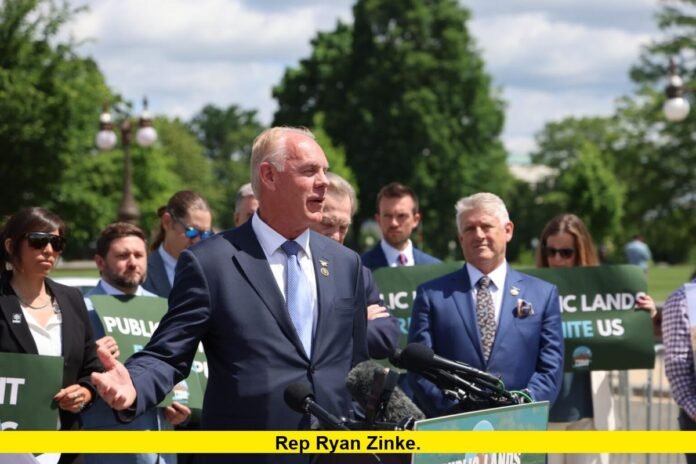

Rep ryan zinke is once again at the center of several high-profile debates in Washington as the Montana congressman advances legislation tied to public lands, energy development, and border security. The Republican lawmaker, who represents Montana’s at-large district in the U.S. House of Representatives, has taken visible roles in committee discussions and floor votes in recent weeks.
Zinke, a member of the Republican Party and former U.S. Interior Secretary, continues to emphasize issues that directly affect rural communities and western states. His office has highlighted efforts focused on land management reforms, wildfire prevention, and support for domestic energy production.
Stay with us for continued coverage of how these developments impact Montana and national policy.
Public Lands Remain a Central Focus
Public lands policy has long shaped Zinke’s political profile. Representing Montana, where federal land plays a major economic and cultural role, he has repeatedly addressed concerns about conservation, recreation access, and responsible resource development.
In recent House activity, Zinke has voiced support for measures aimed at balancing conservation goals with energy and mineral production. Lawmakers debated proposals related to permitting processes and environmental oversight, with Zinke aligning with colleagues who argue for streamlined federal reviews.
He has also reiterated support for wildfire mitigation strategies. Western states have faced severe fire seasons in recent years, and congressional discussions have included funding allocations and forest management initiatives. Zinke’s statements stress local input and collaborative land management.
Border Security and National Policy Debates
Beyond public lands, border security remains another area where Zinke has taken a clear position. Congressional negotiations over border enforcement funding and immigration measures have intensified in recent sessions. Zinke has voted in line with broader Republican efforts to tighten border policies and increase enforcement resources.
Supporters argue that stronger enforcement ensures national security and addresses strain on local communities. Critics within Congress have countered with alternative proposals focused on humanitarian considerations and broader immigration reform. Zinke’s public comments underscore his belief in a more restrictive framework.
These votes reflect larger partisan divides in Washington, where narrow margins in the House have made each vote significant.
Energy Development and Economic Priorities
Energy independence continues to serve as a major theme in Zinke’s legislative agenda. As debates over oil, gas, and renewable energy policy unfold, he has supported expanded domestic production and criticized regulatory hurdles that, in his view, limit job growth in resource-rich states.
House committee activity has included oversight hearings and bill markups concerning leasing practices on federal lands. Zinke has advocated policies that promote what he describes as responsible production, while maintaining compliance with environmental standards.
Energy discussions in Congress remain closely tied to inflation concerns and global market pressures. Lawmakers from energy-producing states often emphasize the link between domestic supply and fuel prices.
Committee Assignments and Legislative Strategy
Zinke serves on key House committees that influence natural resources and oversight issues. His participation in hearings has allowed him to question federal agency officials and weigh in on regulatory decisions.
Recent sessions included testimony from administration representatives about land use policies and environmental compliance frameworks. Zinke has pressed officials on timelines and economic impact, reflecting priorities that align with western constituencies.
Committee work often shapes legislation before it reaches the House floor, and Zinke’s engagement signals his continued influence on resource-related policy.
Political Context and Montana Representation
As Montana’s sole House member, Zinke carries statewide responsibilities. The at-large district structure means he must address diverse regional interests—from agricultural communities to outdoor recreation businesses.
Elections in Montana have grown increasingly competitive over the past decade. Zinke’s political history includes serving as Interior Secretary before returning to Congress. That background gives him familiarity with federal land agencies and administrative processes.
In public remarks, he has stressed bipartisan cooperation on issues like veteran services and infrastructure improvements. While partisan divides remain strong nationally, local priorities often require cross-party collaboration.
Looking Ahead in Congress
Upcoming votes on budget measures and appropriations could shape funding levels for land management agencies, border enforcement, and wildfire response. Zinke’s position within the House majority will likely influence negotiations.
Observers note that resource policy and border security will continue dominating congressional headlines in the months ahead. With control of the House closely contested, lawmakers such as rep ryan zinke may play decisive roles in tight votes.
For Montana residents, federal decisions on public lands, energy leasing, and wildfire funding carry direct consequences. Zinke’s office continues to release statements outlining his positions as legislation moves forward.
As Washington navigates fiscal deadlines and policy disputes, Zinke remains a prominent voice representing western priorities on the national stage.
What are your thoughts on how Congress is handling public lands and border policy? Share your perspective below and stay tuned for further updates.