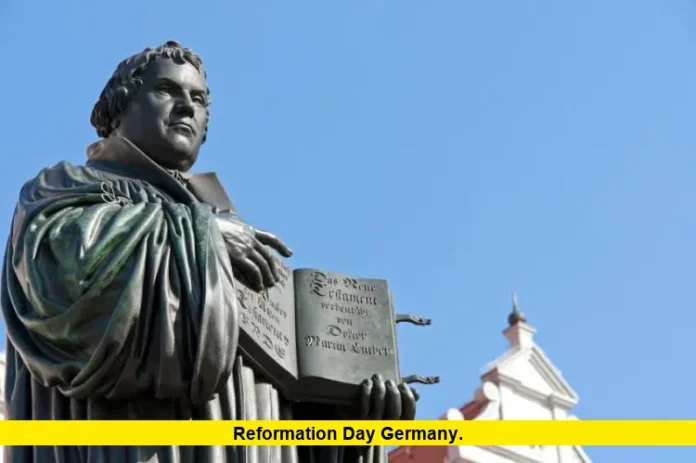

Every year on October 31, Reformation Day Germany honors one of the most significant moments in world history — the start of the Protestant Reformation. In 2025, the day continues to hold deep cultural, religious, and historical meaning across Germany. For U.S. readers, this observance offers not only a glimpse into Germany’s traditions but also a chance to understand how faith, history, and civic life intersect in Europe’s largest economy.
What Is Reformation Day Germany?
Reformation Day Germany, known locally as Reformationstag, commemorates the day in 1517 when Martin Luther, a German monk and theologian, initiated a movement that reshaped Christianity. On October 31 of that year, Luther is believed to have presented his Ninety-Five Theses in Wittenberg, challenging the practices of the Catholic Church and sparking the Protestant Reformation.
The Reformation transformed Europe’s religious and political landscape, leading to the formation of Protestant denominations and influencing later movements for freedom of thought and conscience. In modern Germany, Reformation Day serves as both a public holiday and a historical remembrance.
Reformation Day Germany 2025: Date and Observance
In 2025, Reformation Day will be observed on Friday, October 31. It is recognized as a public holiday in several German states. On this day, churches, communities, and religious institutions host special worship services, concerts, and educational events that reflect on Luther’s legacy and the continuing relevance of the Reformation.
For U.S. travelers and companies with German connections, it’s important to know that businesses, schools, and government offices in certain German states may close for the day. Public transportation may operate on a reduced schedule in observant regions.
Where Reformation Day Is a Public Holiday in Germany
Reformation Day is not a nationwide public holiday in Germany, but it is officially recognized in these states:
- Brandenburg
- Bremen
- Hamburg
- Lower Saxony
- Mecklenburg-Western Pomerania
- Saxony
- Saxony-Anhalt
- Schleswig-Holstein
- Thuringia
These are mostly northern and eastern regions where Protestant traditions remain strong. In other parts of Germany, such as Bavaria and North Rhine-Westphalia, October 31 is not a public holiday, although churches may still hold commemorations.
How Germans Celebrate Reformation Day
Reformation Day in Germany is observed with both reverence and reflection. While the day is rooted in religious history, its observance often includes cultural and educational aspects:
- Church Services: Protestant churches hold special services focusing on themes of renewal, faith, and conscience.
- Music and Concerts: Many churches feature choirs performing hymns composed by Martin Luther, such as Ein feste Burg ist unser Gott (“A Mighty Fortress Is Our God”).
- Community Events: Towns and schools may organize lectures, plays, or exhibitions about the Reformation’s impact on German history.
- Family Gatherings: As the day is a public holiday in several regions, families often spend time together or visit local cultural sites.
Significance for U.S. Readers
For U.S. readers, Reformation Day Germany has multiple points of interest:
- Historical Connection: The Reformation’s influence reached far beyond Europe, shaping the religious freedom and diversity found in the United States today. Many American Protestant denominations trace their origins to this movement.
- Cultural Insight: Understanding how Germany marks Reformation Day provides valuable perspective on how history, religion, and civic life intertwine in European culture.
- Travel Awareness: For Americans traveling to or doing business in Germany, being aware of regional holidays helps in planning meetings, logistics, and sightseeing activities.
Reformation Day vs. Halloween
October 31 carries a very different meaning in Germany than it does in the United States. While Americans associate the date with Halloween celebrations, Germans in certain regions view it as a solemn religious holiday.
That said, in recent years, Halloween festivities have grown more popular in Germany, especially in larger cities and western states. Still, in the regions where Reformation Day is a public holiday, the emphasis remains on reflection, faith, and remembrance of Martin Luther’s legacy rather than costumes or parties.
Martin Luther and the City of Wittenberg
The city of Wittenberg in Saxony-Anhalt remains the symbolic heart of Reformation Day Germany. Visitors can explore key sites connected to Luther’s life, including:
- All Saints’ Church (Schlosskirche): The church where Luther is said to have displayed his Ninety-Five Theses.
- Lutherhaus: The former Augustinian monastery where Luther lived, now a museum dedicated to the Reformation.
- Wittenberg Market Square: A UNESCO World Heritage Site, featuring statues of both Martin Luther and fellow reformer Philip Melanchthon.
Each year on Reformation Day, Wittenberg becomes the focal point for national observances. Thousands of people attend church services, concerts, and historical reenactments, turning the small city into a vibrant center of remembrance.
Reformation Day and Modern Germany
In modern Germany, Reformation Day symbolizes more than a religious anniversary. It represents:
- Freedom of Belief: The idea that individuals can interpret faith and conscience independently.
- Cultural Identity: For Protestant regions, it affirms a shared heritage that continues to shape local traditions and education.
- Historical Awareness: The Reformation marked a turning point not only for religion but also for art, science, and politics across Europe.
The observance remains peaceful and reflective, offering Germans an opportunity to pause and consider how their history continues to influence modern democratic values and spiritual life.
Travel and Practical Tips for U.S. Visitors
If you’re visiting Germany around October 31, keep these points in mind:
- Check regional holidays: If you are in one of the states observing Reformation Day, expect closures in shops, banks, and public offices.
- Plan ahead for travel: Transportation networks might operate on limited schedules in certain areas.
- Visit historical sites: Reformation-related attractions in Wittenberg, Eisleben, and Erfurt offer guided tours and special exhibits.
- Respect local customs: In observant states, the holiday carries religious significance, so public celebrations or loud events may be discouraged.
The Lasting Legacy of Reformation Day Germany
More than 500 years after Martin Luther’s stand in Wittenberg, his ideas still echo across the world. Reformation Day Germany is not only a moment to remember the past but also to reflect on how freedom of thought and belief continues to shape societies today.
In 2025, as Germany once again marks this historic date, the spirit of reform, dialogue, and faith that began in 1517 remains alive — bridging centuries and inspiring generations on both sides of the Atlantic.
Join the conversation below — how do you see the legacy of the Reformation influencing modern life today?