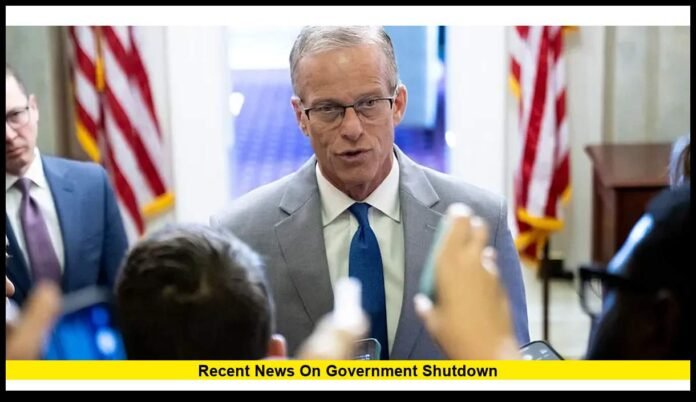

The recent news on government shutdown shows that the federal stalemate is finally nearing an end after more than 40 days of partial government closure. The U.S. Senate advanced a major funding bill late Sunday night that aims to reopen the government through January 2026, potentially ending the longest government shutdown in U.S. history.
What Happened?
The government shutdown began on October 1, 2025, when Congress failed to pass the required funding bills to keep operations running. With federal agencies running out of money, hundreds of thousands of workers were furloughed or forced to work without pay.
Over the weekend, senators voted 60-40 to move forward with a bipartisan compromise package. The bill includes short-term funding through January 30, 2026, retroactive pay for furloughed workers, and a commitment to hold a separate vote in December on healthcare subsidies. While the deal received support from a mix of Republicans and moderate Democrats, it faced resistance from progressives who argued that healthcare funding provisions were insufficient.
The White House expressed cautious optimism and signaled that if the bill passes the House, the President is prepared to sign it immediately to reopen the government.
Why It Matters
The prolonged shutdown has had severe nationwide consequences. The recent news on government shutdown highlights how critical federal operations were brought to a halt for over a month. Here are some of the most affected areas:
- Federal Workers and Contractors: Nearly 900,000 employees were furloughed, while thousands more were required to continue working without pay.
- Social Services: Programs like SNAP (Supplemental Nutrition Assistance Program) saw significant delays, putting millions of low-income families at risk of losing access to food benefits.
- Transportation: Staffing shortages at the Federal Aviation Administration caused widespread flight cancellations and delays at major airports.
- National Parks and Services: Many national parks were closed or left understaffed, leading to maintenance issues and safety concerns.
- Economic Impact: Analysts estimate that the shutdown cost the economy billions of dollars in lost productivity and spending.
Key Players and Political Positions
- Speaker of the House Mike Johnson has indicated that once the Senate completes its vote, the House will quickly return to vote on the bill.
- Senate Minority Leader Chuck Schumer and many Democrats have expressed concern that the package does not guarantee long-term funding for healthcare subsidies.
- Senate Majority Leader John Thune called the compromise a necessary step to restore government services and provide relief to American workers.
- The White House continues to urge both chambers to finalize the legislation swiftly to prevent further economic damage.
This bipartisan cooperation in the Senate marks the most significant progress toward ending the shutdown since it began.
Timeline of the Shutdown
| Date | Event |
|---|---|
| October 1, 2025 | Federal government funding expired, triggering a partial shutdown. |
| October–November 2025 | Several failed attempts to pass short-term funding measures deepened the standoff. |
| November 9–10, 2025 | The Senate approved a motion to advance a new funding bill with a 60-40 vote. |
| Week of November 10, 2025 | The House is expected to take up the measure for final passage. |
If approved, the bill would immediately reopen all affected federal departments, restore pay to workers, and ensure critical programs like SNAP, Medicare, and Social Security continue uninterrupted.
What’s in the Deal?
The Senate package contains several key provisions:
- Short-Term Funding: Keeps the federal government funded through January 30, 2026.
- Retroactive Pay: Guarantees back pay for furloughed workers and ensures no loss of seniority or benefits.
- Healthcare Subsidy Vote: Commits to a December vote on healthcare subsidy extensions, a major sticking point during negotiations.
- Program Support: Includes extended funding for nutrition assistance and disaster relief programs.
- Debt Negotiations: Opens a path for early discussions on the next fiscal year’s budget to avoid another shutdown in early 2026.
Remaining Challenges
Despite the Senate’s progress, several hurdles remain:
- House Approval: The bill still needs to clear the House of Representatives. Any delay or amendment could slow the process and prolong the shutdown.
- Partisan Divisions: Some Democrats insist on a stronger healthcare guarantee, while some Republicans oppose the spending levels in the bill.
- Implementation Lag: Even after passage, it may take several days for agencies to resume normal operations, meaning some services will remain disrupted temporarily.
- Economic Repercussions: Analysts warn that the prolonged shutdown has already caused lasting economic damage, and a quick recovery will require stable policy moving forward.
Impact on Everyday Americans
For many families and workers, this shutdown has been more than a political battle — it’s been a test of resilience. From delayed paychecks to suspended benefits, the shutdown’s ripple effects have been felt across every state.
Air travel delays, suspended federal court operations, and uncertainty around key programs like WIC and SNAP have left millions anxious about their futures. Small businesses dependent on federal contracts or tourism around national parks have also faced significant losses.
The Senate’s action brings a glimmer of hope, signaling that government operations could soon return to normal. Once the House votes, federal employees could expect back pay and the reopening of essential services within days.
What Comes Next?
If the House approves the Senate bill, the President is expected to sign it promptly, officially reopening the government and restoring services. However, the next fiscal deadline — January 30, 2026 — looms large. Lawmakers must use the coming months to reach a long-term funding solution that prevents a repeat of this crisis.
This shutdown has become a major reminder of how critical timely budgeting is for millions of Americans who depend on federal stability. The bipartisan progress seen in recent days may serve as a model for avoiding similar standoffs in the future.
In conclusion, the recent news on government shutdown signals a potential end to weeks of federal uncertainty. With the Senate advancing the bill and the House preparing to vote, Americans are hopeful that relief is finally in sight. Share your thoughts below on how the shutdown has affected you or your community — your voice matters.