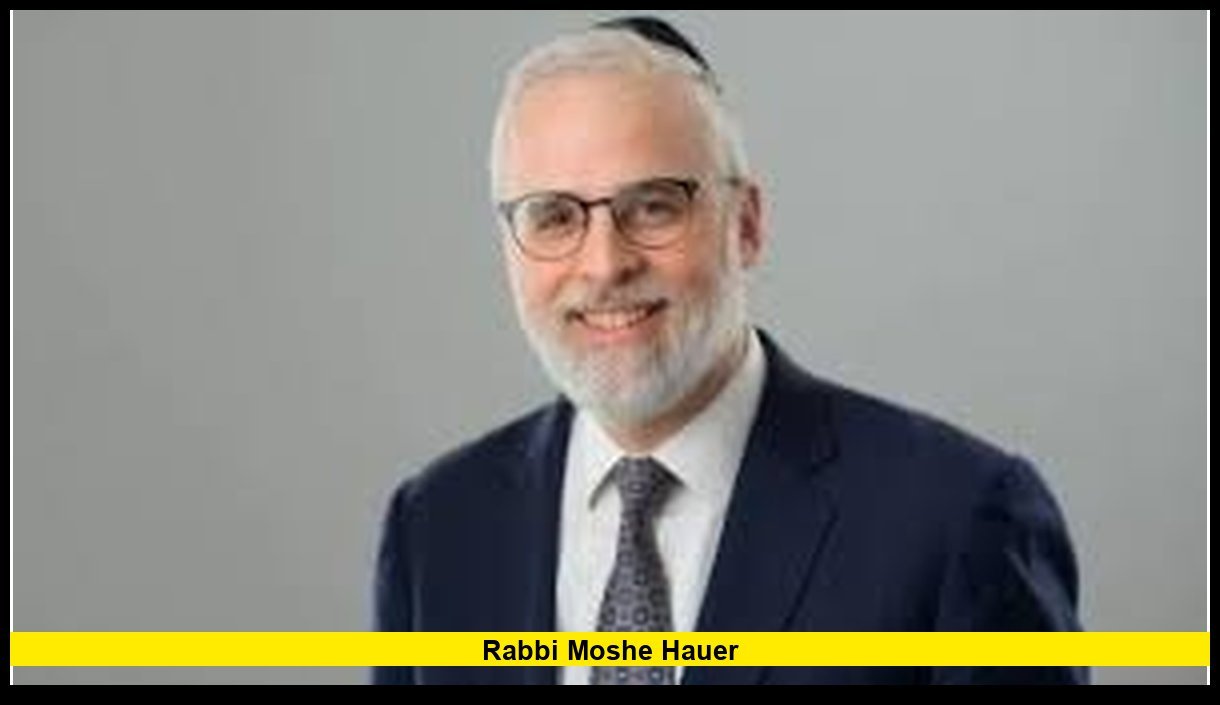

The passing of Rabbi Moshe Hauer on October 15, 2025, during the holiday of Shemini Atzeret, has reverberated throughout Jewish communities across the United States and beyond. His sudden death at his home in Baltimore, reportedly due to a heart attack, stunned those who viewed him as a guiding voice in American Orthodoxy. As the Executive Vice President of the Orthodox Union (OU) and the longtime spiritual leader of Congregation Bnai Jacob Shaarei Zion, Rabbi Hauer’s influence spanned decades, communities, and continents.
This is not merely the story of a respected rabbinic figure’s passing. It is the story of a man whose life embodied leadership, humility, scholarship, and unwavering dedication to the Jewish people. His absence leaves a profound void, but his legacy will continue to shape American Jewish life for generations.
Early Life and Education: A Foundation of Faith and Learning
Born and raised in Baltimore, Maryland, Rabbi Moshe Hauer was deeply connected to the fabric of American Orthodox life from a young age. He studied at Ner Israel Rabbinical College, one of the most prestigious yeshivas in the country, where he received rabbinic ordination and later earned a Doctorate in Talmudic Law.
In addition to his extensive Torah education, Rabbi Hauer pursued academic studies at Johns Hopkins University, where he received a Master of Science. This dual background—deep Torah scholarship combined with rigorous secular education—would become one of his hallmarks. It allowed him to speak with authority to both religious and broader intellectual audiences.
From the beginning of his career, he demonstrated a rare ability to synthesize tradition and modernity, grounding his work firmly in Torah while engaging thoughtfully with contemporary issues facing American Jewry.
Baltimore Leadership: Building a Community of Torah and Chesed
In 1994, Rabbi Moshe Hauer became the spiritual leader of Congregation Bnai Jacob Shaarei Zion (BJSZ) in Baltimore. Over the next 26 years, he transformed the shul into a thriving hub of learning, worship, and community life.
Under his leadership:
- The congregation expanded its membership significantly.
- Daily and weekly shiurim (Torah classes) attracted participants from across the city.
- Community programs addressed both spiritual growth and practical needs, including youth engagement, education, and social support.
- He became known as a personal and accessible rabbi, guiding families through every stage of life with wisdom and compassion.
Those who knew him personally often speak about his genuine humility. Despite his intellectual stature, he would spend hours counseling individuals, visiting the sick, and giving time to anyone who needed guidance. His Baltimore years were defined by steady growth, warmth, and an unshakeable sense of mission.
National Leadership: Executive Vice President of the Orthodox Union
In May 2020, Rabbi Moshe Hauer assumed the role of Executive Vice President of the Orthodox Union, one of the most influential Jewish organizations in the world. The OU represents hundreds of synagogues, schools, and communities across North America, playing a central role in advocacy, religious guidance, education, and communal support.
Taking on this leadership role at the height of the COVID-19 pandemic, Rabbi Hauer faced an unprecedented challenge. He quickly became one of the most trusted rabbinic voices in the community, providing clear halachic guidance and moral leadership during a time of uncertainty.
During his tenure, he focused on several key areas:
- Strengthening Jewish Education – Supporting day schools and yeshivas, advocating for government funding, and ensuring continued access to quality Jewish education.
- Advocacy in Washington – Representing Orthodox interests on Capitol Hill, addressing issues like religious freedom, antisemitism, and school choice.
- Public Rabbinic Voice – Delivering speeches, essays, and interviews that articulated Torah perspectives on contemporary issues with rare clarity.
- Crisis Leadership – Responding to challenges such as rising antisemitism, global instability, and the shifting landscape of Jewish identity in the U.S.
His leadership style was often described as measured, thoughtful, and principled. He avoided sensationalism, preferring to offer well-reasoned perspectives that resonated widely, even across ideological lines.
A Sudden and Deeply Felt Loss
On the morning of October 15, 2025, during Shemini Atzeret, Rabbi Moshe Hauer suffered a fatal heart attack at his Baltimore home. Because Jewish law prohibits certain public activities during the holiday, the news was not widely disseminated until after Yom Tov ended.
Once confirmed, the reaction was immediate and profound. Synagogues, schools, and Jewish organizations across the United States released statements expressing grief and honoring his memory. Community leaders, rabbanim, educators, and laypeople shared personal stories of his kindness, intellect, and leadership.
The fact that his passing occurred during a sacred holiday added a layer of solemnity and reflection. Many described it as symbolic: a leader whose life was intertwined with Torah and community left this world on a day of deep spiritual significance.
A Thought Leader in Modern Orthodoxy
Throughout his career, Rabbi Hauer distinguished himself not only as a communal leader but also as a powerful thinker and teacher. He was frequently invited to deliver keynote addresses at conferences and served as a sought-after speaker on a range of topics including:
- Jewish identity in modern America
- Torah perspectives on social and political issues
- Ethical leadership and communal responsibility
- The relationship between American Jewry and the State of Israel
His ability to address complex subjects with intellectual rigor and deep empathy made him a rare figure in contemporary Jewish leadership. His writings and recorded shiurim will continue to be studied by students, rabbis, and lay leaders for years to come.
Personal Qualities That Defined Him
While his public accomplishments are well-documented, what truly set Rabbi Moshe Hauer apart were his personal qualities:
- Humility – Despite holding prestigious positions, he interacted with everyone with kindness and respect.
- Approachability – People of all backgrounds felt comfortable seeking his advice, whether on halachic issues or personal struggles.
- Integrity – His words and actions were consistently aligned, earning him deep trust across the spectrum of Jewish life.
- Calm Leadership – In times of crisis, his composed demeanor reassured communities and set a tone of thoughtful resilience.
- Passion for Torah – His love of Torah was evident in every speech, class, and conversation.
These qualities explain why his passing has left not only an organizational gap but also a personal void for countless individuals and families who turned to him over the years.
Timeline of Rabbi Moshe Hauer’s Life and Accomplishments
| Year | Event |
|---|---|
| 1960s–1970s | Born and raised in Baltimore; early education in local Jewish institutions. |
| 1980s–1990s | Ordained at Ner Israel Rabbinical College; earned doctorate in Talmudic Law; completed Master’s at Johns Hopkins. |
| 1994 | Appointed Rabbi of Congregation Bnai Jacob Shaarei Zion in Baltimore. |
| 1994–2020 | Led and expanded BJSZ; became a prominent voice in Baltimore’s Jewish community. |
| 2020 | Became Executive Vice President of the Orthodox Union. |
| 2020–2025 | Guided the OU through crises, education initiatives, and national advocacy. |
| October 15, 2025 | Passed away suddenly at his home in Baltimore on Shemini Atzeret. |
National and Global Reaction
The response to his death underscored his national and international impact. Tributes came from across the U.S., Israel, and Jewish communities worldwide.
- Rabbis and scholars praised his depth of Torah knowledge and his ability to address contemporary issues without compromising halachic integrity.
- Community members shared heartfelt stories of personal interactions that reflected his warmth and genuine care.
- Organizations highlighted his strategic vision and the steady leadership he brought to complex communal landscapes.
His funeral is expected to be one of the largest rabbinic gatherings in Baltimore in recent memory, with community members traveling from across the country to pay their respects.
Carrying His Legacy Forward
Though his passing was sudden, Rabbi Moshe Hauer’s legacy is firmly established. His decades of Torah teaching, communal leadership, and advocacy have left lasting marks on institutions and individuals alike. His recorded shiurim, essays, and public addresses will continue to guide and inspire future generations of leaders.
Within the Orthodox Union, discussions have already begun about how to honor and continue his vision — through educational programs, leadership development, and renewed commitment to the values he championed.
How has Rabbi Moshe Hauer’s leadership or teachings impacted you or your community? Share your reflections in the comments below to honor his memory.