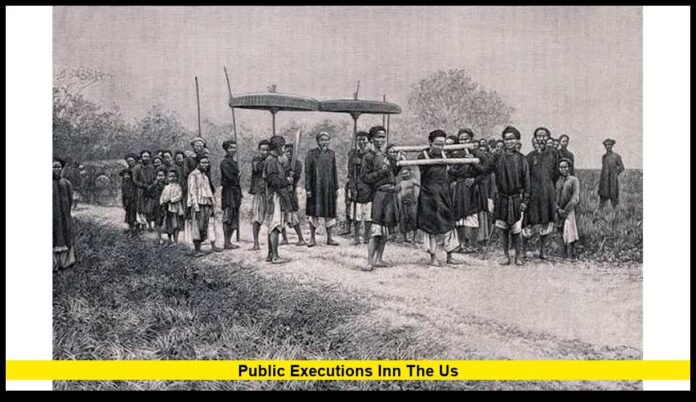

Public executions in the US have returned to the national spotlight after the Pentagon announced plans to livestream the scheduled December 3, 2026, execution of former Army psychiatrist Nidal Malik Hasan. The case, connected to the deadly 2009 Fort Hood shooting in Texas, has reignited debate over capital punishment, government transparency, and the boundaries of public access to military proceedings. The proposed broadcast would mark an extraordinary departure from the modern American practice of conducting executions privately, with access generally limited to authorized witnesses.
The announcement comes during a year of renewed attention to the death penalty. Questions about execution procedures, legal oversight, and the treatment of condemned prisoners have intensified following several controversial developments. The planned military execution now places another issue at the center of the discussion: whether the government should make an execution available for public viewing through a live broadcast.
Latest Update on the Pentagon’s Execution Livestream Plan
The Pentagon announced the livestream plan on October 8, 2026. The Army has scheduled Hasan’s execution by firing squad for December 3 at Fort Hood, the same Texas military installation where the deadly attack occurred.
Defense Secretary Pete Hegseth has supported making the execution public, and President Donald Trump approved the firing squad method. The proposal has attracted national and international attention because military executions are exceptionally rare in modern America.
The planned execution would be the first U.S. military execution since 1961. It would also mark the first military firing squad execution since 1945, if the scheduled event proceeds.
The livestream proposal adds a separate issue to the case. Although executions have taken place before authorized witnesses for decades, broadcasting one to a much larger audience would represent a significant change in public access.
The announcement does not mean the execution has already occurred. December 3 remains the scheduled date, and legal or administrative developments could still affect the proceedings.
Questions also remain about the final broadcasting arrangements, including how viewers would access the event and what restrictions might apply. Those details will help determine how the government intends to implement the unprecedented plan.
Who Is Nidal Malik Hasan?
Hasan is a former U.S. Army psychiatrist who carried out the Fort Hood shooting on November 5, 2009. The attack killed 13 people and wounded 32 others at the military installation near Killeen, Texas.
The victims included military personnel preparing for deployment and other individuals at the base. The shooting shocked the military community and families across the country.
A military court convicted Hasan in 2013 of 13 counts of premeditated murder and 32 counts of attempted murder. The jury sentenced him to death.
The case has remained significant because of the scale of the attack, the military setting, and the subsequent legal proceedings. The scheduled execution would bring the case to another major stage, more than 17 years after the shooting.
The military justice system handles capital cases under rules that differ from ordinary state criminal proceedings. The scheduled execution therefore involves military authorities and procedures rather than the standard process used for a state prisoner on death row.
The proposed broadcast has added a new layer of controversy to a case that already carries substantial consequences for victims’ families, military personnel, and the wider public.
Why Public Executions Became Uncommon in America
For much of American history, executions could take place before large crowds. Local authorities sometimes treated them as public events, allowing spectators to gather and observe the punishment imposed by the state.
These gatherings could attract thousands of people. They often drew vendors, journalists, and curious spectators, transforming criminal punishment into a public spectacle.
Over time, states increasingly moved executions behind prison walls. Officials restricted attendance and developed procedures that allowed only approved witnesses to observe the event.
Several concerns contributed to this change. Large crowds created public-order challenges, while the spectacle surrounding executions raised questions about whether public displays of death served any legitimate purpose.
The shift also reflected changing expectations about criminal justice and human dignity. Authorities increasingly treated executions as controlled legal procedures rather than public gatherings.
The change did not eliminate capital punishment. Instead, it limited direct public access to the process.
Today, states that carry out executions generally rely on controlled facilities and witness restrictions. Rules vary, but the modern approach differs substantially from the open-air executions that once attracted large crowds.
The Historic 1936 Execution That Changed Public Perceptions
<PRIVATE_PERSON> Rainey Bethea’s execution in Owensboro, Kentucky, on August 14, 1936, is widely recognized as the last public execution in the United States.
Bethea had been convicted of raping Lischia Edwards, a 70-year-old woman. His hanging attracted an estimated crowd of approximately 20,000 people, making the event a major public spectacle.
The execution received extensive attention and exposed the problems associated with allowing large crowds to witness state punishment. The circumstances surrounding the event contributed to growing criticism of public executions.
The historical significance of Bethea’s hanging extends beyond the individual case. It represents a turning point in the way Americans viewed public punishment and the appropriate role of spectators in the criminal justice system.
The country subsequently moved further toward private executions conducted within prisons and other controlled facilities. Public access became increasingly limited, and open-air executions faded from modern American practice.
The proposed military livestream would not be identical to the 1936 hanging. However, it would reopen a debate that has largely remained settled for generations: should the government make an execution visible to a mass audience?
How a Livestream Would Change the Execution Process
A traditional private execution allows a limited number of authorized witnesses to attend. Officials control access to the facility, establish security arrangements, and determine who may observe the proceedings.
A livestream could extend that access far beyond the physical location. Viewers might be able to watch from homes, offices, or other locations without entering the military installation.
That difference creates practical and ethical questions. Officials would need to determine how the broadcast would be distributed, who could access it, and whether any restrictions would apply.
The technology itself is not the main issue. Governments routinely use livestreams to make public meetings, briefings, and other official proceedings accessible to wider audiences.
An execution, however, presents a different set of concerns. It involves the deliberate taking of a human life under government authority, making the content and consequences of broadcasting fundamentally different from those of an ordinary public event.
Supporters may argue that public access promotes accountability. Critics question whether broadcasting an execution offers meaningful transparency or merely turns punishment into a spectacle.
The central question is whether the public interest in witnessing an execution outweighs concerns about dignity, privacy, and the potential effects of displaying state violence.
The Legal Questions Surrounding a Public Execution
The proposed livestream raises questions beyond the legality of Hasan’s death sentence.
Courts have previously considered whether journalists and members of the public have a right to access prisons and observe executions. The constitutional protections for gathering and publishing information do not automatically grant unrestricted access to every government-controlled facility.
The current proposal differs in one important respect: the government itself has announced plans to broadcast the event. This raises questions about the authority for the transmission and the rules governing its implementation.
Potential legal issues could involve military procedures, the rights of the condemned person, and the restrictions that apply to broadcasting an execution. Any challenge would depend on the specific claims presented and the relevant law.
The distinction between an authorized execution and an authorized public broadcast is important. Permission to carry out a sentence does not necessarily settle every question about how officials may make the event available to viewers.
As of October 9, 2026, the announced plan remains a developing matter. Without a final determination of all relevant legal and administrative questions, it would be premature to treat every aspect of the proposed livestream as settled.
How Many Executions Have Taken Place in 2026?
Capital punishment remains active in several American states, even as the military prepares for its scheduled execution.
As of October 8, 2026, 30 prisoners had been executed in six states during the year. Those states were Texas, Florida, Alabama, Oklahoma, Tennessee, and Arizona.
Texas and Florida have accounted for a substantial portion of the recorded executions. The distribution illustrates how heavily capital punishment remains concentrated in a relatively small number of states.
The annual total concerns completed civilian executions. Hasan’s scheduled military execution is not included because it has not yet occurred.
The figures also demonstrate that the proposed livestream would not represent a general shift toward publicly broadcasting executions across the country. State executions continue to operate under established procedures, typically with access restricted to authorized witnesses.
The military case is attracting attention because of its unusual method, historical significance, and proposed broadcast rather than because it replaces the existing civilian execution system.
International and Ethical Concerns
The livestream proposal has drawn international scrutiny and renewed discussion about the treatment of people sentenced to death.
Critics argue that broadcasting an execution could undermine human dignity by turning a legally authorized punishment into a form of mass viewing. They also question whether public exposure is necessary for accountability.
Another concern involves the potential effect on viewers. An execution broadcast could expose children and other vulnerable people to disturbing material, depending on how the government distributes the transmission and whether access restrictions exist.
Supporters of greater visibility may argue that public access would allow citizens to see the consequences of criminal sentences rather than relying solely on official descriptions. They may also contend that transparency can strengthen public understanding of the justice system.
However, transparency does not always require unrestricted access to every aspect of a government proceeding. The challenge is determining what information the public should receive and whether a live broadcast is a necessary or appropriate way to provide it.
The controversy also highlights a distinction between supporting capital punishment and supporting public execution broadcasts. People who agree that certain crimes deserve the death penalty may still oppose livestreaming the process.
Likewise, opponents of capital punishment may view the proposed broadcast as an additional reason to question the practice. The debate therefore extends beyond the sentence itself to the government’s responsibility for carrying it out.
What Happens Before the Scheduled December Execution?
The next major development will be whether military officials maintain the December 3 schedule and provide further details about the broadcast.
Several issues remain important to follow:
- Whether the execution date changes.
- Whether any legal proceedings affect the scheduled event.
- How officials intend to distribute the livestream.
- Whether the government establishes restrictions on viewing access.
- Whether further information clarifies the legal and administrative arrangements.
These questions should be distinguished from speculation about what might happen. The scheduled date is a confirmed part of the announced plan, but the final outcome depends on the proceedings and any subsequent decisions.
The case also illustrates why current reporting must distinguish between a proposed action, a scheduled event, and a completed execution. Those are different stages, and confusing them could give readers an inaccurate understanding of the case.
What the Debate Means for the Future of Capital Punishment
The proposed broadcast has placed public access at the center of a wider debate about the death penalty in America.
The modern American approach developed over decades, moving executions away from public crowds and into controlled facilities. The change reflected concerns about spectacle, public order, and the dignity of those involved.
A livestream would challenge that tradition without necessarily changing the underlying legal status of capital punishment. It would instead change how the public could witness the government carrying out a death sentence.
The outcome could influence future discussions about transparency, media access, and the boundaries between public accountability and private proceedings. However, one planned military broadcast does not establish a nationwide policy for state executions.
For now, the scheduled Hasan execution remains the central development. The Pentagon’s subsequent decisions, any relevant legal proceedings, and the final broadcasting arrangements will determine how the plan unfolds.
The debate is likely to continue as Americans weigh the demands of transparency against concerns about dignity and the public display of state punishment.
Do you believe the government should livestream executions, or should capital punishment remain a private legal proceeding? Share your opinion and stay informed as the story develops.