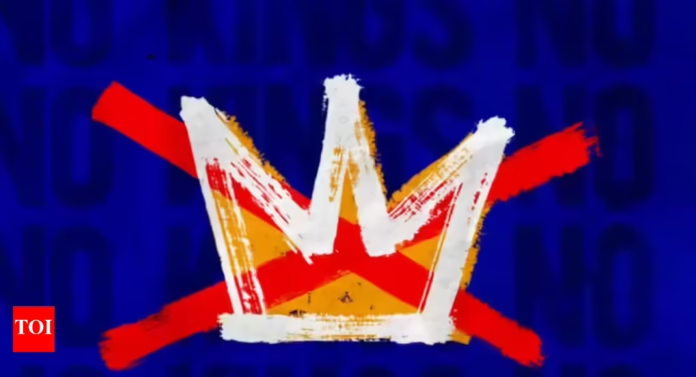

The streets across the United States erupted this week with a wave of creativity, humor, and defiance as Americans gathered for what many are calling one of the most culturally charged demonstrations in recent memory. Protest signs for No Kings Day have gone massively viral on social media, with thousands of images flooding platforms like X, Instagram, and TikTok — and for good reason. The messages people are bringing to these rallies are sharp, witty, and impossible to scroll past.
This movement has captured the attention of millions, and if you haven’t seen what’s happening yet, you’re going to want to keep reading — because the signs alone tell a story worth knowing.
What Started the Conversation
No Kings Day didn’t appear out of nowhere—it grew out of a simmering national mood. Across social media feeds, town halls, and kitchen-table debates, Americans have been increasingly vocal about concerns over concentrated executive authority and what they see as a gradual erosion of democratic checks and balances. In that climate, the phrase “No Kings” landed with unusual force. It wasn’t just catchy—it was deeply symbolic, tapping into a core idea that has defined the United States since its founding: the rejection of monarchy and unchecked power.
That historical resonance is what gave the movement its edge. Protesters weren’t only responding to current political tensions; they were deliberately invoking the spirit of the American Revolution—framing their message as part of a long-standing tradition of resistance and accountability. By tying modern frustrations to a foundational national narrative, No Kings Day instantly felt bigger than a single moment. It felt like history repeating itself, with a new generation stepping into a familiar role.
And once that idea took hold, it spread rapidly.
What started as a loosely connected grassroots sentiment quickly turned into a visible, nationwide expression of dissent. Social media amplified the message, transforming simple phrases into viral rallying cries. At the heart of it all were the protest signs—bold, witty, sometimes biting, and often deeply personal. Each one carried a piece of the larger story, blending humor, frustration, and civic pride into something that was impossible to ignore.
In a time when many felt their voices were being drowned out, No Kings Day gave people a platform—and a shared language—to push back. Streets, sidewalks, and digital spaces alike became canvases for expression, turning the movement into something both highly visible and culturally contagious.
And work with it they did.
The Signs That Stopped Everyone Mid-Scroll
The creativity on display at No Kings Day rallies has been nothing short of remarkable. Demonstrators showed up with everything from handwritten cardboard to professionally printed banners, but it was the handmade, witty signs that truly captured the internet’s imagination.
Some of the most talked-about messages leaned hard into American history. Signs reading “1776 Called — They Said No Kings” and “We Already Did This Revolution Thing” became instant favorites, racking up tens of thousands of likes and shares within hours of being posted online.
Others went full pop culture. References to everything from Game of Thrones to Disney’s Brave showed up in protest art, with one widely shared sign reading “Even Merida Didn’t Want a King” — a nod to the animated princess who famously rejected royal tradition. The blend of humor and message landed perfectly with younger audiences who helped push the images into viral territory.
What Social Media Users Are Saying
The reaction online has been overwhelming and largely enthusiastic. On X, the hashtag No Kings Day trended nationally for hours, with users reposting their favorite signs and tagging friends. Comments ranged from pure admiration for the creativity to deeper conversations about what the demonstration means for American democracy.
Many users pointed out that the signage at this protest felt different from past demonstrations — more polished in its messaging, more unified in its theme, and far more shareable. One widely liked post simply read: “These signs are doing more political work than most campaign ads.”
Instagram saw a surge of carousel posts collecting the best sign photography, while TikTok creators built entire videos around reading out their favorites, some of which crossed into the millions of views within a single day.
The Signs With Historical Punch
Beyond the humor and viral one-liners, a powerful subset of demonstrators leaned into history—and their signs carried a different kind of weight. These weren’t just clever or sarcastic; they were deliberate, rooted in the language and principles that shaped the nation itself.
Across rallies in major cities, quotes pulled directly from America’s founding era began appearing again and again. One of the most widely shared read: “Tyranny, like hell, is not easily conquered.” Drawn from Thomas Paine’s Common Sense, the phrase struck a chord far beyond the streets. Photos of the sign quickly circulated online, with historians, educators, and political commentators amplifying it as a reminder that today’s debates echo centuries-old warnings.
Other signs took a more legalistic tone, spotlighting the framework of the Constitution itself. Messages like “Article II Has Limits” and “Checks and Balances Aren’t Optional” cut through the noise with clarity. These weren’t designed for laughs—they were meant to assert boundaries, to remind viewers that executive power was never intended to operate without restraint.
What made these signs stand out wasn’t just their wording, but their intent. They spoke to a segment of demonstrators focused less on viral humor and more on civic principles—people who wanted to anchor the protest in law, history, and institutional accountability. And yet, despite their seriousness, they performed just as strongly online. In a feed dominated by punchlines, these historically grounded messages offered something different: credibility, depth, and a sense that the movement wasn’t just reactive—it was informed.
In many ways, these signs became the intellectual backbone of No Kings Day, proving that sometimes the most powerful statement isn’t the funniest one—it’s the one that reminds people where they came from—and what was promised in the first place.
Why This Moment Feels Different
Protest culture in America has always thrived on creativity, but many observers say No Kings Day feels like a turning point—a moment where expression, strategy, and cultural fluency have fully converged. These signs aren’t just spontaneous reactions to headlines; they’re crafted with intent. They blend sharp humor with historical awareness and digital-savvy phrasing, making them not only impactful in person but perfectly engineered for online circulation.
What’s setting this moment apart is how effortlessly these messages move between the street and the screen. A single sign can function on multiple levels—eliciting a laugh at first glance, then prompting reflection seconds later. That dual impact is exactly why the imagery is spreading so quickly. In today’s attention economy, content that makes people feel and think at the same time has a much longer lifespan—and No Kings Day signs are hitting that sweet spot.
Cultural commentators have highlighted this mix of humor, history, and high-stakes political context as the driving force behind the movement’s viral momentum. It’s not just what the signs say—it’s how they say it. Clever phrasing, recognizable references, and a deep awareness of internet culture have turned protest messaging into something highly shareable without losing its seriousness.
Equally striking is who’s showing up.
Rallies have drawn visibly multigenerational crowds, with grandparents holding historically grounded signs alongside college students wielding meme-ready slogans. Suburban families have marched next to longtime activists, creating a blend of perspectives that isn’t always present in modern protest movements. That diversity of age and background has amplified the sense that this isn’t a niche or fringe response—it’s something broader, more representative, and harder to dismiss.
For many watching, that’s what makes this moment feel different. It’s not just loud—it’s layered. Not just viral—it’s meaningful. And perhaps most importantly, it signals a form of civic engagement that feels both rooted in the past and unmistakably shaped by the present.
What Happens Next
Organizers have signaled that No Kings Day is not meant to be a one-time event. More demonstrations are being planned across the country, and the sign-making community online is already brainstorming the next wave of messaging. Several artists have begun selling protest-inspired prints, with proceeds going to civic organizations.
Whether the movement maintains its momentum or fades as political cycles shift, one thing is clear — the signs that defined this day have already earned their place in the visual history of American protest culture.
Drop your favorite sign message in the comments and follow along as this story continues to develop.