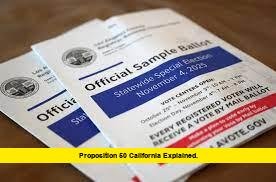

Proposition 50 California explained: This highly discussed ballot measure is heading to voters in November 2025, aiming to temporarily shift how congressional district maps are drawn in California. The measure has sparked intense debate across the state, with major implications for both California’s representation in Congress and the broader balance of power in Washington.
What Is Proposition 50?
Proposition 50 proposes to allow the California State Legislature to redraw congressional district maps before the next scheduled redistricting cycle. Normally, this process is handled by the California Citizens Redistricting Commission, an independent body designed to ensure fairness and transparency.
If voters approve Proposition 50, the Legislature would temporarily take over that responsibility until after the 2030 Census. The new maps would then apply to elections from 2026 through 2030. After that, the independent commission would resume its traditional role.
In simple terms, Proposition 50 California explained means that the state Legislature would take control of redistricting for a limited time, creating a mid-decade redraw instead of waiting for the next census.
Why Proposition 50 Was Introduced
Proposition 50 emerged in response to recent nationwide redistricting changes, particularly in states where partisan map drawing has given one party a stronger advantage. Lawmakers in California argued that without a mid-cycle adjustment, the state could lose influence in Congress while other states aggressively reshape their maps.
Supporters say the measure helps protect California’s representation and ensures that the state remains competitive on the national stage. They argue that states like Texas and Florida have already used redistricting to shift political control — and that California cannot afford to sit idle.
Opponents, however, argue that Proposition 50 undermines the independence of California’s redistricting system. They see it as a political maneuver designed to favor one party and weaken voter trust in fair elections.
Key Provisions of Proposition 50
Here’s a breakdown of what the measure does:
- Temporary Legislative Control: The California Legislature would gain authority to redraw congressional districts beginning in 2026.
- Limited Duration: The change would last until the 2030 election cycle, after which the Citizens Redistricting Commission would resume control.
- No Change to State or Local Maps: Proposition 50 only affects congressional boundaries, not state legislative or local district lines.
- Implementation Timeline: If passed, new maps would be used starting with the 2026 congressional elections.
Supporters’ Viewpoint
Proponents of Proposition 50 argue that it’s a defensive measure — one intended to protect California voters’ representation in a changing national landscape. They believe that allowing a temporary redistricting effort would counterbalance partisan redrawing in other large states.
Supporters emphasize these points:
- It keeps California competitive in Congress and ensures that the state’s values are reflected nationally.
- The measure is temporary and narrowly focused, restoring the independent commission’s authority after 2030.
- The Legislature, they argue, remains accountable to voters and must follow transparency rules during the redistricting process.
Governor Gavin Newsom and several high-profile state Democrats have endorsed the proposition, framing it as a necessary response to national redistricting trends that favor certain political groups.
Opponents’ Arguments
Critics say Proposition 50 represents a rollback of reform. California voters previously created the Citizens Redistricting Commission to take politics out of map-drawing. Handing that power back to lawmakers, even temporarily, is seen as a step backward.
Key points raised by opponents include:
- It undermines voter-approved independence by letting politicians draw their own districts.
- It could lead to gerrymandering — manipulating boundaries to benefit one party or incumbent lawmakers.
- The special election itself is costly and unnecessary, coming just a year before the 2026 midterm cycle.
Many civic groups, political watchdogs, and members of the state’s minority parties have voiced strong opposition, saying Proposition 50 could damage public trust in California’s commitment to fair elections.
Current Political Climate
As of October 2025, polling indicates that voters are divided. Roughly half of Californians support Proposition 50, while others remain undecided or opposed. Awareness is still growing, with both sides launching major campaigns ahead of the November 4 special election.
Campaign spending is soaring, with millions pouring into advertising, outreach, and mail campaigns. Analysts predict one of the most expensive ballot fights in California’s recent history, given how central congressional control is to both parties.
How Proposition 50 Affects Voters
For most Californians, the measure’s outcome won’t immediately change how they vote — but it could alter which district they vote in beginning in 2026. A redrawn map could shift boundaries, move communities, or change which representative serves them in Washington.
Key voter considerations:
- Mail-in Ballots: Sent automatically to all registered voters in mid-October 2025.
- Election Day: November 4, 2025.
- Registration Deadline: Late registration is available through Election Day at county voting centers.
- Ballot Drop-off: Secure drop boxes are available statewide, and voters can track their ballots online.
Election officials have also increased security after reports of attempted ballot thefts in Sacramento County earlier this month. Additional tracking and identification measures have been reinforced to maintain voter confidence.
Impact Beyond California
Although Proposition 50 focuses on California, the results could influence national politics. The state currently holds 52 congressional seats, and even minor changes could affect the balance of power in the U.S. House of Representatives.
If the Legislature redraws boundaries in ways that strengthen one party’s hold, it could tilt multiple races in upcoming federal elections. Political experts view the proposition as a major test of redistricting strategy nationwide — potentially inspiring similar efforts in other states if it passes.
What to Watch Next
- Debates and Ads: Expect an uptick in televised debates, campaign commercials, and social media discussions throughout October.
- Legal Challenges: If the measure passes, lawsuits over redistricting fairness are almost certain to follow.
- Turnout Rates: Voter turnout will be closely monitored, as special elections often attract fewer participants — something both sides are keenly aware of.
Whether Proposition 50 passes or fails, it will shape California’s political landscape for years to come, influencing how communities are represented and how political power is distributed.
Proposition 50 California explained shows how one state’s ballot measure can carry national importance. As the special election approaches, all eyes are on California’s voters to see how they define fairness and representation in 2025.
We’d love to hear your opinion — share your thoughts in the comments and stay tuned for updates as Election Day approaches.