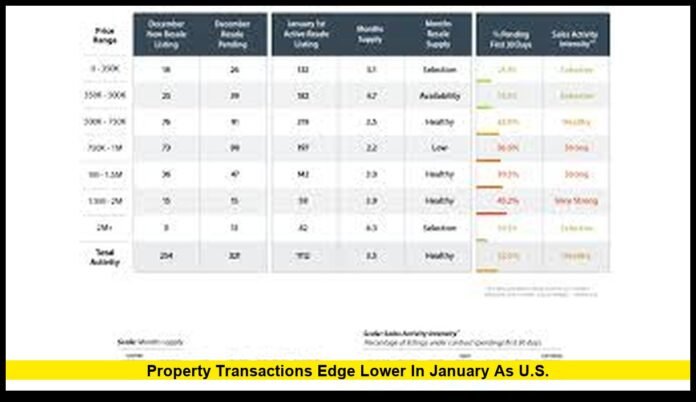

Property transactions edge lower in January, with newly released U.S. housing data showing a month-over-month decline in home sales activity to start 2026. National figures for existing-home sales and pending contracts both indicate softer movement compared with December, reflecting seasonal slowdowns and continued affordability pressure from elevated mortgage rates.
For buyers, sellers, real estate professionals, and investors across the United States, January’s numbers set the tone for the year ahead. Here is a comprehensive look at what the latest confirmed data reveals about transaction volume, pricing trends, inventory levels, and what may come next.
January 2026 Existing-Home Sales Dip
Existing-home sales represent the majority of residential property transactions in the country. In January 2026, completed sales declined compared with the prior month.
The slowdown follows a typical seasonal pattern. January often produces weaker activity due to colder weather, fewer listings, and post-holiday financial resets. However, current affordability conditions also continue to influence buyer decisions.
Key January observations include:
- A measurable month-over-month decrease in completed transactions.
- Sales activity remaining below long-term historical averages.
- Ongoing supply limitations in many metro areas.
Higher borrowing costs remain a primary factor shaping the market.
Pending Home Sales Show Reduced Contract Signings
Pending home sales, which measure signed purchase contracts, also moved lower in January. Because pending sales usually close within 30 to 60 days, this metric provides insight into upcoming activity.
January trends indicate:
- Fewer contract signings compared with December.
- Mixed regional performance.
- Continued caution among buyers navigating mortgage rate fluctuations.
The dip in pending transactions suggests February and March closings could remain moderate unless demand strengthens during the spring season.
Mortgage Rates Continue to Influence Buyer Behavior
Mortgage rates remain a central driver of housing activity in early 2026.
Although rates have stabilized compared with peak volatility seen in earlier years, they remain significantly higher than pandemic-era lows. That shift affects monthly affordability for millions of Americans.
For example:
- Even a small rate increase can raise monthly payments by hundreds of dollars.
- First-time buyers face greater barriers due to both rate levels and home prices.
These financial dynamics directly contribute to the trend that property transactions edge lower in January.
Buyers are increasingly selective and price-sensitive.
Median Home Prices Remain Stable
Despite slower transaction volume, home prices have not collapsed. Instead, national data shows moderate price stability with modest year-over-year growth in many areas.
January 2026 highlights:
- Continued price resilience in supply-constrained regions.
- Slower appreciation compared with the rapid gains of 2021 and 2022.
- Price adjustments in certain overheated markets.
Limited housing supply continues to support pricing levels. However, the pace of appreciation has cooled as buyers exercise greater caution.
Inventory Levels Show Gradual Improvement
Housing inventory remains one of the most important variables affecting transaction volume.
January data shows:
- Total active listings slightly higher than one year ago.
- Inventory levels still below historical averages.
- Modest growth in new listings entering the market.
Many homeowners who secured ultra-low mortgage rates in prior years remain reluctant to sell. That “rate lock” effect limits supply growth.
An increase in listings could stimulate more transactions later in the year if buyer demand responds.
Regional Performance: A Closer Look
The housing market varies significantly by region. January data reflects these geographic differences.
Northeast
- Modest decline in transaction volume.
- Limited supply supports price stability.
- Urban and suburban markets show mixed results.
Midwest
- Smaller month-over-month decline compared with other regions.
- Relatively stronger affordability.
- Steady buyer interest in mid-sized metro areas.
South
- Continues to account for the largest share of national sales.
- Slight slowdown in January activity.
- Population growth remains a long-term demand driver.
West
- Higher median prices influence affordability.
- Noticeable cooling in certain high-cost markets.
- Increased time on market compared with prior years.
These regional variations demonstrate that national averages do not tell the full story.
Days on Market and Negotiation Trends
Homes are spending more time on the market compared with the fast-paced environment of earlier years.
January trends reveal:
- Increased average days on market in multiple regions.
- More frequent price reductions before closing.
- Greater room for negotiation in some markets.
Buyers now have more leverage than during peak competitive periods. Sellers must price properties strategically to attract interest.
New Construction and Its Impact
New construction contributes to overall transaction totals.
Recent housing data shows:
- Builders remain active but cautious.
- Housing starts fluctuate month to month.
- Completion rates have improved compared with supply chain disruption years.
New-home sales can offset declines in existing-home transactions, but January also showed moderation in new construction activity.
Builders continue to monitor buyer demand and financing conditions closely.
Investor Participation Moderates
Investor purchases surged during the low-rate period earlier in the decade. Activity has since moderated.
January figures indicate:
- A lower share of investor purchases compared with peak years.
- Fewer all-cash transactions.
- Stronger presence of owner-occupant buyers.
The shift toward traditional buyers reflects a more normalized housing environment.
Economic Conditions Supporting the Market
Broader economic conditions remain relatively stable in early 2026.
Key indicators include:
- Ongoing job growth.
- Moderating inflation compared with previous peaks.
- Continued monitoring of monetary policy.
Stable employment supports housing demand. However, elevated borrowing costs still limit purchasing power.
Consumer confidence plays a role in transaction timing.
Comparing January 2026 to Prior Years
When compared with January 2025:
- Inventory has improved modestly.
- Price growth has slowed.
- Transaction volume remains below pre-2020 levels.
The market has adjusted from rapid pandemic-era growth to a steadier, more balanced environment.
While activity remains subdued compared with peak years, it is not experiencing a sharp collapse.
Why January Typically Shows Lower Sales
Seasonal factors historically reduce January activity.
Contributing elements include:
- Cold weather in many regions.
- Fewer listings during the holiday season.
- Delayed decision-making after year-end expenses.
- Family relocation timing tied to school calendars.
This seasonal softness, combined with affordability constraints, explains much of the month’s decline.
What Buyers Should Consider
Buyers navigating the January market may find:
- Reduced competition compared with spring months.
- Increased opportunity for negotiation.
- Greater time to conduct inspections and due diligence.
However, financing costs remain a critical consideration. Buyers should evaluate total monthly expenses carefully.
What Sellers Should Consider
Sellers entering the market in early 2026 should focus on:
- Accurate pricing aligned with local comparables.
- Property presentation and staging.
- Flexibility during negotiations.
Homes priced aggressively may sit longer in a slower winter market.
Outlook for Spring 2026
Spring traditionally brings stronger listing activity and higher transaction volume.
Market participants will watch:
- Mortgage rate movements.
- Inventory increases.
- Buyer confidence trends.
- Regional employment data.
If borrowing costs ease, transaction activity could rebound in the second quarter.
For now, January signals cautious participation.
Final Analysis
The fact that property transactions edge lower in January reflects a housing market balancing seasonal slowdowns with affordability constraints. Confirmed data shows modest declines in both completed sales and pending contracts, while prices remain generally stable and inventory gradually improves.
The U.S. housing market is adjusting rather than collapsing. Stability in employment and measured supply growth provide a foundation for potential recovery as the year progresses.
What trends are you seeing in your local housing market this winter? Share your insights and stay informed as new data shapes the 2026 real estate landscape.