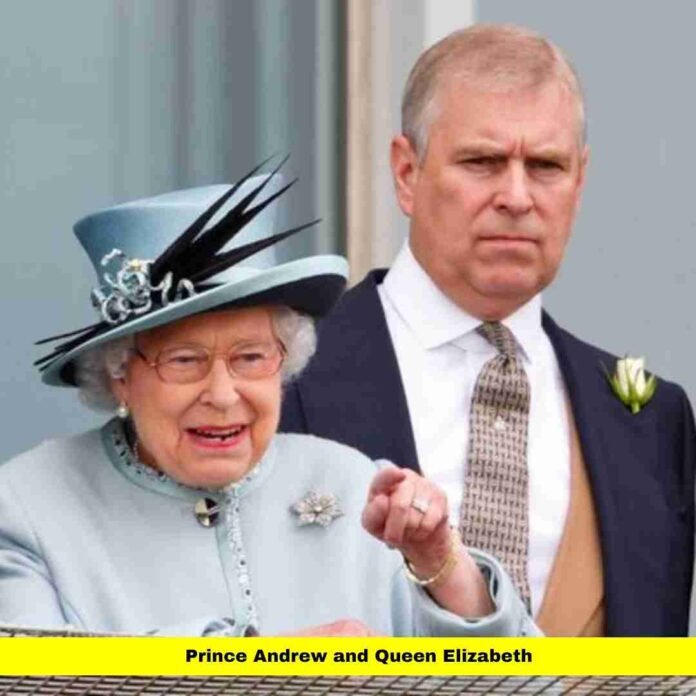

In an unfolding drama that has captured global attention, the relationship between prince andrew and queen elizabeth continues to shape one of the most extraordinary chapters in modern British royal history. While Queen Elizabeth II passed away in 2022, her legacy — and the contrasting path of her son Andrew — remains a topic of deep public interest and significant news developments.
Today’s story goes beyond old headlines. Recent verified events have pushed the once-senior royal into unprecedented legal and personal territory, raising questions about how his past actions reflect on the royal institution his mother led for 70 years.
Across the United States and around the world, audiences now follow not just historical ties but fresh legal actions, shifts in titles, and dramatic changes in Andrew’s life. This article chronicles the full arc of his journey, his ties to Queen Elizabeth II during her reign, and where things stand today.
Early Life and Royal Lineage
Prince Andrew was born in 1960 as the second son of Queen Elizabeth II and Prince Philip, Duke of Edinburgh. As part of the House of Windsor, he grew up in the public eye and was groomed for service.
He pursued a military career in the Royal Navy, where he served as a helicopter pilot during the Falklands War. His active service and youthful energy earned him respect as a capable and dedicated officer within the navy.
During much of his adult life, Andrew represented his mother at ceremonial occasions and diplomatic functions. In that sense, his role was intertwined with Queen Elizabeth’s long reign, which began in 1952 and lasted until her death in 2022.
Marriage and Family Under the Queen’s Reign
In 1986, Andrew married Sarah Ferguson, a union that became a highly visible part of the royal family narrative. Their marriage produced two daughters, Princess Beatrice and Princess Eugenie, who continued the Windsor lineage.
For years, the family attended events and fulfilled royal duties under the sovereign leadership of Queen Elizabeth II. The queen, known for her steadfast dedication to duty and service, presided over decades of continuity and stability in the monarchy.
Although Andrew and Sarah Ferguson separated in 1992 and divorced in 1996, his position within the royal family remained prominent for years afterward. The Queen continued to support her son’s official roles even as scrutiny began to build around his associations.
Emerging Controversy in the 21st Century
Andrew’s reputation began to shift dramatically in the early 2000s. The public’s focus on a close friendship with a controversial American financier grew intense and sustained.
By the 2010s, his ties to this individual had become a liability. Despite his denials of wrongdoing, media and legal pressure mounted. This culminated in significant public and private fallout for Andrew that would eventually reshape his place in the royal family.
Under Queen Elizabeth II’s reign, steps were taken to reduce his public responsibilities. In 2019, following a deeply criticized interview about these matters, he withdrew from official duties. The Queen’s actions reflected the seriousness with which the palace viewed the situation while still preserving her son’s dignity within the institution.
Queen Elizabeth’s Actions and Legacy
Queen Elizabeth II’s tenure was marked by continuity and modernization. She navigated constitutional challenges, family events, and global shifts with an unshakeable focus on duty.
During the controversies involving Andrew, the Queen took measured action. She gradually removed her son’s military affiliations and public roles as evidence continued to accumulate about the concerning relationship and conduct.
These decisions underscored her commitment to the monarchy’s institutional integrity while managing delicate family dynamics. Her approach to Andrew’s situation balanced personal affection with the weight of public responsibility.
Transition to King Charles III
When Queen Elizabeth II died in 2022, her oldest son succeeded her as King Charles III. The new monarch inherited not only the crown but also complex family dynamics and unresolved controversies.
King Charles III’s reign has involved steering the monarchy through a landscape very different from that of his mother’s early years — including renewed scrutiny around past actions by members of the royal family.
One of his earliest major decisions regarding his brother Andrew was to remove remaining royal titles and functions associated with him. From 2025 onward, Andrew ceased to be styled as a prince and former Duke of York, reflecting a clear departure from his historical standing while Queen Elizabeth was sovereign.
Stripping of Titles and Royal Standing
In October 2025, King Charles III made the decision to strip his brother of all royal titles and honors, including the historic “Prince” designation. Andrew was ordered to vacate his long-term residence at Royal Lodge, an estate he had occupied for more than two decades.
These actions marked an extraordinary break from tradition. Whereas Queen Elizabeth had slowly withdrawn Andrew from public roles, Charles took further steps that removed formal recognition entirely. Andrew would henceforth be known as Andrew Mountbatten-Windsor — a clear indication of his changed status.
This shift underlines how the monarchy under Charles has prioritized institutional integrity and public accountability.
Legal Confrontation and Arrest
The most dramatic recent development in Andrew’s story happened on his 66th birthday in February 2026. Thames Valley Police arrested him on suspicion of misconduct in public office, specifically linked to allegations arising from released documents connected to the Epstein investigation.
The arrest occurred at his residence on the Sandringham estate, and searches were also conducted at other properties. Police actions had intensified following the release of millions of pages of records that included emails and records suggesting Andrew may have shared sensitive information with the now-deceased financier.
This arrest is historic. It marks the first time in centuries that a senior member of the British royal family has been detained in connection with allegations of misconduct. Under the charges being considered, “misconduct in public office” carries a maximum penalty that could include life imprisonment.
As of now, Andrew remains in police custody, and authorities continue to investigate the scope of alleged actions during his tenure as a trade envoy for the United Kingdom.
Public and Political Response
News of the arrest reverberated across Britain and beyond. The UK prime minister affirmed that no individual, regardless of background or status, is above the law.
King Charles III issued a written statement emphasizing his support for a thorough legal process and stating that the law must take its course. The ruling monarch and his family have expressed a commitment to public duty even as they navigate the repercussions of this unprecedented situation.
Members of the royal family, including Queen Camilla and members of the next generation, have continued with public engagements, demonstrating continuity and stability within the institution despite the legal turmoil engulfing Andrew.
This Was Once Queen Elizabeth’s Favorite Son
Historically, Andrew was often described as Queen Elizabeth’s favorite. He was present at family events, state occasions, and represented her on many occasions throughout his adult life.
Yet it was a combination of personal decisions, public backlash, and emerging evidence that gradually eroded his standing. The contrast between his early prominence under his mother’s reign and his present predicament is stark.
Today, Queen Elizabeth’s legacy is invoked not to defend her son but to contextualize the dramatic arc of his life — from a favored royal to a former prince under arrest.
Andrew’s Career Before Controversy
Before his fall from royal favor, Andrew’s career included notable public service. He served in the Royal Navy and was involved in diplomatic and trade roles on behalf of the United Kingdom.
His role as a trade envoy took him across the world, forging economic ties and representing British interests abroad. These activities continued until around 2011, when scrutiny of his expenses and associations led to his resignation from that role.
Despite stepping back from military and diplomatic duties, he continued to undertake occasional official appearances until his withdrawal in 2019.
Long-Term Consequences of the Epstein Association
The association with Jeffrey Epstein — a convicted sex offender whose network spanned global elites — was always a sensitive part of Andrew’s story. The controversy resurfaced multiple times as new documents, emails, and photographs emerged in batches over the past several years.
Criticism centered on perceptions of judgment, accountability, and the potential misuse of privileged access. Andrew has consistently denied any wrongdoing related to the allegations.
However, the legal and public fallout grew to the point where King Charles’s actions in removing titles and formal functions were seen as necessary steps to protect the monarchy’s reputation and uphold the rule of law.
Andrew’s Place in the Line of Succession
Even after losing his royal titles, Andrew remains in the line of succession to the British throne. As of 2026, he is eighth in line — a reminder that constitutional rules govern royal succession independently of titles granted by the monarch.
Removing someone from the line of succession would require an act of Parliament rather than a personal decision by the king. Consequently, although he no longer carries the formal style of “prince,” his hereditary place following his elder siblings remains unchanged.
The Royal Family’s Public Representation
In the wake of Andrew’s arrest, the rest of the royal family has continued its public duties. King Charles III and Queen Camilla have remained active in official engagements.
In a striking display of continuity, the King attended a major fashion event in London on the same day that Andrew was taken into custody. The contrast highlighted the monarchy’s ability to maintain its institutional responsibilities while addressing internal crises.
Camilla, as Queen, has also continued her patronages and engagements, projecting a composed public presence amid challenges.
How Public Perception Has Shifted
Public perception of Prince Andrew has evolved considerably from earlier decades. When Queen Elizabeth was on the throne, Andrew was among the working royals with public visibility. Over time, as controversies mounted, his public profile diminished.
Today, many view his arrest as a watershed moment for accountability, not just within the royal family but within global conversations about power and privilege.
At the same time, opinions vary widely; his supporters emphasize denial of wrongdoing and due process, while critics underscore the importance of transparency and justice.
Queen Elizabeth’s Enduring Legacy
Even as the royal family grapples with present concerns, Queen Elizabeth’s legacy remains a defining backdrop. Her reign was the longest in British history, a period marked by stability, ceremony, national continuity, and global respect.
Her approach to duty contrasted starkly with the present complexities faced by members of her family, particularly Andrew.
Today’s developments do not diminish her legacy but illustrate the modern challenges of monarchy in an age of public scrutiny, legal accountability, and global media.
What do you think about this unprecedented royal chapter and its implications for the future of the monarchy? Share your thoughts below and follow for continued updates.