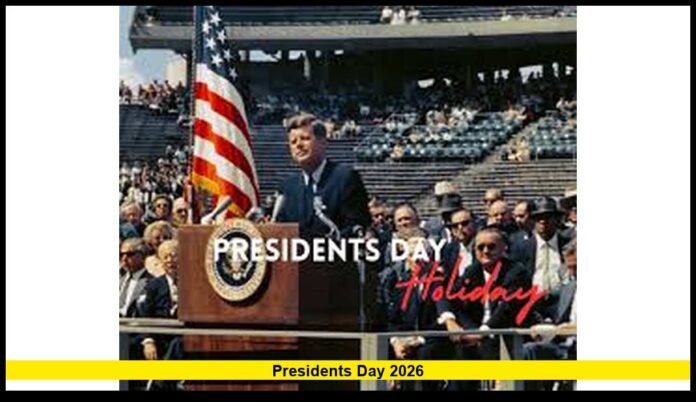

Presidents Day 2026 arrives as a nationally recognized federal holiday that affects daily life across the United States, from government operations and school schedules to banking services, travel plans, and workplace routines. Observed each year on the third Monday of February, the holiday serves as both a tribute to presidential leadership and a practical pause during the winter calendar.
In 2026, Presidents Day falls on Monday, February 16, providing millions of Americans with a three-day weekend. The holiday remains one of the most widely observed federal observances, shaping how institutions, businesses, and families plan their schedules in the early part of the year.
This article explains everything U.S. readers need to know about the holiday, including its confirmed date, federal status, closures, school impacts, banking operations, travel trends, retail activity, and what happens once the holiday concludes.
When Is Presidents Day Observed in 2026?
Presidents Day in 2026 will be observed on Monday, February 16, continuing the federal tradition of holding the holiday on the third Monday of February each year. Because the date shifts annually, the 2026 calendar places the observance squarely in the middle of the month, offering a predictable long weekend for millions of Americans.
Originally established to honor George Washington’s birthday, the holiday has gradually evolved in public perception. Today, many people view Presidents Day as a broader recognition of the nation’s leadership history, even though the official federal name remains unchanged. Retailers, travel companies, and schools have adapted to this modern interpretation, often treating the weekend as a major seasonal milestone.
In 2026, federal government offices, courts, and postal services will close in observance of the holiday, while many banks and state agencies are also expected to suspend operations. Schools and private employers may follow different schedules, depending on local policies.
Recent planning trends show Presidents Day weekend continuing to play a key role in winter travel and retail activity. With its guaranteed three-day break, the holiday remains a popular time for short vacations, sales events, and family gatherings, reinforcing its status as one of the most widely recognized long weekends on the U.S. calendar.
Why Presidents Day Falls on a Monday
Presidents Day falls on a Monday because of a deliberate shift in how federal holidays are scheduled in the United States. When the holiday was first established, it was observed on February 22, the actual birthday of George Washington. For many years, the date was fixed on the calendar, regardless of which day of the week it landed on.
That changed in the late 20th century, when lawmakers moved to modernize the federal holiday system. The goal was to create more predictable time off for workers by clustering holidays around weekends. This effort led to the adoption of a system that placed several major holidays on Mondays, guaranteeing three-day weekends for much of the workforce.
As part of this change, Washington’s Birthday was reassigned to the third Monday of February. This adjustment ensured a consistent long weekend every year, even though it meant the holiday would never again fall on Washington’s actual birth date. Notably, the third Monday can occur as early as February 15 or as late as February 21, keeping the observance near—but never on—the 22nd.
Today, this Monday placement shapes how Presidents Day is experienced nationwide. It supports travel, retail events, and school schedules while still preserving the holiday’s connection to presidential history and national leadership.
Is Presidents Day 2026 a Federal Holiday?
Yes, Presidents Day 2026 is an official federal holiday in the United States, observed nationwide on Monday, February 16. Its federal designation means the holiday is formally recognized by the U.S. government and included on the annual federal holiday calendar.
As a result, all non-essential federal government offices will be closed for the day. Federal courts will not hold regular sessions, and most federal employees will receive a paid day off. Many state and local government offices also follow the federal schedule, leading to additional closures or reduced services depending on jurisdiction.
While private businesses are not required to close, a large number choose to align with the federal holiday. Banks, financial institutions, and some school districts commonly adjust their schedules, and many employers either close offices or operate with limited staffing. Retailers, on the other hand, often remain open and treat the day as a major sales event.
Because Presidents Day is guaranteed to fall on a Monday, it creates a three-day weekend that is widely anticipated each year. This consistency makes it a key planning point for workplaces, families, and travelers, reinforcing its status as one of the most impactful federal holidays on the U.S. calendar.
Presidents Day 2026 in the Federal Holiday Calendar
Presidents Day 2026 holds an important place in the federal holiday calendar, serving as one of the first major nationwide observances of the year. Falling on Monday, February 16, it comes shortly after Martin Luther King Jr. Day in January and well before Memorial Day, which signals the unofficial start of summer.
Because it arrives during late winter, Presidents Day often acts as a natural midpoint between the beginning of the year and the gradual transition into spring. For many workplaces and schools, it is the last widely observed long weekend before the busy stretch of March and April. This timing makes it especially significant for scheduling academic calendars, business planning, and early-year travel.
From a federal standpoint, Presidents Day also helps establish the rhythm of government operations for the year. Agencies, courts, and offices experience one of their earliest planned closures, setting expectations for how federal holidays will be handled in the months ahead.
Beyond its administrative role, the holiday’s calendar placement has cultural and economic impact. Retail promotions, winter travel, and family activities often center around the long weekend, reinforcing Presidents Day as a seasonal checkpoint that bridges the quiet start of the year with the momentum of spring.
What Presidents Day Represents Today
Today, Presidents Day represents a broader reflection on American leadership rather than a tribute to a single historical figure. Although the holiday’s official federal name remains Washington’s Birthday, public understanding has expanded well beyond its original intent of honoring George Washington alone.
For many Americans, Presidents Day now symbolizes the office of the presidency itself—an institution that carries responsibility, authority, and lasting influence over the nation’s direction. The holiday invites reflection on how presidential leadership has shaped the country across different eras, political climates, and historical challenges.
Rather than focusing solely on individual achievements, modern observance often centers on the evolving role of presidents in guiding national priorities, responding to crises, and representing the United States at home and abroad. Schools and civic discussions frequently use the holiday as an opportunity to examine leadership qualities, democratic values, and the balance of power within government.
At the same time, Presidents Day has become woven into everyday life through long weekends, travel, and seasonal traditions. This blend of civic meaning and modern observance reflects how the holiday has adapted over time. Today, Presidents Day functions less as a birthday commemoration and more as a moment to consider leadership, legacy, and the ongoing impact of the presidency on American society.
How Presidents Day 2026 Is Observed Nationwide
Presidents Day 2026 will be observed nationwide on Monday, February 16, with traditions and practices varying across regions, institutions, and workplaces. While the holiday is federally recognized, how it is experienced depends largely on local policies and organizational decisions.
Government Offices and Public Services
At the federal level, Presidents Day brings a full pause to routine government operations. Federal offices will be closed for the day, and federal courts will suspend regular sessions. Many state and local government offices also shut down or operate on limited schedules. Administrative public services, such as licensing and permitting offices, typically pause until operations resume on Tuesday. Emergency services, including police, fire, and medical response teams, continue to operate without interruption to ensure public safety.
Schools and Educational Institutions
Schools observe Presidents Day differently depending on district and academic calendars. Many public school systems close entirely, giving students and staff a day off. Some districts incorporate the holiday into a longer winter break, while others treat it as a standalone closure. Private schools have greater flexibility and may choose whether or not to observe the day. Colleges and universities also vary, with some closing campus offices and others maintaining normal class schedules.
Workplaces and Private Employers
In the private sector, observance is not uniform. Many employers provide a paid holiday or close offices entirely, especially in industries closely aligned with federal schedules. Others offer flexible work arrangements or operate with reduced staffing. Retailers, hospitality businesses, and essential services often remain open, sometimes experiencing increased activity due to the long weekend.
Together, these varied observances make Presidents Day a nationwide pause point—balancing civic recognition, operational downtime, and modern work patterns.
Presidents Day 2026 and Banking Operations
Presidents Day 2026 will have a noticeable impact on banking operations across the United States. Because the holiday is federally recognized, most banks will be closed on Monday, February 16, 2026, aligning their schedules with the federal holiday calendar.
Customers should plan ahead, as in-branch banking services will not be available for the day. This includes teller services, account assistance, and loan processing at physical locations. However, banks are prepared to maintain access through digital channels. ATMs will remain operational, allowing customers to withdraw cash, make deposits at enabled machines, and complete basic transactions. Online and mobile banking platforms will continue to function normally, giving customers the ability to check balances, transfer funds, and pay bills without interruption.
It is important to note that while digital transactions can be initiated on Presidents Day, certain payments, deposits, and transfers may not post until the next business day. This can affect direct deposits, wire transfers, and bill payments with time-sensitive deadlines. Customers are encouraged to account for the holiday when scheduling payments to avoid delays or fees.
Normal banking operations are expected to resume on Tuesday, February 17, 2026, when branches reopen and standard processing timelines return.
Postal Services on Presidents Day
Postal services on Presidents Day follow the federal holiday schedule, and Presidents Day 2026 will be no exception. On Monday, February 16, standard postal operations across the United States will pause in observance of the holiday.
On this day, post offices will be closed, meaning customers will not be able to access in-person mailing services, purchase postage at counters, or pick up held mail. Regular mail delivery will not take place, including standard letters and most routine packages. Residential and business mailboxes will not receive their usual deliveries.
Some package shipments may experience temporary delays, particularly those that rely on standard delivery schedules. Items already in transit may be held until the next business day before continuing through the system. However, private carriers operate under their own holiday policies and may follow different schedules.
Postal operations are expected to resume on Tuesday, February 17, 2026, with normal mail collection and delivery returning. Customers are advised to plan ahead for time-sensitive mail, payments, or documents to account for the one-day pause in service caused by the federal holiday.
Financial Markets and the Holiday
Financial markets in the United States generally align their schedules with federal holidays, and Presidents Day 2026 is no exception. While market operations vary by asset class, the holiday creates a temporary pause that affects trading activity and transaction processing.
On Presidents Day, U.S. bond markets are closed, halting trading in Treasury securities, corporate bonds, and municipal debt for the day. As a result, settlement timelines shift, since transactions that would normally settle on Monday are pushed to the next business day. This can affect cash flows, interest calculations, and payment schedules tied to fixed-income instruments.
Other financial processes that depend on clearing and settlement systems may also experience brief delays. Even when certain markets or platforms remain technically open, underlying settlement infrastructure often follows the holiday calendar, limiting final transaction processing until after the break.
Because of these adjustments, investors, financial institutions, and businesses typically plan transactions in advance. Deadlines for payments, trades, and contractual obligations are often moved up to avoid complications. Normal market activity and processing resume on the first business day after the holiday, restoring standard settlement and operational timelines.
Travel Patterns During Presidents Day Weekend
Presidents Day weekend is consistently one of the busiest winter travel periods in the United States, driven by the guaranteed three-day break and its timing in mid-February. In 2026, the long weekend surrounding Monday, February 16, is expected to follow well-established national travel patterns.
Domestic travel typically sees a noticeable surge, as travelers favor shorter trips that fit comfortably within the long weekend. Airports and major highways become especially busy, particularly on Friday afternoons and Monday evenings, when departures and returns peak. Travelers are often encouraged to plan departures earlier in the day to avoid congestion.
Hotel occupancy rates tend to rise sharply in winter-focused destinations, including ski resorts, mountain towns, and warm-weather locations in the South and Southwest. Popular family-friendly destinations often see limited availability, reflecting the strong demand tied to school closures and flexible work schedules.
Rather than extended international travel, most trips during Presidents Day weekend are short getaways. Families and couples frequently choose regional destinations that can be reached quickly, maximizing leisure time while minimizing travel fatigue. This combination of accessibility, seasonal appeal, and a built-in long weekend continues to make Presidents Day a key moment in the winter travel calendar.
Tourism and Cultural Engagement
Presidents Day plays a meaningful role in boosting tourism and cultural engagement across the United States, particularly at sites connected to national history and civic life. With many people off work and school for the long weekend, the holiday creates opportunities to explore educational and historical destinations in a relaxed, accessible way.
Many Americans use Presidents Day weekend to visit monuments and memorials, especially in cities rich with national landmarks. Museums often see increased attendance, and some offer special programming, exhibitions, or family-focused activities tied to presidential history and American government. These events help make history more engaging for visitors of all ages.
The holiday also encourages participation in educational activities, such as guided tours, lectures, and interactive exhibits that highlight leadership, democracy, and the nation’s founding principles. Historic homes, preserved sites, and cultural centers frequently experience higher foot traffic during this period as travelers seek meaningful experiences alongside leisure.
By combining time off with opportunities for learning, Presidents Day supports a deeper public connection to U.S. history. Rather than being solely a break from routine, the holiday often becomes a gateway for reflection, discovery, and cultural exploration rooted in the country’s past and evolving identity.
Retail Activity Around Presidents Day
Presidents Day has become firmly linked to retail activity across the United States, with the long weekend serving as a strategic point in the early-year shopping calendar. For many consumers, the holiday is now as much about seasonal deals as it is about time off.
Shoppers commonly encounter Presidents Day sales events, especially in sectors such as furniture, appliances, home improvement, and automotive. Retailers often use the holiday to offer discounts on large purchases, making it a popular time for consumers to plan higher-value spending. Clothing, electronics, and online retailers also participate, timing promotions to align with increased consumer availability.
Because the holiday falls on a Monday, promotions are typically stretched across the entire long weekend, encouraging both in-store and online shopping. This extended window helps retailers capture attention from shoppers who have more free time than usual.
As a result, foot traffic and online activity tend to increase during the Presidents Day period. For retailers, the holiday provides an important boost during the slower winter retail season, while consumers benefit from competitive pricing and flexible shopping opportunities tied to the extended break.
State-Level Observances and Variations
Although Presidents Day is recognized at the federal level, state-level observances can vary in name, emphasis, and scope. While most states align with the federal calendar and observe the holiday on the third Monday of February, how it is labeled and interpreted often reflects local traditions and historical priorities.
One common variation involves alternate holiday names. Some states continue to officially recognize the day as Washington’s Birthday, while others use Presidents Day or hybrid titles that reference more than one historical figure. In certain cases, the name reflects a broader tribute to presidential leadership rather than a single individual.
Other states place a stronger focus on specific historical figures, most notably George Washington or Abraham Lincoln, whose birthdays fall close together in February. Educational programming or public messaging in these states may highlight the contributions of those leaders more directly.
Some states also combine Presidents Day with existing state holidays or observances, streamlining closures and reducing calendar complexity. Despite these differences in naming and emphasis, the majority of states still observe the holiday on the same Monday, preserving nationwide consistency while allowing for regional interpretation.
Why Presidents Day 2026 Matters
Presidents Day 2026 matters because it serves multiple roles at once, blending civic meaning with practical value in modern American life. At its core, the holiday reinforces civic awareness by drawing attention to the presidency as an institution and its influence on the nation’s direction. Even without formal ceremonies for most people, the day creates space for reflection on leadership, responsibility, and democratic values.
The holiday also honors public service and leadership, acknowledging the weight of decisions made by those who have held the nation’s highest office. Rather than focusing on one individual, today’s observance encourages broader consideration of how presidential actions shape laws, culture, and national identity over time.
From a practical standpoint, Presidents Day provides an important winter break for families, students, and workers. Arriving during a long stretch between New Year’s Day and spring holidays, it offers a pause that supports rest, travel, and work-life balance during the colder months.
Finally, Presidents Day encourages reflection on national history in a way that feels accessible rather than ceremonial. By balancing historical significance with contemporary needs—such as predictable time off and economic activity—the holiday remains relevant, meaningful, and firmly woven into the rhythm of modern American life.
What Happens After Presidents Day 2026
After Presidents Day 2026 concludes, normal routines resume quickly across the United States. The long weekend ends, and Tuesday, February 17, 2026, marks a clear return to standard operations for both public institutions and private organizations.
On that day, federal offices reopen, restoring access to government services and administrative functions. State and local government agencies also resume regular hours, allowing delayed paperwork, licensing, and public services to move forward. Schools return to full academic schedules, bringing students and staff back after the midwinter pause. Banks and financial institutions reopen, restarting in-branch services and standard transaction processing, while businesses across most sectors restore normal hours and staffing levels.
For individuals and organizations that postponed tasks during the holiday weekend, Tuesday serves as a practical reset point. Appointments are rescheduled, transactions are completed, and operational backlogs are addressed as workflows normalize.
Looking ahead, there is a noticeable gap in the federal holiday calendar. The next major federal holiday after Presidents Day is Memorial Day in late May, creating a long stretch of uninterrupted work and school schedules. That transition shifts national focus from winter routines toward remembrance, warmer weather, and the unofficial beginning of summer.
Presidents Day 2026 in Everyday Life
Presidents Day 2026 fits naturally into everyday American life, serving as more than just a break from work or school. Its steady placement on the third Monday of February gives the holiday a familiar rhythm that people come to expect each year.
For many, it acts as a pause in the winter calendar, arriving during a long stretch of colder months with few major breaks. This pause offers a mental and physical reset, helping people recharge before the busy spring season begins. Families often use the long weekend as a chance for connection, whether through short trips, shared activities at home, or simple time together away from daily routines.
Presidents Day also provides a moment for historical reflection, even in subtle ways. Through school discussions, media coverage, or personal interest, the holiday encourages awareness of leadership, national history, and the evolution of the presidency. These reflections are often informal but still meaningful.
Finally, the holiday serves as a planning point for the months ahead. Businesses, schools, and households use it to recalibrate schedules and goals for the rest of the year. Because its timing is consistent and predictable, Presidents Day continues to hold a steady, practical place in American life.
Looking Ahead Beyond the Holiday
Once Presidents Day concludes, attention across the United States naturally shifts toward spring schedules, academic milestones, and the steady return of normal routines. Government offices, schools, and businesses resume full operations, while families and individuals refocus on work, education, and long-term planning for the year ahead. For many students, the period after Presidents Day marks an important stretch of the academic calendar, with classrooms moving toward testing cycles, project deadlines, and preparation for spring breaks.
The weeks following the holiday also signal a gradual seasonal transition. As daylight increases and winter weather begins to ease in many regions, communities see a rise in outdoor activities, local events, and travel planning. Sports seasons gain momentum, cultural programming expands, and households begin organizing schedules around spring commitments. Presidents Day often serves as the final significant pause before this shift, giving Americans a brief opportunity to reset before the pace of the year accelerates.
Looking forward on the national calendar, the next major federal observance is Memorial Day in late May, which marks a period of remembrance and the unofficial start of summer. Between Presidents Day and Memorial Day, the country moves through a phase defined by renewal, preparation, and forward momentum, making the close of the Presidents Day holiday a clear turning point in the annual rhythm of American life.
Final Thoughts on Presidents Day 2026
Presidents Day 2026 remains a meaningful national observance that blends historical reflection with modern life. Falling early in the year, it provides a welcome pause for families, workers, and students while encouraging reflection on leadership, civic values, and the presidency’s role in shaping the nation. The long weekend supports travel, family time, and community engagement, while schools and local organizations often use the occasion to promote civic learning and historical awareness. Whether experienced through education, leisure, or quiet reflection, Presidents Day 2026 continues to hold a steady and relevant place in the American calendar.
How do you plan to observe Presidents Day 2026? Share your thoughts and traditions in the comments below.