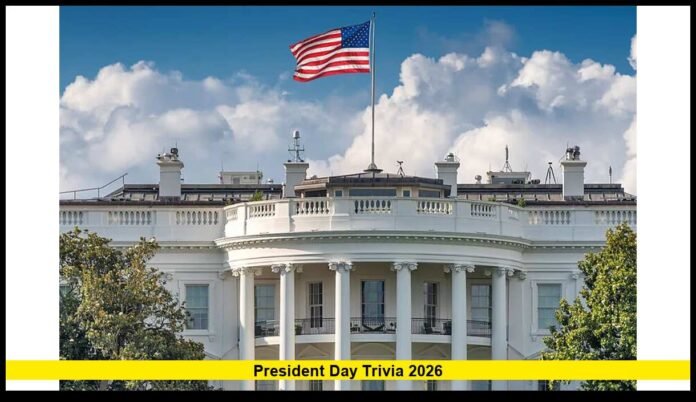

President day trivia captures national attention every February as Americans mark the federal holiday observed on the third Monday of the month. In 2026, the holiday falls on February 16, bringing government closures, retail promotions, and renewed interest in presidential history. Though commonly called Presidents’ Day, federal law still designates it as Washington’s Birthday, a detail that surprises many readers each year.
As of today, the observance remains unchanged at the federal level. Government offices close, financial markets pause trading, and the U.S. Postal Service suspends regular delivery. Schools and civic groups across the country continue to use the holiday to spotlight the lives and leadership of American presidents.
Below is a detailed, fully factual look at the history, structure, and most interesting records connected to this widely observed holiday.
The Origin of the Federal Holiday
The story begins with George Washington, born on February 22, 1732. Congress officially established Washington’s Birthday as a federal holiday in 1879. At that time, he was the only president honored with a national observance.
For decades, the holiday was celebrated on February 22. That changed after Congress passed the Uniform Monday Holiday Act in 1968. The law moved several federal holidays to Mondays to create consistent three-day weekends. The change took effect in 1971.
Since then, Washington’s Birthday has been observed on the third Monday of February. Because of that rule, the holiday can fall between February 15 and February 21—but never on February 22 itself.
Why Many Americans Call It Presidents’ Day
While federal law uses the name Washington’s Birthday, states and businesses began using “Presidents’ Day” in the late 20th century. The broader name reflects public recognition of multiple presidents, not only Washington.
The association with Abraham Lincoln played a major role in that shift. Lincoln was born on February 12, 1809. Several states once observed Lincoln’s Birthday separately. Over time, the two commemorations blended in popular culture.
Today:
- Federal documents list Washington’s Birthday.
- Many state calendars list Presidents’ Day.
- Retail advertising often uses Presidents Day without an apostrophe.
There is no national standard for punctuation. However, the plural possessive form, Presidents’ Day, appears most often in educational materials.
A Holiday That Never Matches the Actual Birthday
One of the most interesting facts in president day trivia is that the modern holiday never falls on Washington’s true birth date.
Because it is tied to the third Monday of February, the observance shifts yearly. The goal of the schedule change was worker convenience, not historical precision.
This adjustment has remained in place for more than five decades without modification.
Presidential Records That Still Stand in 2026
Interest in presidential milestones increases every February. These verified records remain accurate as of 2026:
- Youngest to assume office: Theodore Roosevelt, age 42.
- Youngest elected president: John F. Kennedy, age 43.
- Oldest at inauguration: Joe Biden, age 78 in 2021.
- Only president to serve four terms: Franklin D. Roosevelt.
The 22nd Amendment, ratified in 1951, now limits presidents to two elected terms.
How Many Presidents Has the U.S. Had?
As of 2026, the United States has experienced 46 presidencies.
That number includes the return of Donald Trump, who began a second, nonconsecutive term in January 2025. He is counted as the 47th president, but the total number of presidencies remains 46 because he previously served as the 45th.
This distinction often appears in presidential quizzes and classroom discussions.
Mount Rushmore and Presidential Legacy


5
The four faces carved into Mount Rushmore represent key chapters in American leadership:
- George Washington
- Thomas Jefferson
- Abraham Lincoln
- Theodore Roosevelt
The monument symbolizes founding, expansion, preservation, and development. Presidents’ Day often renews interest in visiting national landmarks that reflect American leadership.
Firsts in Presidential History
Several historical firsts remain central to the holiday’s educational focus:
- John Adams was the first president to live in the White House.
- Washington never resided there, as construction finished after his presidency.
- William Howard Taft later served as Chief Justice of the United States. He remains the only individual to hold both offices.
- Barack Obama became the first African American president in 2009.
These milestones continue to appear in civic programs each February.
What Closes on the Holiday
Presidents’ Day remains one of eleven federal holidays recognized nationwide.
On February 16, 2026:
- Federal offices close
- U.S. Postal Service operations pause
- Most banks close
- U.S. stock markets suspend trading
Private businesses may operate on adjusted schedules. Retail stores often extend hours due to holiday sales.
The Economic Impact of the February Weekend
Presidents’ Day has become one of the largest winter retail events in the United States.
Automotive dealerships traditionally launch major sales campaigns. Furniture and mattress retailers also promote seasonal discounts. Electronics brands use the long weekend for promotional pricing.
Despite the commercial activity, the holiday’s legal purpose remains tied to presidential recognition.
Presidents Who Share Notable Dates
Certain historical coincidences frequently appear in trivia collections:
- John Adams and Thomas Jefferson both died on July 4, 1826, exactly 50 years after the Declaration of Independence.
- James Monroe also died on July 4, in 1831.
These shared dates add depth to presidential history and remain well-documented.
How Schools and Communities Observe the Day
Educational institutions often incorporate presidential studies into February lesson plans. Activities may include:
- Biographical research projects
- Classroom debates
- Historical reenactments
- Civic engagement workshops
Museums and historical societies host themed exhibits and public programs. Digital platforms now stream many of these events, expanding national access.
The Difference Between Presidents’ Day and Independence Day
Presidents’ Day honors leadership. Independence Day celebrates the founding of the nation.
Here is a simple comparison:
| Presidents’ Day | Independence Day |
|---|---|
| Third Monday in February | July 4 |
| Honors U.S. presidents | Celebrates national independence |
| Federal offices closed | Federal offices closed |
| Focus on leadership history | Focus on 1776 founding |
Both holidays remain pillars of American civic culture.
Why Interest Continues to Grow
Search trends consistently rise in early February as families prepare for classroom events and holiday travel. Social media quizzes, historical posts, and trivia games further increase engagement.
President day trivia remains popular because it blends history with approachable facts. The holiday encourages reflection on leadership while maintaining a practical long weekend structure.
Key Dates in the Holiday’s Development
- 1732: Birth of George Washington
- 1879: Federal recognition of Washington’s Birthday
- 1968: Passage of Uniform Monday Holiday Act
- 1971: Modern Monday observance begins
- 2026: Continued nationwide observance
No structural changes to the holiday have occurred in recent years.
Why the Holiday Still Matters in 2026
Presidents’ Day connects Americans with more than two centuries of leadership history. It remains a reminder of constitutional governance and executive responsibility.
Though retail advertising dominates headlines, the holiday’s core purpose endures. Schools, civic organizations, and families continue to use the occasion to explore the lives of the nation’s presidents.
From Washington’s leadership during the nation’s founding to modern administrations shaping contemporary policy, the presidency remains central to American democracy.
Which presidential fact surprised you most this year? Share your thoughts and join the conversation as the nation marks another Presidents’ Day.