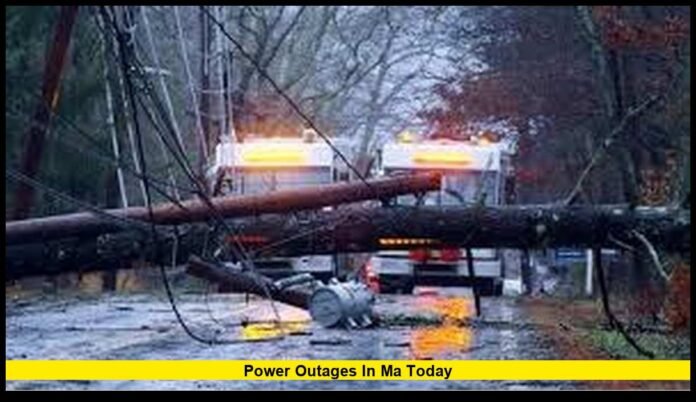

Power outages in MA today are affecting pockets of communities across Massachusetts on February 23, 2026, as electric utilities respond to scattered disruptions linked to wind, localized equipment faults, and infrastructure maintenance activity.
Crews from major providers continue restoration operations throughout the day, focusing on neighborhood-level outages rather than a single widespread blackout. Most customers statewide still have electricity, while smaller clusters remain without power during active repair work.
Statewide Snapshot of Current Outage Activity
Massachusetts is experiencing scattered outages across multiple regions rather than a unified grid failure.
Service interruptions today range from isolated street-level outages to larger feeder disruptions impacting several hundred customers. Outage maps show activity shifting throughout the day as crews restore service and new incidents appear.
Typical patterns include:
- Short-duration outages tied to equipment issues
- Tree contact with overhead lines
- Weather-related line damage
- Targeted shutdowns for urgent repairs
Utilities continue real-time monitoring to identify new disruptions quickly.
Regional Breakdown of Outages
Outage conditions differ across Massachusetts due to geography, weather exposure, and infrastructure layout.
Greater Boston and Eastern Massachusetts
Urban and suburban areas in eastern Massachusetts reported intermittent outages during the morning.
These disruptions often involve:
- Underground cable faults
- Local transformer failures
- Switching operations during repairs
- Tree limb interference in residential neighborhoods
Because infrastructure is dense, crews can often restore service quickly once the problem is located.
However, traffic signal outages and apartment building disruptions can affect large numbers of residents even when outage areas are small.
Central Massachusetts Conditions
Central Massachusetts frequently experiences outages tied to mixed suburban and wooded environments.
Current activity reflects:
- Line damage along residential corridors
- Wind-related branch contact
- Equipment issues affecting distribution feeders
Restoration timing varies depending on whether crews must clear vegetation before repairs begin.
Some outages in central communities resolve within hours, while others require extended work if multiple lines are involved.
Western Massachusetts Activity
Western parts of the state typically face more weather-driven outages, especially during winter.
Conditions today include:
- Snow accumulation in elevated terrain
- Wind exposure in rural areas
- Remote line damage requiring longer travel times for crews
Access challenges often influence restoration timelines. Crews may need specialized vehicles or additional personnel to reach affected infrastructure.
Utility Response Across the State
Massachusetts electric service is primarily managed by Eversource and National Grid, with smaller municipal utilities operating in select communities.
Eversource Restoration Operations
Eversource deployed field teams early today to assess damage and begin repairs.
Key actions include:
- Patrol crews identifying fault locations
- Vegetation management teams clearing lines
- Equipment replacement for damaged transformers
- Circuit switching to reroute electricity
The company prioritizes critical infrastructure, including hospitals, emergency services, and large outage clusters.
Crews then move to smaller neighborhood outages.
National Grid Restoration Operations
National Grid activated monitoring teams and dispatched repair crews across its service territory.
Operational focus includes:
- Real-time outage detection
- Rapid dispatch of local crews
- Coordination with municipal public works departments
- Updating estimated restoration times
National Grid also uses automated switching technology to restore some customers without field repairs.
How Outages Are Detected
Modern electric grids rely on automated systems that identify disruptions quickly.
Detection methods include:
- Smart meter outage alerts
- Grid sensors identifying voltage loss
- Customer outage reports
- Control center monitoring
Once an outage is confirmed, dispatch teams send crews to investigate.
Restoration Process Explained
Restoring electricity follows a structured process designed to return power safely and efficiently.
Typical steps include:
- Confirm the outage and determine its cause
- Isolate damaged equipment
- Repair or replace infrastructure
- Test system safety
- Restore service gradually
Large outages affecting many customers are restored first because they return service to the greatest number of people.
Estimated Restoration Expectations Today
Restoration timing depends on outage cause and location.
| Cause | Typical Duration |
|---|---|
| Equipment fault | 1–3 hours |
| Tree contact | Several hours |
| Transformer replacement | Several hours to same day |
| Remote line damage | Same day or longer |
Most outages reported today fall into short-to-moderate duration categories.
Primary Causes Behind Today’s Outages
Several confirmed factors explain current outage patterns across Massachusetts.
Wind Exposure
Wind remains one of the most frequent triggers. Even moderate gusts can move branches into power lines or damage equipment.
Tree Interference
Tree limbs are a major contributor to outages statewide.
Vegetation near lines increases the risk of momentary disruptions and sustained outages when branches fall.
Infrastructure Issues
Electric systems contain thousands of components that can fail unexpectedly.
Examples include:
- Transformers
- Switchgear
- Underground cables
- Insulators
Utilities perform maintenance to reduce these risks, but faults still occur.
Preventive Repairs
Some outages happen intentionally during urgent repairs.
Utilities may temporarily shut off electricity to ensure crew safety while fixing damaged equipment.
Impact on Residents
Today’s outages create localized disruptions rather than widespread shutdowns.
Common effects include:
- Temporary heating interruptions
- Internet connectivity loss
- Elevator outages in multi-story buildings
- Business slowdowns
- Traffic signal disruptions
Short outages can still affect work schedules and daily routines.
Impact on Businesses and Services
Businesses often experience immediate operational challenges when electricity is lost.
Potential impacts include:
- Retail closures
- Restaurant service interruptions
- Payment processing delays
- Production downtime
- Remote work disruptions
Organizations with backup power systems maintain continuity more easily.
Healthcare facilities and emergency services typically have backup generators.
Public Safety Considerations
Officials emphasize safety during outages.
Recommended precautions:
- Stay away from downed lines
- Treat all wires as energized
- Use generators outdoors only
- Keep flashlights accessible
- Avoid opening refrigerators frequently
Reporting hazards helps crews respond faster.
Transportation Effects
Power outages can influence transportation systems.
Possible impacts:
- Traffic signal failures
- Transit station lighting disruptions
- Electric vehicle charging interruptions
- Rail signaling backup activation
Transportation agencies monitor outages closely, especially in urban areas.
Why Winter Increases Outage Risk
Massachusetts experiences more outages in colder months due to environmental stress on infrastructure.
Key risk factors:
- Snow weight on branches
- Frozen ground affecting tree stability
- Wind events moving through the Northeast
- Higher electricity demand
Even small storms can produce scattered outages.
Technology Improving Reliability
Utilities continue investing in grid modernization.
Recent advancements include:
- Automated reclosers restoring power quickly
- Smart meters providing instant outage alerts
- Predictive maintenance tools identifying weak equipment
- Drone inspections for faster damage assessment
These technologies reduce outage duration and improve response speed.
Municipal Utilities and Local Response
Some Massachusetts communities operate municipal electric utilities.
Local utilities often restore outages quickly because service territories are smaller.
Coordination occurs between municipal utilities and larger regional providers when outages affect shared infrastructure.
How Residents Can Check Outage Status
Residents monitor outages through multiple channels.
Common methods:
- Utility outage maps
- Mobile alerts
- Text notifications
- Municipal emergency pages
- Customer service phone systems
Estimated restoration times update as crews complete repairs.
Preparedness Steps for Households
Preparation reduces disruption when outages occur.
Household readiness tips:
- Keep portable phone chargers
- Store extra batteries
- Maintain emergency lighting
- Protect electronics with surge protectors
- Keep shelf-stable food available
Planning ahead improves safety and comfort.
Preparedness Steps for Businesses
Businesses benefit from structured outage plans.
Recommended measures:
- Backup power systems
- Data protection procedures
- Manual payment options
- Employee communication plans
- Equipment shutdown protocols
Prepared organizations recover faster after outages.
When Outages Become Larger Events
Routine outages can escalate when severe weather or infrastructure damage spreads across multiple regions.
Conditions that increase risk:
- Strong coastal storms
- Ice accumulation
- Transmission line failures
- Flooding impacting substations
Today’s conditions remain within normal operational levels.
Role of Emergency Management
State and local emergency management agencies monitor outage data continuously.
Focus areas include:
- Customer counts without power
- Geographic concentration
- Restoration progress
- Impact on critical facilities
- Weather developments
Coordination ensures resources are available if conditions worsen.
What Crews Face During Restoration
Repair teams often work in challenging conditions.
Common challenges include:
- Nighttime repairs
- Weather exposure
- Working near roadways
- Accessing remote lines
- Handling energized equipment safely
Safety protocols guide every restoration step.
Outlook for the Remainder of the Day
Current trends suggest restoration will continue steadily.
Expectations include:
- Ongoing neighborhood-level repairs
- Shifting outage clusters as work progresses
- Most affected customers regaining service today
- Possible new outages if wind continues
Utilities will update estimates throughout the day.
Why Search Interest Remains High
Search activity rises whenever outages appear on maps, even when disruptions are limited.
Residents seek:
- Restoration timelines
- Cause of outages
- Impact on their area
- Safety guidance
Real-time information helps people make decisions during disruptions.
Long-Term Reliability Efforts in Massachusetts
Massachusetts continues investing in electric reliability.
Key initiatives include:
- Vegetation management programs
- Underground infrastructure upgrades
- Grid automation projects
- Storm hardening efforts
- Community resilience planning
These efforts aim to reduce outage frequency and duration over time.
Summary
Massachusetts is experiencing scattered outages today driven mainly by wind exposure, vegetation interference, and routine equipment issues. Utilities across the state are actively restoring service, prioritizing critical infrastructure and larger outage clusters first.
Most disruptions remain localized, and restoration work continues throughout the day as crews repair lines, replace equipment, and reroute electricity where possible.
Are power outages affecting your neighborhood today? Join the conversation below and check back for the latest updates as conditions change.