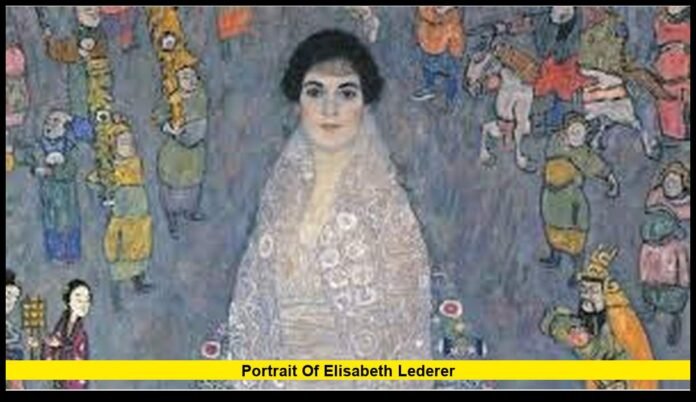

The term portrait of elisabeth lederer refers to the momentous sale of Gustav Klimt’s 1914–1916 painting, which in November 2025 fetched approximately $236.3 million at auction in New York. This transaction shattered previous records for modern art at auction, reinforced the painting’s cultural weight, and revived global conversation about provenance, legacy collections, and the high-end art market.
Why This Painting Matters: A Fresh Perspective
The Portrait of Elisabeth Lederer stands out not simply because it commands extraordinary prices at auction, but because it represents a rare convergence of artistic innovation, cultural memory, and historical consequence. Several intertwined factors elevate it far beyond the label of a “high-value lot”:
Artistic significance:
Klimt painted this work during the height of his late period—a phase defined by lavish ornamentation, bold chromatic contrasts, and deeply psychological portraiture. Every fold of fabric, every shimmer of pattern, and every deliberate pause of negative space showcases a master fully in control of his visual language. The portrait embodies Klimt’s evolution into a style where sensuality, symbolism, and surface richness reach an unforgettable harmony.
Historical context:
Elisabeth Lederer was not a distant sitter but a member of a prominent Viennese family whose relationships shaped Klimt’s creative world. Her family’s patronage supported many of his most important works, and the portrait reflects that closeness. It is a window into the cultural circles of early 20th-century Vienna—its salons, its intellectual ferment, and its intertwined worlds of art, society, and modern thought.
Market impact:
Its extraordinary sale price does more than break records; it resets expectations for how early modern masterpieces are valued today. The global attention surrounding the portrait underscores how rare Klimt’s major works are on the open market and how fiercely contested they have become. Each transaction becomes a bellwether for collectors, institutions, and investors, signaling where the art market is heading and how cultural icons are appraised in the 21st century.
Provenance and story:
Few artworks encapsulate a century of history so vividly. Commissioned in Vienna, confiscated during the Nazi era, later restituted, and ultimately integrated into prominent American collections, the portrait’s journey mirrors the upheavals of European history itself. Its exhibitions and ownership changes trace a path through war, loss, recovery, and renewed recognition—transforming the painting into a testament of resilience, memory, and cultural stewardship.
Together, these elements make the Portrait of Elisabeth Lederer more than a masterpiece on canvas. It becomes a living document—an artwork that carries the weight of personal story, artistic triumph, historical reckoning, and the evolving values of the global art market.
From Commission to Creation: The Journey of the Painting
The story of the Portrait of Elisabeth Lederer begins in Vienna around 1914, when August and Serena Lederer—key patrons in Gustav Klimt’s circle—commissioned the work as a full-length depiction of their daughter. Elisabeth, then in her early twenties, posed in a luminous white gown overlaid with an intricately patterned robe, standing against a deep, blue-toned backdrop that pulses with Klimt’s trademark symbolic detail.
Measuring roughly 180.4 × 130.5 cm (about 71 × 51 inches), the portrait is one of the larger canvases from Klimt’s late career and bears his signature. Completed between 1914 and 1916, the scale and ambition of the composition were remarkably uncommon for the period, instantly marking the painting as a statement piece within both the Lederer home and Klimt’s evolving portfolio.
Yet Klimt did far more than record Elisabeth’s appearance. He crafted a visual environment that reflects the artistic and cultural currents of Vienna’s Belle Époque. Stylized dragons with East Asian influence, shimmering ornamental surfaces, and meticulously arranged geometric patterns surround the figure, drawing the viewer into a world that merges portraiture with deliberate symbolism. This layering of aesthetic languages—European, Asian, decorative, and psychological—adds a level of complexity that continues to intrigue scholars, curators, and collectors.
It is this fusion of personal portrait and symbolic tapestry that helps explain why the Portrait of Elisabeth Lederer continues to command such intense interest today.
Elisabeth Lederer and the Patronage Network
Elisabeth Lederer (1894-1944) was the daughter of two major collectors and patrons in Viennese high society, and frequently sat for Klimt. Her mother, Serena, was among the most important female patrons of the time. Through this relationship, the Lederer family played an outsized role in Klimt’s career—commissioning portraits, collecting major works, and hosting salons where the painter moved freely.
Their home in Vienna became a cultural hub, and Elisabeth’s portrait represents not just an image of a young woman, but a visual embodiment of a family’s cultural and social aspirations. Interestingly, the question of Klimt’s closeness to the family has fueled speculation—some rumored familial connections—but those remain part of art-historical discussion rather than publicly verified fact.
Provenance, Seizure and Restitution
After its creation, the painting remained with the Lederer family until the Nazi annexation of Austria in 1938, when the collection was seized under the systematic looting of Jewish-owned property. The portrait of elisabeth lederer was impounded in 1938 and later deposited with a Vienna art house. In 1948 it was restituted to the Lederer heirs, a relatively successful example of post-war recovery.
Later, the painting entered the Serge Sabarsky Gallery in New York and then, in 1985, was acquired by American collector Leonard A. Lauder. Under Lauder’s stewardship, the painting was lent to major exhibitions, including at the National Gallery of Canada (long term loan). The full provenance shows how a European masterpiece traveled through war, restitution, private collection and public exhibition—culminating in its 2025 auction headline status.
The 2025 Auction: Setting Records
On November 18, 2025, at Sotheby’s new flagship location in the former Whitney Museum (the Breuer Building) in Manhattan, the painting was offered as part of the estate of Leonard A. Lauder. With an initial estimate of around $150 million, fierce competition among bidders drove the hammer price to approximately $205 million. Including fees, the final price reached about $236.3 million—making the portrait of elisabeth lederer the most expensive modern artwork ever sold at auction.
The bidding war lasted nearly 20 minutes, with phone and in-room bids pushing the price upward in significant increments. This sale also marked the highest price ever achieved by Sotheby’s in its history. For the art market, the result sends a clear signal: provenance, rarity, condition and story matter deeply—and premium works with all four can still command extraordinary sums despite broader market uncertainty.
What This Means for the Art Market & Collectors
The sale of the portrait of elisabeth lederer has several ripple effects:
- Valuation benchmark: Collectors and auction houses will reference this price as a barometer for similar modern masterpieces.
- Museum-collector pipeline: Museums may rethink how they acquire or display major works if private collectors know such pieces retain major value.
- Focus on provenance: The painting’s layered history—from commissioner to Nazi seizure to restitution to American collection—underscores the premium placed on clear provenance in today’s market.
- Narrative value: Beyond aesthetic value, the story behind the object remains a key component of its financial and cultural value.
For U.S. audiences and collectors, this sale reinforces the dynamics of high-end art as both cultural asset and wealth asset.
Exhibition History and Cultural Impact
Before the auction, the painting had been exhibited at prestigious institutions:
- Stockholm, Liljevalchs Konsthall – Austrian Art Exhibition, 1917
- Vienna, Belvedere – “Klimt’s Women,” 2000–2001
- New York, Neue Galerie – “Klimt and the Women of Vienna’s Golden Age, 1900-1918,” 2016–17
- Ottawa, National Gallery of Canada – Long term loan until 2025
These exhibitions helped solidify the portrait of elisabeth lederer as not only a collector’s piece, but a public icon of Klimt’s late work, Viennese modernism, and the shifting art-historical canon. Its presence in major museum shows broadened public awareness and added to its pedigree ahead of the 2025 auction.
Stylistic Analysis: What Makes the Composition Unique
Several features elevate this portrait beyond typical late Klimt works:
- Full-length format: Uncommon in his late phase, making the portrait visually impressive.
- Rich ornamentation: The robe’s dragon and floral designs echo East-Asian and decorative influences, aligning with Klimt’s fascination with Japonisme and Chinoiserie.
- Color interplay: The cool blue backdrop contrasts elegantly with warm clothing tones and golden accents, drawing the viewer into a layered space rather than a simple frontal depiction.
- Poised presence: Unlike some more opulent “gold-period” portraits of Klimt, this work holds restraint in the sitter’s expression and posture—underscoring intimacy rather than spectacle.
Together, these features explain why art historians call the portrait of elisabeth lederer a crowning piece of Klimt’s maturity as a painter: decorative brilliance married to psychological subtlety.
Legacy and Future Viewpoints
What comes next for this painting and for Klimt’s legacy? Several possibilities:
- Museum acquisitions or loans: Following the sale, institutions may seek opportunities to display or borrow the portrait, increasing its visibility.
- Scholarly research: The painting’s provenance, especially wartime history, invites further research into art restitution, patronage and early 20th-century Vienna.
- Market shifts: Seeing such a high result may encourage more collectors to bring “museum-quality” pieces to auction, while museums may accelerate acquisitions before values rise further.
- Public engagement: More documentaries, exhibitions, and publications may focus on this work, broadening its cultural footprint beyond collectors to general audiences interested in art history.
Ultimately, the portrait of elisabeth lederer will likely become a reference point for Klimt’s work, modern-art valuation and the intersection of art and history.
Conclusion
In answering the key question—how significant is the portrait of elisabeth lederer?—the 2025 sale provides a definitive reply. It is not merely a painting with a high price tag; it is a masterpiece embedded with layers of beauty, history, provenance and market significance. For the American art world and global collectors alike, the painting stands as both a cultural milestone and a financial landmark.
Share your thoughts below or stay tuned for further developments around this remarkable work of art.