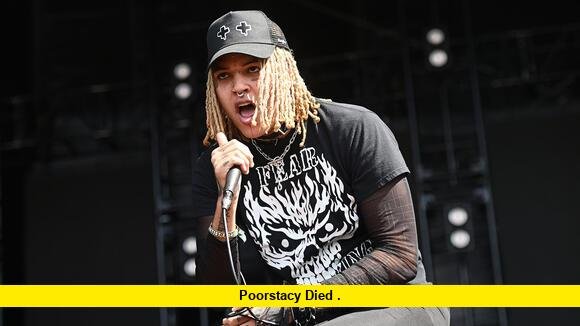

POORSTACY Died — a tragic announcement that has stunned fans and the music community alike. The talented young rapper, born Carlito Junior Milfort, was just 26 years old when he passed away early morning on November 29, 2025, after what authorities have described only as a “medical emergency” at a hotel in Boca Raton, Florida.
What Happened: The Final Hours
According to local reports, first responders were called to a hotel in Boca Raton on Saturday after a medical emergency involving Milfort. He had been staying at the location for about ten days along with a woman and a toddler. The 26-year-old was rushed to a nearby hospital, but he never regained consciousness and was pronounced dead shortly after arrival.
At this time, the official cause of death remains undetermined. The office of the county medical examiner has opened an investigation and no public statement has yet been released indicating what exactly led to the fatal emergency. Authorities have urged patience as toxicology and autopsy reports are expected in the coming weeks. Meanwhile, speculation has grown online — yet nothing beyond official yet has been confirmed.
A Unique Sound: Who Was POORSTACY?
Carlito Milfort, known on stage as POORSTACY, grew up in Palm Beach, Florida. From an early age he learned music — guitar, bass, piano — often inspired by his father and by the heavy-metal and punk scene that shaped his youth. As a teenager, he played guitar in local bands, eventually uploading music under various pseudonyms. He eventually adopted his final stage name as a nod to skater legend Stacy Peralta: a personal tribute to perseverance and individuality.
Starting in 2019, Milfort released his debut EP, I Don’t Care, via Internet Money. The project quickly attracted attention. His breakout moment came with his 2020 full-length album The Breakfast Club, followed by a second album Party at the Cemetery in 2021. His style was anything but conventional. Rather than sticking to traditional rap beats, he blended emo rap, punk rock, post-hardcore, heavy metal, and gothic rock to fashion a gritty, emotionally raw sound that stood apart from mainstream hip-hop.
Tracks like “Choose Life,” featuring legendary drummer-producer Travis Barker, showcased his ability to cross genres. His music also appeared on the soundtrack for the film Bill & Ted Face the Music — a soundtrack that earned a Grammy nomination. That recognition marked a high point, suggesting that major breakthrough may have been close.
More than anything, Poorstacy resonated with listeners searching for authenticity. His lyrics often touched on isolation, inner turmoil, mental pain, and the darkness that sometimes comes with youth and fame. For many fans, those songs offered solace, comfort, or simply a sense of being heard.
Life Beyond the Music: Success and Struggles
As his career gained steam, Milfort found himself collaborating with several notable artists beyond Travis Barker — including work with Iann Dior and connections to the broader emo-rock and punk scenes. His blend of sounds brought together fans from metal, emo, rap, and punk backgrounds, building a community around his music that felt unified yet diverse.
However, Good press and creative success were not the full picture. In 2023, Milfort faced serious legal trouble: he was arrested amid allegations of domestic violence and child neglect involving a woman and their infant child. The case stirred widespread debate on social media, and though bonds were posted and charges were reportedly dropped, the episode left a mark on his public image. To date, no official connection has been made between those past allegations and his untimely death.
In the days following his passing, fans revisited his earlier work, sparking conversations around mental health, fame, and the pressures young artists face behind the scenes. His final Instagram post — shared in August — has become a digital shrine of sorts, flooded with tributes, heartbreak, and gratitude for the music he left behind.
Aftermath and Reactions: Mourning a Lost Voice
News of his death has sparked an outpouring of grief across social media as friends, fellow artists, and fans reflect on what he meant to them. Many described Poorstacy as a beacon for those who felt unseen — a musician unafraid to channel raw pain, darkness, and vulnerability into something that resonated deeply. Posts flooded with messages like “Thank you for giving voice to what we couldn’t say” and “We’ll miss you forever” highlight the emotional imprint he left on listeners.
Supporters also acknowledged the complex nature of his legacy — celebrating his creativity and daring sound, while acknowledging his troubled past. For some, the loss reignites concern about mental health and the unseen challenges that often accompany fame. Others lament the loss of potential: what new music might have been, what evolution his sound could have reached.
Music communities, forums, and fan spaces are already debating how to honor him — from tribute playlists to virtual memorial dreams — and many hope that once the investigation concludes, more clarity will emerge about his final hours.
What We Know — and What Remains Unknown
- POORSTACY died on November 29, 2025, at the age of 26.
- He suffered a medical emergency at a hotel in Boca Raton, Florida, and was transported to a hospital where he died.
- The official cause of death remains under investigation and has not yet been released.
- He had been staying at the hotel with a woman and a toddler. No other person was reported injured or hospitalized.
- Toxicology and autopsy reports are pending.
- His history includes a 2023 arrest on allegations of assault and child neglect; the case was reportedly dropped. Authorities have not indicated any link between those events and his death.
- Fans, collaborators, and the broader music community have expressed grief, confusion, and deep respect for his unique musical voice.
Legacy: The Impact of a Short — but Resonant — Career
Even in just a handful of years, Poorstacy carved out a space for himself that few emerging artists achieve. His willingness to blend genres — rap with punk, metal, emo, and alternative rock — challenged conventional boundaries. That fearless hybrid style helped build a dedicated and diverse fanbase that crossed genre lines.
For listeners who felt marginalized, misunderstood, or emotionally raw, his songs offered validation and solace. He turned deeply personal feelings into something public yet universal — a voice for struggle, inner darkness, and sometimes hope.
His presence in collaborations with high-profile artists and in a Grammy-nominated soundtrack hinted at a path toward mainstream breakthrough. With his untimely death, those possibilities vanish — but the record remains. On streaming platforms, playlists, and within fan memory, Poorstacy’s music endures as a testament to what he created, who he reached, and what he meant to a generation looking for honest emotion in music.
A Moment for Reflection: The Human Cost Behind the Spotlight
The sudden death of someone as young and promising as Poorstacy forces a hard look at the pressures artists face, especially in genres rooted in emotional vulnerability and personal pain. For all his public bravado and creative risk, he remained human — flawed, complex, and possibly struggling behind the scenes.
This moment also highlights a broader conversation around mental health in the music industry and among fans. When social media speculation points to suicide or serious personal turmoil, the lack of official confirmation only deepens grief and uncertainty. But beyond speculation, it underscores that artists often carry heavy burdens we never see — and sometimes pay the ultimate price.
What Comes Next? What to Watch For
As the investigation continues, many await the toxicology and autopsy results. Those findings may clarify what led to Milfort’s final hours — whether natural causes, health complications, or something else entirely. Until then, the music world remains in mourning, and fans continue sharing memories, tribute songs, and stories of what his music meant to them.
Some artists have already hinted at tribute projects, collaborations, and memorial performances. Many fans are sensitizing each other to mental-health resources and reminding listeners that behind the music, there was a real human being.
Whether or not Poorstacy returns — there will be no more music from him — what remains is his voice, recorded and immortalized in tracks that challenged norms, defied industry labels, and carved raw emotion into melody and rhythm.
His absence stings. But his music still speaks — to pain, to power, to hope.
Let us know what Poorstacy meant to you — share your memories, favorite tracks, or thoughts below.