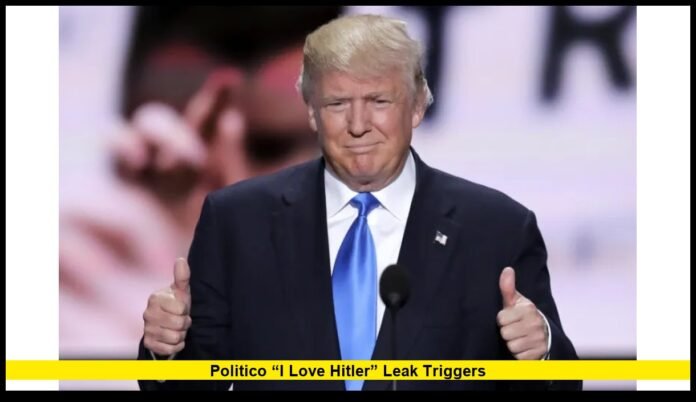

The phrase politico i love hitler has set off a major political controversy in the United States after leaked group chats involving members of Republican youth organizations revealed the use of openly antisemitic and extremist language. What began as a private conversation quickly escalated into a national debate about extremism, accountability, and the culture inside certain political circles.
How the Controversy Started
The scandal began when a series of internal group messages from multiple state-level Republican youth organizations came to light. Within those messages, one participant responded to a political discussion with the shocking phrase “I love Hitler,” sparking outrage both inside and outside the party.
The chats contained a pattern of offensive statements, jokes, and extremist references. The phrase at the center of the uproar — politico i love hitler — became the headline shorthand for a broader leak that exposed troubling behavior among young political leaders.
Immediate Political Repercussions
Once the chats became public, the response was swift. Several state-level chapters of youth organizations faced internal investigations, suspensions, or leadership resignations. High-ranking party officials at both state and national levels condemned the language and moved to distance the broader party from those involved.
In some states, entire youth organizations were temporarily dissolved or restructured. Officials emphasized that the rhetoric used in the chats does not represent their values. Others called for mandatory reforms and closer oversight of youth political wings to prevent similar incidents.
Public Reaction and Widespread Condemnation
The public reaction was intense. The phrase itself shocked many, not just because of its content but because it appeared in messages between individuals in political leadership positions. Civil groups, community leaders, and political commentators all weighed in, describing the language as unacceptable and demanding firm action.
For many observers, this was more than a case of individuals making offensive jokes — it was evidence of a cultural problem within certain youth political spaces, where hateful rhetoric is normalized and left unchallenged. The fallout included pressure on national party leadership to set clearer boundaries and take visible steps to address the issue.
Internal Party Tensions
Within the party, reactions were mixed. Some leaders argued that swift expulsions and disbandments were necessary to protect the party’s image and values. Others warned against overreach, suggesting that some participants were engaging in “edgy” humor without fully grasping the consequences.
This internal divide has become part of the larger story. Some party members want to draw a firm moral line, while others are cautious about alienating young activists. These conflicting perspectives illustrate the party’s struggle to address extremism while maintaining internal unity.
Why the Phrase Resonated Nationally
The reason the phrase politico i love hitler resonated so strongly is that it cuts to the heart of long-standing concerns about extremist ideologies gaining footholds in mainstream politics. Youth political wings often serve as pipelines to higher positions, meaning that the attitudes present there can shape the future of political leadership.
When language that glorifies hateful ideologies surfaces in such spaces, it raises questions about recruitment, ideological vetting, and whether sufficient guardrails exist to keep extremist views from moving upward through party structures.
Key Issues Highlighted by the Scandal
This controversy isn’t just about one offensive phrase. It has opened up broader conversations on multiple fronts:
- Extremism in youth politics: Whether current vetting and oversight mechanisms are strong enough to prevent extremist ideologies from spreading in youth groups.
- Party accountability: How political organizations respond to internal scandals and whether they act swiftly or defensively.
- Public perception: How these incidents affect voters’ trust, especially moderates and independents who view such language as disqualifying.
- Cultural environment: Whether jokes and “edgy humor” inside private chats reflect deeper, more dangerous beliefs.
Steps Being Considered
In the wake of the incident, several measures have been discussed at the party level to address the situation more systematically:
- Mandatory code of conduct: Introducing formal rules for youth organizations regarding speech, behavior, and disciplinary procedures.
- Internal investigations: Reviewing other communications and activities to determine whether similar behavior exists elsewhere.
- Leadership changes: Encouraging or requiring implicated individuals to step down from leadership positions.
- Training and education: Implementing programs to teach members about antisemitism, hate speech, and the historical impact of extremist ideologies.
- Ongoing monitoring: Creating oversight structures to ensure compliance with new standards.
These steps are meant to demonstrate that the party takes the issue seriously while working to prevent similar scandals in the future.
Historical Context and Sensitivity
The phrase at the center of this controversy is not just offensive; it touches one of the most sensitive historical wounds. Openly expressing admiration for a figure responsible for mass atrocities crosses a clear moral line in American political discourse. Even if framed as a joke, the use of such language by individuals in leadership positions raises serious concerns about judgment and ideology.
This is why the scandal has gained so much attention so quickly. It isn’t just about one comment — it’s about what that comment represents in terms of culture, oversight, and political responsibility.
Long-Term Implications
The impact of the politico i love hitler scandal is likely to extend beyond the immediate resignations and condemnations. For youth political groups, it represents a turning point: either they take concrete action to address extremist rhetoric, or they risk becoming symbols of moral failure in a critical election cycle.
For the broader party, the scandal could affect public trust, fundraising, and voter outreach, especially among communities sensitive to antisemitism and hate speech. It may also shape how the party structures and monitors its youth organizations going forward.
A Moment of Reckoning
The controversy surrounding the phrase politico i love hitler is forcing political leaders, party officials, and the public to confront uncomfortable truths. What happens in private spaces can define public reputations. Words matter — especially when they come from individuals who may one day hold higher office.
This moment represents an opportunity for parties to reaffirm their values, set clear standards, and prove to voters that there is no place for hateful rhetoric in their ranks.
What do you think? Should those involved face permanent removal from leadership, or can this be addressed through reform? Share your thoughts and keep the conversation going.