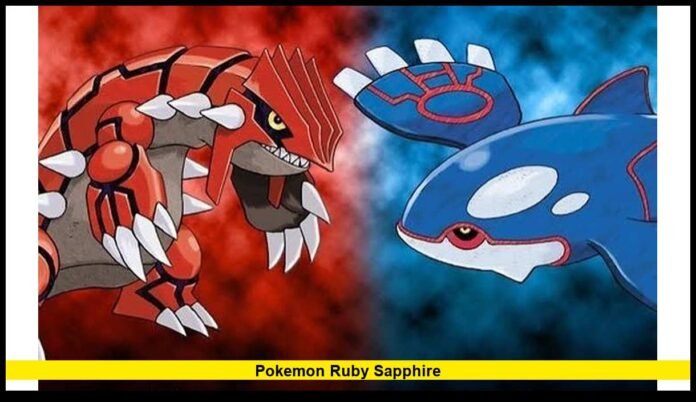

Pokémon Ruby Sapphire continue to hold a special place in the franchise, and interest in the two Generation III classics has grown again as Nintendo brings more older Pokémon experiences to modern hardware. As of October 8, 2026, the original Game Boy Advance versions of Ruby and Sapphire have not received an official Nintendo Switch or Nintendo Switch 2 release. Recent developments involving other classic Pokémon games have nevertheless put the spotlight back on the era that introduced players to Hoenn.
The original Ruby and Sapphire adventures remain important because they changed several core elements of Pokémon. They introduced a new region, a large group of Pokémon, Double Battles, Abilities, Natures and Pokémon Contests. Their influence can still be seen throughout the modern series.
Pokémon Ruby and Sapphire Explained
Pokémon Ruby Version and Pokémon Sapphire Version were released for the Game Boy Advance during the early 2000s. They marked the beginning of Generation III and moved the main Pokémon adventure away from the familiar Kanto and Johto regions.
The Japanese release arrived in November 2002. U.S. players received both games on March 19, 2003.
The basic objective remained familiar. Players selected a starter Pokémon, traveled through towns and routes, captured wild Pokémon, challenged Gym Leaders and eventually pursued the Pokémon League.
However, Hoenn gave the series a noticeably different identity.
The region featured large stretches of ocean, numerous islands, mountainous areas, forests, caves and volcanic terrain. Water routes became a particularly important part of exploration.
The Hoenn Region Remains a Fan Favorite
Hoenn introduced a large new collection of Pokémon and became home to some of the franchise’s most recognizable creatures.
The three original starters were Treecko, Torchic and Mudkip. Each offered a different approach to the early stages of the adventure.
Treecko developed into Sceptile, Torchic eventually became Blaziken and Mudkip evolved into Swampert.
The region also introduced popular Pokémon such as Gardevoir, Absol, Flygon, Metagross, Salamence and many others.
At the legendary level, Groudon and Kyogre became central figures in the two games, while Rayquaza became strongly associated with the broader Hoenn storyline.
Ruby and Sapphire Were More Than Standard Pokémon Games
Generation III introduced several mechanics that significantly changed how players approached their teams.
Abilities gave individual Pokémon special effects that could activate during battles or under specific conditions.
Natures added another layer of individual variation. Different Natures could influence a Pokémon’s statistics, making them relevant for players interested in building carefully optimized teams.
The introduction of Double Battles was another major change.
Instead of limiting battles to one Pokémon on each side, the system allowed two Pokémon to participate at the same time.
This created new combinations of moves and abilities. Some attacks could affect multiple Pokémon, while others could support a teammate.
Double Battles eventually became a recurring feature across the Pokémon series.
Pokémon Contests Added an Alternative Goal
Not every player wanted to spend the entire game focusing on conventional battles.
Ruby and Sapphire introduced Pokémon Contests, which gave trainers another way to showcase their Pokémon.
Contest performance involved different attributes and presentation elements rather than simply defeating an opponent.
Players could use Berries to create Poké Blocks, which could help prepare Pokémon for Contest participation.
This feature gave the Hoenn games a broader sense of progression. Players could pursue traditional Gym victories while also developing Pokémon for Contests.
The idea continued in later Hoenn releases and became one of the region’s signature features.
Team Magma and Team Aqua Created the Central Conflict
The stories of Ruby and Sapphire differ in one of their most recognizable ways.
Ruby places Team Magma at the center of the villainous conflict.
Team Magma seeks to expand the world’s landmass. Its ideology connects naturally with Groudon, the Legendary Pokémon associated with the Ruby version.
Sapphire takes a different direction.
Team Aqua seeks to expand the world’s oceans. Kyogre is the Legendary Pokémon most closely connected with the Sapphire storyline.
The opposing philosophies gave the two versions a distinct identity even though their overall adventure structure remained similar.
Groudon and Kyogre Became Generation III Icons
Groudon and Kyogre are among the most recognizable Legendary Pokémon created during Generation III.
Groudon is strongly associated with land, while Kyogre represents the sea.
Their rivalry became one of the defining elements of Hoenn’s mythology.
The story was expanded further in Pokémon Emerald, which gave Rayquaza a larger role in resolving the conflict.
The three Legendary Pokémon eventually became a major part of Pokémon’s long-running mythology and returned in later games and remakes.
Version Differences Encouraged Trading
Ruby and Sapphire followed an important Pokémon tradition: neither version contained every Pokémon available within the generation.
Certain Pokémon appeared in Ruby but not Sapphire. Others were exclusive to Sapphire.
This encouraged players to trade with friends.
The feature was especially important during the Game Boy Advance era because trading Pokémon was a major part of completing a collection.
Players could also battle one another using connected Game Boy Advance systems.
The two-version model helped turn Pokémon into a social experience rather than a purely single-player adventure.
Pokémon Emerald Expanded the Hoenn Story
The Ruby and Sapphire era did not end with the two original games.
Pokémon Emerald later returned players to Hoenn with an expanded storyline and additional content.
Rayquaza became much more prominent, while the conflict between Groudon and Kyogre received a different narrative treatment.
Emerald also introduced the Battle Frontier.
The Battle Frontier offered specialized battle challenges that appealed to experienced players looking for additional content after completing the main story.
As a result, Ruby, Sapphire and Emerald became the defining trio of the original Hoenn generation.
Omega Ruby and Alpha Sapphire Brought Hoenn Back
Nintendo eventually revisited the region with Pokémon Omega Ruby and Pokémon Alpha Sapphire.
The two games launched for Nintendo 3DS in 2014 as enhanced remakes of the original Ruby and Sapphire adventures.
They preserved the basic Hoenn journey while incorporating features introduced in later Pokémon generations.
One major addition was Mega Evolution.
The remakes also introduced Primal Reversion for Groudon and Kyogre. These powerful alternate forms became important parts of the updated Hoenn experience.
The games also provided expanded aerial exploration and additional content that was not available in the original Game Boy Advance releases.
For players who wanted to experience the Ruby and Sapphire story with modernized visuals and newer mechanics, Omega Ruby and Alpha Sapphire became the primary official option.
Are Ruby and Sapphire Available on Nintendo Switch?
As of October 8, 2026, the answer is no for the original versions.
Nintendo has not announced an official Nintendo Switch or Nintendo Switch 2 release of the original Pokémon Ruby Version or Pokémon Sapphire Version.
There has been renewed interest in the possibility because classic Game Boy Advance Pokémon games have begun appearing on modern Nintendo hardware.
FireRed and LeafGreen are now available as Nintendo Switch releases. Their arrival demonstrates that older Pokémon adventures can receive dedicated modern releases.
It does not mean Ruby and Sapphire have been confirmed.
There is currently no official release date or confirmed Nintendo Switch launch announcement for the original Ruby and Sapphire games.
Why the FireRed and LeafGreen Releases Matter
The arrival of FireRed and LeafGreen is significant because both games originated on the Game Boy Advance.
Their modern availability has naturally encouraged fans to wonder whether other Generation III games could follow.
Ruby and Sapphire are obvious candidates because they were released during the same hardware generation.
However, speculation should not be confused with an official announcement.
Nintendo has not confirmed a Switch version of Ruby, Sapphire or Emerald.
For now, the original games remain associated with their Game Boy Advance release, while Omega Ruby and Alpha Sapphire remain the official remakes of the Hoenn adventures.
Pokémon HOME Compatibility Remains an Important Difference
Modern Pokémon players also need to consider Pokémon HOME.
The original Game Boy Advance versions of Ruby and Sapphire do not function like modern Switch Pokémon games within the current Pokémon HOME ecosystem.
Recent compatibility updates have expanded support for newer and re-released Pokémon titles, including the modern Switch versions of FireRed and LeafGreen.
That does not provide a direct Pokémon HOME connection for the original Ruby and Sapphire cartridges.
Collectors who still own original copies should therefore distinguish between playing the classic games and moving their Pokémon into today’s connected Pokémon ecosystem.
What Makes Ruby and Sapphire Important Today?
Ruby and Sapphire helped establish several systems that remain recognizable in modern Pokémon games.
Their importance goes well beyond the Hoenn map.
The games introduced:
- Double Battles
- Pokémon Abilities
- Pokémon Natures
- Pokémon Contests
- Poké Blocks
- The Hoenn region
- Groudon and Kyogre
- A new generation of Pokémon
- Expanded multiplayer trading and battling features
Several of these additions became permanent parts of the franchise.
Double Battles remain available in later games, while Abilities and Natures became fundamental elements of Pokémon team building.
That makes Generation III an important turning point in the history of Pokémon gameplay.
Ruby vs. Sapphire: Which Game Is Different?
The two games share most of their basic structure, but their version-exclusive elements create meaningful differences.
Ruby emphasizes Team Magma and Groudon.
Sapphire focuses on Team Aqua and Kyogre.
Each version also contains Pokémon that are unavailable in the other version without trading.
For collectors, owning both games can therefore provide access to a broader selection of Pokémon.
For players choosing between the two, the biggest story difference is the opposing Team and Legendary Pokémon.
The core Hoenn journey remains broadly similar in both versions.
The Legacy of Pokémon Ruby Sapphire
More than 20 years after their original release, Ruby and Sapphire remain significant because they represent one of the biggest evolutionary steps in the Pokémon series.
They introduced a new region and a large roster of Pokémon while also adding mechanics that would influence future generations.
The games later inspired Pokémon Emerald and the enhanced Nintendo 3DS remakes Omega Ruby and Alpha Sapphire.
Their legacy has also remained visible through later appearances of Hoenn Pokémon, Legendary Pokémon and battle mechanics.
The current renewed attention surrounding classic Pokémon releases has made the original games relevant again, particularly for players who first experienced Hoenn on the Game Boy Advance.
What Is the Latest Pokémon Ruby Sapphire Update?
The most important confirmed update for U.S. players is that the original Pokémon Ruby and Sapphire games still do not have an official Nintendo Switch or Nintendo Switch 2 release as of October 8, 2026.
The recent arrival of other classic Game Boy Advance Pokémon titles has increased interest in the possibility of additional releases, but no official announcement has confirmed Ruby or Sapphire.
For players who want the original experience, the Game Boy Advance versions remain the definitive releases. Those looking for a more modern version of the same Hoenn adventure can turn to Omega Ruby and Alpha Sapphire on Nintendo 3DS.
Meanwhile, Pokémon HOME continues to expand its compatibility with modern Pokémon software, although the original Ruby and Sapphire games are not directly supported in the same way as current Switch releases.
Pokémon Ruby and Sapphire remain two of the most influential Generation III games, and fans continue to watch closely for any official news that could bring the classic Hoenn adventures back to modern Nintendo hardware.