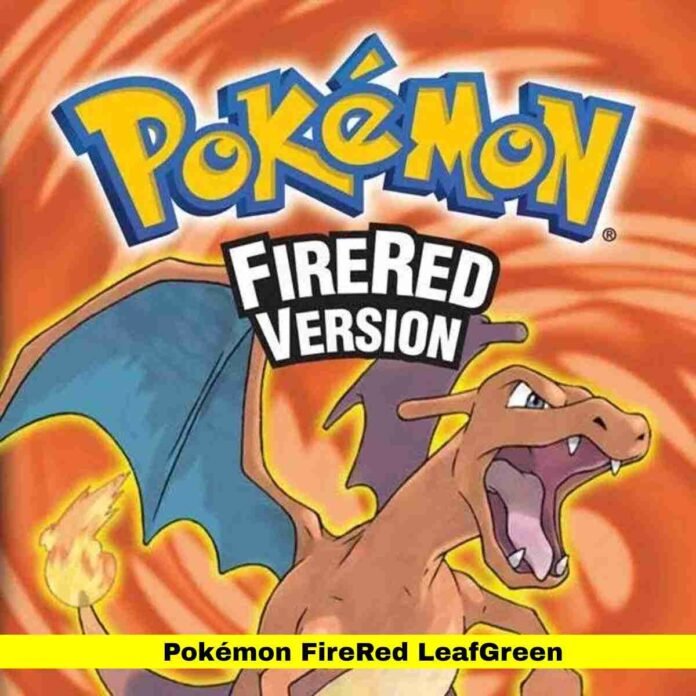

More than two decades after their original release, pokémon firered leafgreen continue to stand tall as two of the most influential titles in the franchise’s history. These Game Boy Advance remakes of the original 1996 Red and Green versions brought the Kanto region back to life with upgraded visuals, expanded content, wireless connectivity, and refined mechanics that shaped future entries in the series. Even in 2026, the games remain widely discussed among players, collectors, competitive battlers, and retro gaming enthusiasts across the United States.
As interest in classic titles surges through digital communities, tournaments, and nostalgic replays, these remakes have secured a lasting legacy. Here’s a comprehensive look at their history, gameplay systems, features, competitive value, availability, and ongoing cultural impact.
Release History and Platform Details
Nintendo and Game Freak originally launched FireRed and LeafGreen for the Game Boy Advance in 2004. The titles served as full remakes of the original Pokémon Red and Green, which debuted in Japan in 1996 and later released internationally as Red and Blue.
The remakes used the enhanced Game Boy Advance hardware to deliver improved sprite animation, vibrant color palettes, updated battle mechanics, and compatibility with third-generation Pokémon titles, including Ruby, Sapphire, and Emerald.
Unlike the originals, FireRed and LeafGreen integrated modernized systems from Generation III while preserving the structure and storyline of the Kanto region. This careful balance allowed longtime fans to revisit a familiar adventure while experiencing meaningful upgrades.
Return to the Kanto Region
Kanto remains one of the most recognizable regions in Pokémon history. Players begin their journey in Pallet Town, choosing between Bulbasaur, Charmander, or Squirtle before setting out to collect eight Gym Badges.
Cities like Pewter, Cerulean, Vermilion, Celadon, Fuchsia, Saffron, Cinnabar, and Viridian return with refreshed visuals and layout adjustments. Iconic landmarks such as Mt. Moon, the Pokémon Tower, Silph Co., and Victory Road maintain their narrative importance.
The Elite Four challenge at Indigo Plateau serves as the final step before becoming Champion. The familiar rival storyline unfolds throughout the adventure, delivering classic battles and character moments that defined the original experience.
Enhanced Graphics and Updated Mechanics
FireRed and LeafGreen improved nearly every visual element compared to the 1990s versions. Character sprites featured greater detail. Battle animations became more dynamic. Environments included richer color depth and sharper pixel design.
Mechanically, the games adopted Generation III battle rules. This included the modern stat system, abilities for Pokémon, natures that influence stat growth, and held items that impact battle strategy.
Breeding mechanics expanded team-building possibilities. Effort Values and Individual Values influenced competitive potential, creating deeper strategic planning than the original versions allowed.
Sevii Islands Expansion
One of the most significant additions was the Sevii Islands storyline. After completing the main Kanto narrative, players unlocked access to a chain of new islands featuring fresh quests, new trainers, and additional Pokémon encounters.
This post-game content expanded the Pokédex beyond the original 151. It also connected FireRed and LeafGreen to the broader Generation III ecosystem.
The Sevii Islands storyline involved Team Rocket’s renewed activity, rare Pokémon spawns, and cross-regional trading integration. This addition gave players extended gameplay well beyond the Elite Four.
Wireless Adapter and Multiplayer Connectivity
At launch, the titles included compatibility with the Game Boy Advance Wireless Adapter. This feature allowed players to battle and trade without a physical link cable.
The introduction of wireless connectivity marked a significant technological step forward for the franchise. It simplified multiplayer access and encouraged local competitive play.
Battles supported standard formats, while trading allowed evolution of Pokémon that required link exchanges, such as Alakazam and Gengar.
Pokédex Integration and National Expansion
Initially, the regional Pokédex limited available Pokémon to the original Kanto lineup. However, after completing certain in-game milestones, players unlocked the National Pokédex.
This update allowed integration with Ruby, Sapphire, and Emerald. Players could trade Pokémon between titles to complete their collection.
The structured unlocking system encouraged long-term gameplay and cross-title interaction, strengthening community engagement among Generation III players.
Competitive Battling Influence
FireRed and LeafGreen played a central role in shaping competitive Pokémon battling during the mid-2000s.
The updated stat mechanics, abilities, and breeding systems allowed players to build highly specialized teams. Many iconic competitive Pokémon—such as Snorlax, Dragonite, and Gengar—remained powerful threats within the meta.
Move tutors and TM distribution gave strategic flexibility. Players could customize movesets in ways not possible in earlier generations.
Even today, retro tournaments and emulator-based competitions often revisit Generation III rule sets, with FireRed and LeafGreen serving as foundational pillars.
Storyline Faithfulness and Narrative Structure
The core storyline closely followed the original Red and Green narrative. Team Rocket’s criminal activities unfold gradually, culminating in confrontations with Giovanni.
Players progress linearly through Gym challenges, encountering legendary Pokémon such as Articuno, Zapdos, and Moltres along the way.
Mewtwo appears in Cerulean Cave as the ultimate post-game challenge. Capturing this legendary Pokémon remains one of the most memorable achievements in the game.
The narrative pacing remains tight and focused, making the experience accessible to both new players and returning veterans.
Soundtrack and Audio Design
The soundtrack reimagined classic 8-bit compositions with enhanced Game Boy Advance sound capabilities.
Battle themes retained their iconic melodies while incorporating richer instrumentation. City themes preserved nostalgic charm while benefiting from updated tonal clarity.
Audio cues for Pokémon cries, menu navigation, and item usage improved immersion and responsiveness.
Music continues to play a central role in fan nostalgia, with remixed tracks frequently featured in online retrospectives.
Availability in 2026
Physical Game Boy Advance cartridges remain available through secondary markets and collector platforms. Authentic copies often command premium prices, especially complete-in-box editions.
The Nintendo 3DS Virtual Console previously offered digital versions before the service’s closure in 2023. As of 2026, official digital distribution options remain limited.
Retro gaming demand has sustained strong resale interest. Condition, packaging, and authenticity significantly influence market value.
Players seeking legitimate hardware experiences typically use original Game Boy Advance systems or compatible Nintendo DS models.
Cultural Impact and Legacy
FireRed and LeafGreen occupy a unique space in franchise history. They preserved the foundational Kanto experience while modernizing mechanics for a new generation.
Many players who began their journey with these remakes consider them definitive versions of the original story.
The titles also introduced younger audiences to classic Pokémon species that shaped the franchise’s global expansion.
Online communities frequently rank them among the best Pokémon games ever released, citing their balance of nostalgia and innovation.
Speedrunning and Community Events
Speedrunning communities continue to feature FireRed and LeafGreen in competitive categories.
Players attempt record completion times using optimized routing, battle strategies, and glitch knowledge.
Community challenges—such as Nuzlocke runs and mono-type playthroughs—keep gameplay fresh and engaging.
Streaming platforms regularly showcase playthroughs, reinforcing the games’ ongoing relevance.
Educational and Strategic Value
Beyond entertainment, the games encourage strategic thinking and resource management.
Players must plan team composition, manage move coverage, and adapt to evolving battle conditions.
The type effectiveness system teaches logical decision-making and pattern recognition.
Breeding systems introduce probability-based outcomes and statistical growth modeling.
Comparison With Later Remakes
Later remakes, such as HeartGold and SoulSilver, built upon the blueprint established by FireRed and LeafGreen.
However, many fans appreciate the simplicity and focused design of the Kanto remakes.
The balance between post-game expansion and core narrative clarity remains a defining strength.
Collector Interest and Market Trends
In 2026, retro gaming markets continue to show strong demand for authentic cartridges.
Complete-in-box copies often attract collectors seeking pristine packaging and manuals.
Graded copies occasionally appear at auctions, reflecting the broader rise of video game preservation culture.
Authenticity verification remains critical, as reproduction cartridges circulate in online marketplaces.
Why These Games Still Matter Today
The enduring popularity of pokémon firered leafgreen stems from a combination of gameplay refinement, nostalgic storytelling, and strategic depth.
The games offer a polished version of the original Kanto adventure without overwhelming complexity.
They bridge generations of players—those who experienced the 1990s originals and those introduced through the 2004 remakes.
As discussions around retro gaming continue to grow, these titles remain central to the conversation.
The legacy of FireRed and LeafGreen shows no signs of fading. Whether revisited through original hardware, competitive challenges, or nostalgic replays, their influence remains undeniable in the broader Pokémon universe.
What are your favorite memories from your Kanto adventure? Share your thoughts and stay tuned for more updates on classic gaming favorites.