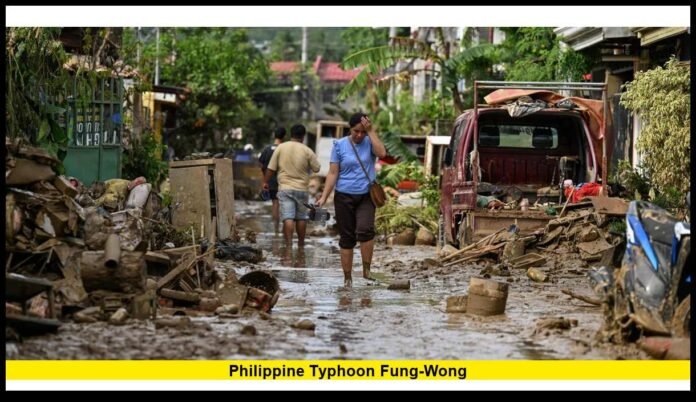

The Philippine Typhoon Fung-Wong continues to dominate headlines as one of the most powerful weather systems to affect the Philippines this year. Making landfall earlier in November 2025, the typhoon brought days of torrential rainfall, violent winds, and destructive floods that swept through several provinces. Now, as the nation focuses on recovery, local authorities and international agencies are joining forces to provide relief to thousands of affected families.
Current Status and Path of Typhoon Fung-Wong
As of November 9, 2025, the Philippine Atmospheric, Geophysical and Astronomical Services Administration (PAGASA) reports that Typhoon Fung-Wong has weakened after crossing Luzon but continues to cause heavy rains and gusty winds in parts of northern and central Philippines. The storm is moving northwest at around 18 kilometers per hour (11 mph), carrying sustained winds of 120 km/h (75 mph) and gusts reaching up to 150 km/h (93 mph).
While the typhoon’s center has moved toward the West Philippine Sea, its wide circulation continues to bring rains across Cagayan Valley, Central Luzon, and Metro Manila. Flood warnings remain in effect, and residents in low-lying and mountainous areas are urged to stay alert for possible landslides and flash floods.
PAGASA forecasts that Fung-Wong will exit the Philippine Area of Responsibility (PAR) by late November 10 or early November 11, before heading toward southern China. However, its lingering rainbands are expected to continue affecting the country for several days.
How Typhoon Fung-Wong Formed and Strengthened
Typhoon Fung-Wong first developed as a tropical depression on November 3, 2025, east of Mindanao. Over the following days, it steadily gained strength over the warm waters of the Philippine Sea, eventually becoming a Category 2-equivalent typhoon.
Meteorologists note that the storm’s rapid intensification was fueled by unusually high sea surface temperatures—a trend increasingly linked to global climate change. By November 7, Fung-Wong reached its peak intensity as it neared the eastern coast of Luzon.
The typhoon made landfall in Aurora Province early on November 8, bringing strong winds, heavy rainfall, and storm surges that flooded coastal towns. From there, it crossed the northern Luzon region, weakening slightly as it interacted with mountainous terrain but still unleashing severe weather along its path.
Timeline of Typhoon Fung-Wong’s Movement
| Date (2025) | Event |
|---|---|
| November 3 | Tropical depression forms east of Mindanao. |
| November 5 | Upgraded to tropical storm “Fung-Wong.” |
| November 7 | Strengthens into a typhoon east of Luzon. |
| November 8 | Makes landfall in Aurora Province, brings strong winds and floods. |
| November 9 | Weakens but continues to bring heavy rains across Luzon. |
| November 10–11 | Expected to exit the Philippine Area of Responsibility. |
This timeline highlights how quickly the storm intensified—going from a weak system to a damaging typhoon in less than five days.
Regions Most Affected by Typhoon Fung-Wong
The Philippine Typhoon Fung-Wong has left widespread destruction, particularly in the northern and central regions of the country.
- Cagayan and Isabela Provinces: Severe flooding and landslides have displaced thousands. Major highways were temporarily closed, and electricity remains unstable in several towns.
- Aurora and Nueva Ecija: The storm’s landfall zone saw uprooted trees, collapsed houses, and widespread power outages.
- Central Luzon and Metro Manila: Continuous rains caused flash floods in urban areas. Schools and offices were closed, and several flights were canceled.
- Ilocos Region: Coastal villages reported moderate storm surges and damage to fishing boats and farmlands.
The National Disaster Risk Reduction and Management Council (NDRRMC) confirmed that over 40,000 residents have evacuated from high-risk zones. As of now, authorities are working to provide food, shelter, and medical assistance to affected communities.
Economic and Infrastructure Damage
Initial reports estimate the damage caused by Typhoon Fung-Wong to be in the tens of millions of dollars, mainly from destroyed crops, flooded homes, and damaged public infrastructure.
- Agriculture: More than 50,000 hectares of farmland—mainly rice, corn, and vegetables—have been submerged. The Department of Agriculture estimates losses at over $12 million, a major setback for local farmers nearing harvest season.
- Energy and Utilities: Power outages were reported in at least 10 provinces, with repair crews working to restore electricity and telecommunications.
- Transportation: Key roads in northern Luzon remain blocked by fallen trees and landslides, while ports and airports temporarily suspended operations for safety.
The Philippine government has started deploying engineers to repair bridges and clear roads, especially in remote towns.
Government and Humanitarian Response
The national government activated its disaster response protocols immediately after the typhoon’s landfall. President Ferdinand Marcos Jr. directed all local government units to conduct rapid damage assessments and ensure that evacuation centers remain safe and well-equipped.
The Department of Social Welfare and Development (DSWD) has distributed over 30,000 family food packs, along with hygiene kits and bottled water. Meanwhile, the Philippine Red Cross and other humanitarian organizations have launched rescue operations and medical missions in affected areas.
International assistance is also arriving. The United States Agency for International Development (USAID), Japan International Cooperation Agency (JICA), and United Nations (UN) are coordinating with local agencies to deliver supplies, provide technical support, and assist with recovery planning.
Health and Safety Concerns
Post-storm flooding has increased the risk of waterborne diseases such as leptospirosis and dengue fever. The Department of Health (DOH) has sent medical teams to monitor evacuation centers, distribute medicines, and educate residents on hygiene and disease prevention.
Authorities are also reminding people to avoid wading in floodwaters and to boil drinking water before consumption. Sanitation efforts are ongoing to prevent outbreaks in densely populated shelters.
Climate Change and Typhoon Intensity
Scientists and environmental groups continue to link stronger typhoons, like Fung-Wong, to the effects of climate change. Rising sea surface temperatures in the Pacific Ocean contribute to faster storm formation and greater intensity.
The Philippines, located along the Pacific typhoon belt, experiences around 20 tropical cyclones annually, making it one of the most disaster-prone countries in the world. Experts emphasize the urgent need for climate resilience projects, such as better flood control systems, stronger coastal defenses, and sustainable farming methods that can withstand extreme weather.
Local Communities and Stories of Resilience
Amid the destruction, stories of hope and courage continue to emerge. Volunteers from various provinces have joined rescue missions, bringing relief goods to far-flung areas using boats and motorcycles.
In Aurora, local fishermen helped transport evacuees to higher ground, while youth groups organized donation drives using social media. Across the country, the hashtags #BangonLuzon (“Rise Luzon”) and #FungWongRelief have been trending, symbolizing solidarity and compassion.
Churches, schools, and sports facilities have opened their doors as temporary shelters. Small businesses and restaurants have also offered free meals to displaced families. These acts of kindness reflect the Filipino people’s well-known resilience during times of crisis.
International Aid and Cooperation
The U.S. Embassy in Manila released a statement expressing sympathy and reaffirming its commitment to assist the Philippines. USAID teams are coordinating with the NDRRMC to provide food, shelter materials, and emergency power generators.
Japan, South Korea, and Australia have also pledged support, sending funds and humanitarian supplies. These efforts highlight the strong international cooperation that often follows major natural disasters in the region.
In Washington D.C., several Filipino-American organizations have launched donation campaigns to aid typhoon victims. Community leaders in states like California, Hawaii, and New York are mobilizing funds and supplies for shipment to affected provinces.
Forecast: What’s Next After Fung-Wong
As Typhoon Fung-Wong exits the country, forecasters warn that the northeast monsoon (amihan) will strengthen in its wake. This will bring cooler weather to northern and central Luzon but may also cause light to moderate rains throughout the week.
The rainy season is expected to continue through December, meaning that further tropical disturbances remain possible. Residents are encouraged to stay updated on weather bulletins and follow safety advisories issued by local authorities.
Lessons and Preparedness for Future Storms
The impact of Philippine Typhoon Fung-Wong highlights the need for continuous investment in disaster preparedness. Experts urge the government to enhance early warning systems, improve flood control infrastructure, and strengthen public education on emergency readiness.
Programs that train communities to respond quickly during disasters have proven vital in reducing casualties. Improved coordination between national and local agencies also ensures faster relief distribution in times of crisis.
Final Thoughts
The Philippine Typhoon Fung-Wong serves as another reminder of both nature’s power and the unyielding strength of the Filipino people. While recovery will take time, the cooperation between government agencies, international partners, and ordinary citizens offers a strong foundation for rebuilding lives and communities.
How do you feel about the ongoing relief and recovery efforts for Typhoon Fung-Wong? Share your thoughts or messages of support in the comments below.