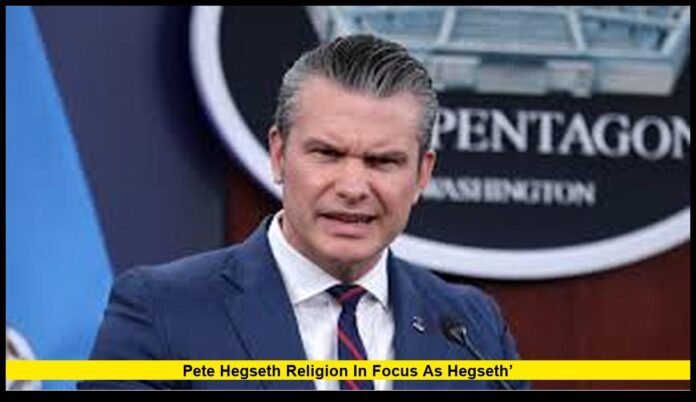

The national conversation around pete hegseth religion continues to grow as the U.S. Defense Secretary’s public expressions of faith draw attention across political, legal, and military circles. His visible integration of Christianity into leadership at the Pentagon has sparked a wide-ranging debate about the role of religion in government, particularly within one of the country’s most powerful institutions.
At a time when the United States faces complex global challenges, leadership decisions are under constant scrutiny. Hegseth’s approach has added another dimension to that scrutiny, placing his personal beliefs at the center of ongoing discussions about policy, culture, and constitutional boundaries.
Faith as a Core Element of Leadership
Pete Hegseth has made it clear that faith plays a central role in how he approaches leadership. Since stepping into his role as Defense Secretary, he has frequently referenced Christian beliefs in both public speeches and internal communications.
His leadership style includes not only personal expressions of faith but also organized religious activities within the Pentagon. These efforts have brought increased visibility to religion within a government setting that traditionally emphasizes neutrality.
For supporters, this reflects authenticity and a commitment to values they believe are foundational to American identity. For critics, it raises important questions about whether such expressions align with the expectations of a public office.
If you want to stay informed on how leadership decisions shape national policy and military culture, keep following updates as this issue continues to evolve.
Pentagon Worship Services Draw Attention
One of the most widely discussed aspects of Hegseth’s tenure is the introduction of recurring Christian worship services within the Pentagon.
These gatherings are structured events that include prayer, scripture readings, and guest speakers. They are open to personnel and have been held during standard working hours, making them accessible to a broad audience within the building.
The presence of these services in such a prominent government location has fueled debate. Some view them as a continuation of longstanding traditions that support the spiritual well-being of service members. Others argue that their official nature could create discomfort for those who do not share the same beliefs.
The frequency and visibility of these events have made them a focal point in discussions about religion in the workplace.
Religious Messaging in Public Statements
Hegseth’s speeches have consistently included references to faith. He has spoken at major Christian gatherings and used religious language when discussing national identity and leadership.
In several appearances, he has emphasized the idea that the United States has deep roots in Christian tradition. He has also linked faith to resilience, purpose, and moral clarity in times of conflict.
These statements resonate strongly with audiences who share similar beliefs. At the same time, they have prompted criticism from those who believe that government leaders should avoid aligning public messaging with any specific religion.
The tone and content of these remarks have contributed to the broader discussion about how personal beliefs should be expressed in official roles.
Policy Shifts and Internal Changes
Beyond public messaging, changes within the Pentagon have also drawn attention.
Adjustments to how chaplains operate within the military structure have been part of this shift. Chaplains have long served as a source of spiritual support for service members of all faiths, and their role has traditionally been guided by principles of inclusivity.
Recent developments suggest a stronger emphasis on visible religious identity in certain contexts. This has led to questions about how policies are evolving and whether they continue to reflect the diversity of beliefs within the armed forces.
Internal reactions have varied, with some personnel expressing support and others raising concerns about maintaining balance.
Debate Over Church-State Boundaries
The prominence of religion within the Pentagon has reignited discussions about the separation of church and state.
Legal scholars and advocacy organizations have pointed to the importance of ensuring that government institutions remain neutral when it comes to religion. They argue that official endorsement—or the appearance of endorsement—can create challenges for inclusivity.
Holding organized religious events in a government setting, especially during work hours, has become a key point of debate. Critics question whether such practices could influence workplace dynamics or create unintended pressure on individuals.
Supporters, however, argue that participation is voluntary and that providing opportunities for worship aligns with principles of religious freedom.
Support for Religious Expression in Leadership
Hegseth’s approach has strong backing from those who believe that faith should have a place in public life.
Supporters argue that leaders should not have to separate their personal beliefs from their professional roles. They see his openness about faith as a reflection of honesty and integrity.
Many also point to the historical presence of religion in the military. From chaplain services to moments of prayer before missions, spirituality has long been part of military culture.
For these supporters, the current approach is not a departure from tradition but rather a continuation of it in a more visible form.
Impact on Military Culture
The U.S. military is one of the most diverse institutions in the country, with service members representing a wide range of religious and non-religious perspectives.
Maintaining unity within this diversity is essential. The increased visibility of one particular religious viewpoint has raised questions about how to ensure that all personnel feel respected and included.
Some current and former military leaders have expressed concern that emphasizing a specific faith could create divisions. Others believe that shared values, including those rooted in faith, can strengthen cohesion.
The outcome of this discussion will likely influence how policies and practices are shaped moving forward.
Religion and National Security Communication
Hegseth’s use of religious language has extended into discussions about national security.
In speeches addressing global conflicts and defense priorities, he has occasionally framed issues in moral or spiritual terms. This approach has drawn attention from both domestic and international audiences.
Critics argue that linking military action to religious language could complicate diplomatic relationships or be misinterpreted by global partners.
Supporters counter that moral clarity has always been part of leadership communication, especially during times of conflict.
This dynamic highlights the challenges of balancing personal conviction with the responsibilities of a global leadership role.
Recent Developments Keep Focus on Leadership Style
Recent events have kept Pete Hegseth in the national spotlight, with attention focused on both policy decisions and leadership approach.
While some developments relate directly to defense strategy, they also contribute to the broader narrative surrounding his tenure.
The combination of high-profile decisions and visible expressions of faith ensures that discussions about his leadership remain active.
As global tensions continue, every aspect of defense leadership—including personal beliefs—becomes part of the public conversation.
Historical Context of Religion in the Military
Religion has long had a presence in the U.S. military, but it has traditionally been managed in a way that supports inclusivity.
Chaplains provide services for a wide range of faiths, and policies have generally emphasized respect for all beliefs.
Leadership has typically maintained a balance, allowing individuals to practice their faith while avoiding institutional alignment with any one religion.
The current discussion reflects a shift in how that balance is interpreted, with increased visibility of religious expression at the leadership level.
Public Reaction Reflects Broader National Debate
Public response to Hegseth’s approach has been divided, reflecting larger conversations about religion and government in the United States.
Some Americans view his actions as a positive example of living out personal beliefs. Others see them as raising important constitutional questions.
Political leaders and commentators have also weighed in, adding to the range of perspectives.
This diversity of opinion underscores the complexity of the issue and its significance in the current national landscape.
The Road Ahead
As discussions continue, the role of religion in government leadership will remain a topic of interest.
Future decisions, potential policy reviews, and ongoing public dialogue will shape how this issue evolves.
Observers will be watching closely to see how leaders balance personal beliefs with institutional responsibilities.
The ongoing focus on pete hegseth religion highlights the importance of this balance and its impact on both policy and perception.
Conclusion
Pete Hegseth’s leadership has brought renewed attention to the intersection of faith and public service. His approach has sparked meaningful conversations about values, governance, and the role of religion in national institutions.
As these conversations continue, they will play a key role in shaping how leadership is understood in the years ahead.
What do you think about the role of faith in government leadership today? Share your perspective and stay engaged as this discussion continues to develop.