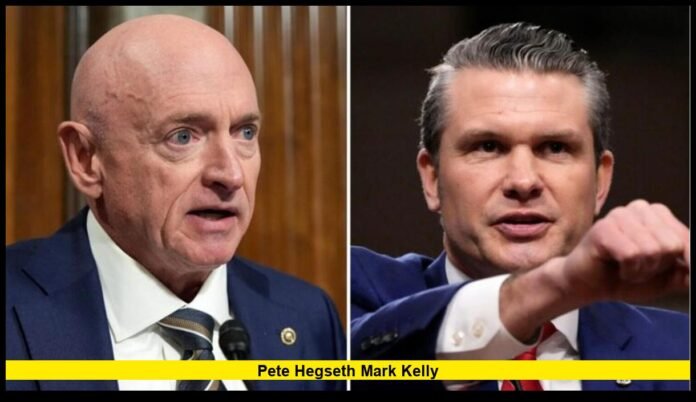

The national spotlight continues to focus on Pete Hegseth Mark Kelly as the Pentagon presses forward with its high-profile inquiry involving Senator Mark Kelly. In the past few days, the tension between Defense Secretary Pete Hegseth and the Arizona senator has surged, driven by renewed scrutiny of Kelly’s appearance in a video addressing military conduct and constitutional duty. The friction has grown into one of the most unexpected and consequential political-military clashes of the year.
As updates unfold, the situation is shaping into a defining moment for civil-military relations, retired-officer obligations, and the boundaries of political speech by former service members who now hold public office.
A Deeper Look at the Two Figures at the Center
Pete Hegseth’s Influence Over the Pentagon
Pete Hegseth leads the Defense Department during a period of heightened mobilization and policy realignment. His long military background as an Army National Guard officer influences his hands-on approach. He emphasizes uncompromising discipline and loyalty within the ranks and advocates for strict enforcement of military codes. Under his leadership, the Pentagon has pivoted toward greater emphasis on hierarchy, order, and accountability at every level of command.
Hegseth’s public style is assertive and direct. He has shown little hesitation in calling out behavior he perceives as challenging to chain-of-command integrity. The controversy involving Kelly fits squarely into his broader vision of restoring what he describes as traditional military standards.
Mark Kelly’s Complex Role as Senator and Veteran
Mark Kelly brings an unusually layered background into the current situation. Before his election to the Senate, he spent years as a Navy pilot, flew combat missions, and later became a NASA astronaut. His military record grants him credibility within defense discussions. His seat in the Senate further places him at the intersection of national-security policy and civil oversight.
Kelly’s decision to appear in a video discussing military obligations stemmed from his long-standing engagement with military ethics. But as a retired officer, he remains subject to the Uniform Code of Military Justice, an aspect that now complicates the Pentagon’s response.
What Triggered the Conflict
The ongoing conflict erupted after the release of a video featuring Kelly and other lawmakers. In the recording, he addressed service members directly, speaking about their responsibility to reject unlawful instructions. He framed his message around the importance of constitutional adherence, a principle he has repeatedly emphasized during his public service.
The message itself did not break new ground; the concept of rejecting unlawful commands has long been part of military instruction. However, the timing and tone of the video, combined with Kelly’s retired-officer status, transformed the issue into something far more explosive inside the Pentagon.
The larger political environment—already tense over questions of military authority—added fuel to the fire. Supporters of Hegseth viewed the video as a challenge to discipline, while supporters of Kelly argued it addressed fundamental duties carried by every service member. With sharp disagreement on intent and impact, the matter quickly escalated.
Hegseth’s Push for Accountability
Once the video circulated widely, Pete Hegseth responded with a firmness that reflected both his leadership style and his broader priorities for the military.
He criticized Kelly’s presentation in the video, including elements of his attire. Hegseth also noted that retired officers remain responsible for adhering to military codes, even after leaving active duty. The possibility of recalling Kelly to active service—rare but legally available—was identified as an option under review.
Hegseth has maintained that the Pentagon must protect the integrity of command structures. In his view, any message that could be seen as encouraging refusal of orders, even if intended to remind troops of constitutional duty, must be examined closely.
His stance signals a larger shift within the Pentagon toward closer oversight of retired officers’ public expressions, especially when those expressions intersect with military matters.
Kelly’s Forceful Pushback
Mark Kelly, however, has not stepped back from his position. He has sharply criticized the investigation, arguing that the Pentagon’s reaction is disproportionate and politically influenced.
He insists that the video simply reiterated an obligation carried by every service member. Kelly also emphasizes that his decades of service demonstrate consistent support for responsible leadership and lawful conduct.
In his public remarks, Kelly has expressed concern that the investigation could set a damaging precedent. If retired officers are punished for reminding service members of their constitutional responsibilities, he argues, it could chill legitimate speech surrounding military ethics.
Kelly also sees the inquiry as a possible attempt to pressure or intimidate him in his Senate role. He has stated that he will not be deterred from speaking on issues related to military conduct, readiness, or governance.
The Legal Questions at the Core
Several complex legal considerations surround the dispute, making this case far from straightforward.
1. Can a Senator Be Recalled to Active Duty?
The military retains the authority to recall retired officers, but doing so for a sitting member of Congress is extremely rare. Legal scholars have debated the constitutional implications, particularly in terms of separation of powers and potential interference with legislative duties.
2. When Does Political Speech Cross Into UCMJ Violation?
Military law places limits on the speech of retired officers, but enforcement has historically been limited. Kelly’s appearance in a politically charged setting raises questions about where those limits should fall.
3. What Constitutes Encouragement of Disobedience?
While Kelly’s defenders say the message was about constitutional adherence, the Pentagon is reviewing whether his words might be interpreted differently by active-duty personnel.
4. How Should Military Law Apply in a Modern Political Environment?
The case is testing how traditional military expectations apply when retired officers hold influential public offices. This intersection has not been defined clearly in prior cases.
The Broader Impact on U.S. Civil-Military Relations
The situation is not occurring in isolation. It highlights growing tensions between political leadership, military governance, and public expectations of both.
Erosion of Trust Between Institutions
The dispute exposes friction between the executive branch and legislative branch at a time when cooperation is crucial. The military’s involvement in political disputes is a long-standing concern in the United States, and this case heightens that worry.
Public Expectations for Military Neutrality
Americans expect the military to remain non-partisan. However, retired officers who enter politics bring unavoidable connections to their past service. The Kelly inquiry is prompting a wider discussion on whether limits should exist—or should be enforced more clearly.
Perceived Politicization of Military Law
Critics argue that pursuing disciplinary inquiry against a senator risks framing the military justice system as a political instrument. Supporters counter that failing to respond to potential violations would undermine military order.
How The Case Could Shape Future Precedents
Depending on the outcome:
- Political candidates with military backgrounds may rethink how they speak about defense issues.
- Retired officers may become more cautious about appearing in partisan contexts.
- Congress may seek clearer definitions of how military policy applies to lawmakers with prior service.
- The Pentagon may adopt new guidelines for public messaging by retired officers.
Where the Situation Stands Today
The Pentagon continues to evaluate the video, Kelly’s remarks, and the circumstances surrounding his participation. No disciplinary action has been announced, but the stakes remain high. Military leaders are assessing whether Kelly’s appearance constituted misconduct under military regulations.
Kelly continues to serve in the Senate and has not backed down from defending the substance of his statements. Meanwhile, Hegseth maintains his stance that military order and discipline must be protected.
The dispute has grown into a defining test of how military law interacts with political office, as well as how constitutional responsibilities overlap with retired-officer obligations. Both sides appear ready to defend their positions publicly and vigorously, suggesting that this confrontation may not resolve quickly.
Why the Issue Matters for Americans
This isn’t only a political dispute. It touches core principles that shape U.S. democracy and national security:
- Whether retired officers have a protected space to speak on issues of military ethics.
- How the Pentagon should interpret public comments made by former service members who now hold office.
- Whether military authority should reach into the political arena when retired officers participate in public discourse.
- How service members should interpret questions of lawful and unlawful instructions.
- Whether recalling an elected official to active duty threatens the constitutional balance of power.
Every phase of this conflict brings new questions and new implications for the relationship between the armed forces and the government they serve.
The Road Ahead
With both sides firm in their positions, the conflict involving Pete Hegseth and Mark Kelly is poised to remain a major national topic. The Pentagon’s findings could reshape expectations for retired military personnel serving in political roles. It could also influence how future secretaries of defense handle disputes involving lawmakers with military backgrounds.
What happens next may determine whether this moment becomes a brief political controversy—or a watershed moment in civil-military history. The coming weeks will likely bring further developments, reactions, and political responses, as leaders across Washington watch closely.
Share your thoughts below and stay connected as this significant national story continues to evolve.