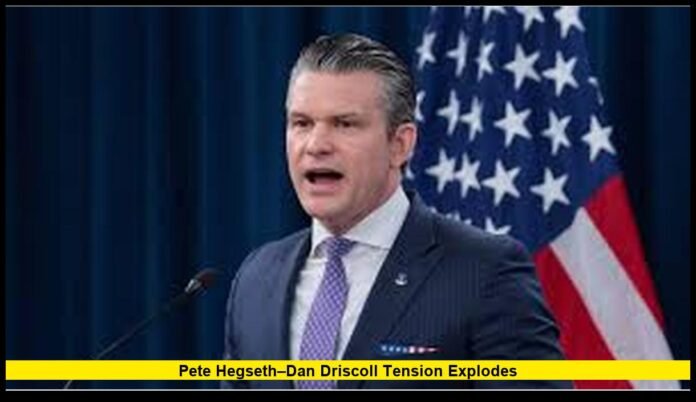

The escalating pete hegseth dan driscoll tension is drawing intense attention across Washington as internal divisions within the Pentagon begin to spill into public view. What started as policy disagreements has evolved into a broader leadership struggle, raising concerns about stability at a time when the U.S. military is managing complex global operations.
This unfolding situation is not just about personalities. It reflects deeper questions about authority, decision-making, and the balance between civilian leadership and military command within the Department of Defense.
A Leadership Rift Moves Into the Spotlight
Tensions between Defense Secretary Pete Hegseth and Army Secretary Dan Driscoll have been building behind closed doors for months. Now, the dispute is becoming more visible, with ripple effects across military leadership and strategic planning.
At the heart of the issue are disagreements over how the Army should be managed, including decisions related to personnel, promotions, and operational priorities. While internal debates are not unusual in Washington, the intensity and visibility of this conflict have set it apart.
The Pentagon relies on coordinated leadership across its branches. When top officials are not aligned, even routine decisions can become complicated, and larger strategic initiatives may face delays or resistance.
High-Level Personnel Decisions Trigger Shockwaves
Recent personnel moves have amplified the situation. The removal and reassignment of senior military officials have raised eyebrows, especially given the timing during ongoing U.S. military operations overseas.
Such changes are typically handled with careful planning and clear communication. However, the rapid pace and limited explanation surrounding these decisions have contributed to uncertainty within defense circles.
These developments have also sparked conversations about how much influence civilian leadership should have over military appointments. While civilian oversight is a cornerstone of U.S. defense policy, the process is generally expected to maintain consistency and avoid disruption.
Disagreements Over Promotions and Authority
One of the central issues fueling the divide is how promotions and leadership roles are determined within the Army.
Reports indicate that both Hegseth and Driscoll have strong views on which officers should advance and how those decisions should align with broader defense goals. These disagreements have created friction, particularly when decisions appear to bypass traditional processes.
Promotions in the military are not just about career advancement—they shape the future direction of leadership and influence how strategies are executed on the ground. As a result, disputes in this area can have long-term consequences.
The conflict has also highlighted differing perspectives on how centralized decision-making should be within the Pentagon. While some argue for a more unified approach, others emphasize the importance of maintaining autonomy within each branch.
Operational Pressures Raise the Stakes
The timing of this leadership tension adds another layer of complexity. The U.S. military is currently engaged in multiple operations that require coordination across regions, commands, and allied forces.
In such an environment, clarity and consistency at the top are essential. Any perception of internal division can create challenges for planning and execution, particularly when rapid decisions are required.
Military leaders depend on clear guidance from civilian leadership. When that guidance appears inconsistent or contested, it can lead to delays or confusion at various levels of command.
This is why the current situation is being closely watched—not just in Washington, but also by military personnel and international partners.
Internal Dynamics Within the Pentagon
The Pentagon is one of the most complex organizations in the world, with layers of leadership and a wide range of responsibilities. Managing this structure requires coordination, trust, and a shared understanding of priorities.
The ongoing tension between Hegseth and Driscoll is testing these dynamics. It has brought attention to how decisions are made and how disagreements are resolved within the Department of Defense.
In many cases, internal debates can strengthen decision-making by bringing different perspectives to the table. However, when disagreements become prolonged or highly visible, they can have the opposite effect.
Maintaining a balance between healthy debate and unified leadership is critical for the Pentagon’s effectiveness.
Reactions Across Washington
The situation has not gone unnoticed among lawmakers and defense observers. Members of Congress and policy analysts are closely monitoring developments, particularly in relation to how they might affect military readiness and oversight.
There is growing interest in understanding the reasons behind recent personnel changes and how they align with broader defense objectives. Questions are also being raised about communication within the Pentagon and how decisions are being conveyed to key stakeholders.
While public statements have remained measured, the level of attention suggests that this issue could become a focal point in future discussions about defense policy and leadership.
Impact on Military Morale and Readiness
Leadership stability plays a significant role in maintaining morale within the military. Service members look to their leaders for direction, consistency, and confidence in decision-making.
When high-level disagreements become visible, it can create uncertainty among troops and officers. This is especially true if changes in leadership occur without clear explanations.
Readiness is another critical factor. The ability of the military to respond effectively to challenges depends on well-coordinated leadership and clear lines of authority.
While the U.S. military remains highly capable, ongoing leadership tensions have the potential to introduce complications that could affect planning and execution.
The Broader Significance of the Conflict
The pete hegseth dan driscoll tension is part of a larger conversation about how the Department of Defense operates in a rapidly changing global environment.
As new challenges emerge, from geopolitical conflicts to technological advancements, the Pentagon must adapt while maintaining stability. This requires strong leadership and a clear vision.
The current situation highlights the importance of alignment among top officials. It also underscores the need for transparent processes and effective communication.
These factors are essential not only for managing day-to-day operations but also for shaping long-term strategy.
Looking Ahead
As the situation continues to develop, attention will remain focused on how both leaders navigate the challenges ahead.
Key questions include whether the tension will ease or intensify, how future decisions will be handled, and what steps might be taken to restore confidence in Pentagon leadership.
The coming weeks and months will be critical in determining the trajectory of this conflict and its impact on the Department of Defense.
Why Americans Are Paying Attention
For many Americans, this story goes beyond internal government dynamics. It touches on national security, military effectiveness, and the leadership responsible for protecting U.S. interests.
The Pentagon plays a central role in addressing global challenges, and its leadership decisions have far-reaching implications.
Understanding what is happening inside the Department of Defense helps provide insight into how the U.S. responds to both current and future threats.
Conclusion
The tension between Pete Hegseth and Dan Driscoll has evolved into a significant issue within the Pentagon, with implications that extend far beyond individual disagreements.
As leadership decisions continue to shape the direction of the military, the importance of stability, coordination, and clear communication cannot be overstated.
How this situation unfolds will not only influence the Pentagon but also play a role in shaping broader defense policy in the years ahead.
The conversation is far from over—share your perspective and keep following as new developments continue to unfold.