

On the morning of December 7, 1941, the United States experienced one of the most catastrophic and defining moments in its history. The attack on Pearl Harbor is a date seared into American memory — and for good reason. It launched the nation into World War II, reshaped global politics, and continues to be commemorated more than eight decades later. Whether you’re a history student, a curious reader, or planning a visit to the Pearl Harbor National Memorial, this guide covers everything you need to know about the Pearl Harbor date, the events of that fateful morning, and the latest developments in 2026.
What Is the Pearl Harbor Date?
The Pearl Harbor date is Sunday, December 7, 1941, a day that forever changed the course of American and world history. In the early morning hours, the Imperial Japanese Navy launched a carefully planned surprise attack against the United States Pacific Fleet stationed at Pearl Harbor on the island of Oahu. The assault began shortly before 8:00 a.m. local time and lasted for approximately two hours, causing extensive damage to American military installations, battleships, aircraft, and personnel.
At the time of the attack, the United States had not yet formally entered World War II, although tensions with Japan had been escalating due to conflicts in Asia and economic sanctions imposed by the United States. The surprise nature of the strike shocked Americans across the country, as many had believed the nation was still insulated from the war raging in Europe and Asia.
The attack targeted battleships, airfields, and military facilities throughout Pearl Harbor and nearby locations. Several major U.S. battleships were sunk or heavily damaged, including the USS Arizona, which suffered a catastrophic explosion after a bomb detonated its forward ammunition magazine. More than 1,100 sailors and Marines aboard the Arizona lost their lives, making it one of the deadliest single-ship losses in American naval history.
In total, the attack resulted in the deaths of more than 2,400 Americans and injured over 1,000 others. Hundreds of military aircraft were destroyed or damaged, significantly impacting American defensive capabilities in the Pacific. Despite the devastating losses, important assets such as U.S. aircraft carriers were not present in the harbor at the time, a factor that later proved critical to the American war effort.
The day after the attack, on December 8, 1941, President Franklin D. Roosevelt addressed a joint session of Congress. In one of the most famous speeches in American history, he referred to December 7, 1941, as “a date which will live in infamy.” His speech rallied the nation and helped unite public opinion behind entering the war. Congress quickly approved a declaration of war against Japan, officially bringing the United States into World War II.
The significance of the Pearl Harbor date extends far beyond the attack itself. December 7, 1941, marked a turning point that transformed the United States from a nation largely focused on avoiding foreign conflicts into a major participant in a global war. The country’s entry into World War II would eventually influence the outcome of the conflict and reshape international politics for decades to come.
Today, December 7 is observed annually as Pearl Harbor Remembrance Day in the United States. Ceremonies, memorial services, and educational programs honor the service members and civilians who lost their lives during the attack. Visitors from around the world travel to the USS Arizona Memorial, which stands above the sunken remains of the battleship, to pay tribute to those who perished and to reflect on the enduring lessons of the event.
More than eight decades later, the Pearl Harbor date remains deeply embedded in American memory as a symbol of sacrifice, resilience, and national unity during one of the country’s most challenging moments.
Background: Why Did Japan Attack Pearl Harbor?
Rising Tensions Between the United States and Japan
The attack on Pearl Harbor was not an isolated event but the culmination of years of growing political, economic, and military tensions between Japan and the United States. Throughout the 1930s, Imperial Japan pursued an aggressive expansionist policy across East Asia, seeking to build a vast empire that would secure resources and strengthen its position as a major world power.
Japan’s military campaigns began with the occupation of Manchuria in 1931 and expanded into a full-scale war with China in 1937. As Japanese forces advanced across Asia, reports of military aggression and humanitarian atrocities raised concerns among Western nations, particularly the United States, which had significant economic and strategic interests in the Pacific region.
In response to Japan’s continued expansion, the United States gradually increased economic pressure. American leaders believed that restricting access to vital resources could discourage further military action. By 1940 and 1941, Washington imposed a series of trade restrictions on Japan, limiting exports of critical materials such as steel, scrap metal, and aviation fuel.
The most significant measure came in July 1941, when the United States froze Japanese assets and effectively imposed an oil embargo. This action threatened Japan’s access to the fuel necessary to power its military, navy, and industrial economy. Because Japan imported the vast majority of its oil, military leaders viewed the embargo as a serious threat to the nation’s future.
Japanese officials faced a difficult choice. They could either withdraw from occupied territories and negotiate with the United States or seek alternative sources of resources through further territorial expansion. Many leaders within Japan’s military establishment favored the latter option, believing that decisive action was necessary to preserve Japan’s strategic ambitions.
Japan’s Strategic Objectives
Japanese military planners concluded that expansion into resource-rich areas of Southeast Asia offered the best solution to the country’s growing shortages. However, such expansion risked direct confrontation with the United States, whose Pacific Fleet was based at Pearl Harbor.
To achieve their objectives, Japanese leaders believed they needed to neutralize American military power in the Pacific before launching broader operations across the region. Their goal was not necessarily to conquer the United States but to inflict such a severe blow that American leaders would hesitate to interfere with Japan’s plans.
Military strategists hoped a surprise attack would destroy key naval assets, weaken American morale, and provide Japan with several months to consolidate its newly acquired territories. During that time, Japan intended to establish a strong defensive perimeter stretching across the Pacific, making any future American counteroffensive costly and difficult.
Admiral Isoroku Yamamoto’s Plan
The architect of the Pearl Harbor operation was Isoroku Yamamoto, commander-in-chief of Japan’s Combined Fleet. Although Yamamoto understood America’s industrial strength and believed a prolonged war would be risky for Japan, he argued that if conflict became unavoidable, Japan needed to strike first and strike decisively.
Yamamoto developed an ambitious plan centered on aircraft carriers rather than traditional battleships. This strategy reflected a new era in naval warfare, where carrier-based aircraft could project power across vast distances and attack enemy fleets without direct ship-to-ship engagement.
On November 5, 1941, Japanese leaders approved the attack plan. Weeks later, on November 26, a powerful naval task force departed from northern Japan under conditions of extreme secrecy. The strike force consisted of six aircraft carriers, numerous escort ships, submarines, and more than 400 aircraft.
To avoid detection, the fleet maintained strict radio silence throughout its voyage and traveled along a remote northern Pacific route far from normal commercial shipping lanes. The force covered approximately 3,500 miles before reaching a launch position roughly 230 miles north of Oahu.
The Goal of the Surprise Attack
Japanese planners believed that surprise was essential to success. By attacking without warning, they hoped to catch American ships and aircraft unprepared, maximizing destruction while minimizing Japanese losses.
The operation focused on battleships, airfields, and military infrastructure throughout Pearl Harbor. Japanese commanders expected that crippling the U.S. Pacific Fleet would buy enough time for Japan to seize territories throughout Southeast Asia, including resource-rich regions that could provide oil, rubber, and other critical materials.
While the attack achieved significant short-term military success, it failed to eliminate several key American assets, including aircraft carriers that happened to be away from Pearl Harbor on the day of the assault. More importantly, instead of weakening American resolve, the attack united the nation and generated overwhelming public support for entering World War II.
A Miscalculation with Historic Consequences
Japanese leaders anticipated that the United States might seek a negotiated settlement after suffering a devastating blow. Instead, the attack produced the opposite effect. On December 8, 1941, President Franklin D. Roosevelt asked Congress for a declaration of war, describing the previous day as “a date which will live in infamy.”
What Japan intended as a strategic knockout punch ultimately became one of the greatest miscalculations in military history. The attack on Pearl Harbor brought the United States fully into World War II, mobilized America’s vast industrial capacity, and set in motion events that would eventually lead to Japan’s defeat in 1945.
The Attack: A Minute-by-Minute Account
Early Warning Signs Before the Assault
The attack on Pearl Harbor unfolded with remarkable speed, but several warning signs appeared before the first bombs fell. In the predawn hours of December 7, 1941, American personnel observed unusual activity near the entrance to Pearl Harbor.
At approximately 3:42 a.m. Hawaiian time, crew members aboard the USS Condor reported spotting what appeared to be a submarine periscope near the harbor entrance. The sighting suggested the presence of an unidentified vessel operating in restricted waters. Although the information was relayed to military authorities, the significance of the report was not fully recognized amid the uncertainty and routine military activity of the time.
A few hours later, Japanese carrier groups positioned north of Oahu prepared to launch one of the most ambitious naval air operations in history. The strike force had traveled thousands of miles across the Pacific while maintaining strict radio silence, successfully avoiding detection by American intelligence.
6:10 AM – The First Wave Takes Off
At approximately 6:10 a.m., the first attack wave began launching from six Japanese aircraft carriers. Around 183 aircraft, including torpedo bombers, dive bombers, high-level bombers, and fighter escorts, rose into the morning sky and headed toward Oahu.
The pilots had been trained extensively for the mission and carried detailed maps and intelligence reports on their targets. Their primary objectives included battleships anchored along Battleship Row, military airfields, and key naval facilities that supported American operations in the Pacific.
As the aircraft approached Hawaii, most American service members were unaware that a massive attack force was rapidly closing in.
7:55 AM – The Attack Begins
At approximately 7:55 a.m., the first Japanese aircraft appeared over Pearl Harbor and surrounding military installations. Moments later, bombs began falling across the harbor while torpedo planes swept low over the water toward anchored battleships.
The attack achieved complete surprise. Many American sailors were still eating breakfast, preparing for Sunday duties, or sleeping aboard their ships when explosions shattered the morning calm.
Japanese aircraft simultaneously targeted major military airfields, including Hickam Field and Wheeler Field. Aircraft parked wingtip-to-wingtip to guard against sabotage became easy targets for strafing and bombing attacks.
Within minutes, fires erupted across military facilities, and thick black smoke began rising above the harbor.
The Destruction of Battleship Row
One of the principal objectives of the attack was the destruction of the American battleship fleet. Japanese torpedo bombers and dive bombers concentrated their efforts on vessels moored along Battleship Row.
Several battleships suffered severe damage, but the most catastrophic loss occurred aboard the USS Arizona. A bomb penetrated the ship and detonated its forward ammunition magazines, triggering a massive explosion that tore through the vessel. The blast instantly killed hundreds of sailors and Marines and remains one of the deadliest single moments in American naval history.
Other ships, including the USS Oklahoma, capsized after sustaining multiple torpedo hits, while numerous additional vessels were sunk, damaged, or set ablaze.
8:54 AM – The Second Wave Arrives
After the initial strike inflicted widespread destruction, a second wave of approximately 170 Japanese aircraft arrived over Pearl Harbor at around 8:54 a.m.
This phase of the attack focused on completing damage to military installations, ships, and aircraft that had survived the first assault. American anti-aircraft crews, now fully alerted, mounted a much stronger defense than during the opening moments of the attack.
Heavy anti-aircraft fire filled the skies as defenders attempted to repel the incoming aircraft. Despite growing resistance, Japanese planes continued to strike targets throughout the harbor and surrounding bases.
9:30 AM – The Explosion of USS Shaw
One of the most dramatic moments of the attack occurred around 9:30 a.m. when the destroyer USS Shaw exploded while in dry dock.
The ship’s forward ammunition magazines detonated in a spectacular fireball that sent debris high into the air. Photographs capturing the explosion became some of the most recognizable images associated with the Pearl Harbor attack and illustrated the immense destructive power unleashed that morning.
10:00 AM – The Attack Ends
By approximately 10:00 a.m., Japanese aircraft began withdrawing and returning to their carriers north of Hawaii. The assault had lasted only about 75 minutes to two hours, yet the scale of destruction was staggering.
In that brief period, the attackers had sunk or damaged numerous American warships, destroyed or crippled hundreds of aircraft, and inflicted thousands of casualties. Military facilities across Oahu had been heavily damaged, and much of the Pacific Fleet had been temporarily neutralized.
A Short Attack with Lasting Consequences
Although the bombing ended before midday, its impact extended far beyond the smoke-filled waters of Pearl Harbor. More than 2,400 Americans were killed, and over 1,000 were wounded during the attack. The destruction shocked the nation and transformed public opinion almost overnight.
The events of December 7, 1941, prompted the United States to enter World War II, setting in motion a global conflict that would reshape international politics, military strategy, and world history. What occurred during those few hours on a quiet Sunday morning remains one of the most studied and consequential military attacks ever carried out.
Pearl Harbor Casualties and Damage
American Losses
The destruction at Pearl Harbor was staggering. According to the National Archives and HISTORY.com, the attack resulted in:
- More than 2,400 Americans killed, including approximately 68 civilians
- 1,178 people wounded
- Nearly 20 naval vessels sunk or damaged, including eight battleships
- More than 300 aircraft destroyed or damaged
The single greatest loss of life occurred aboard the USS Arizona, where 1,177 sailors, officers, and Marines perished — accounting for more than half of all American military deaths in the attack. As per HISTORY, an 1,800-pound bomb pierced the deck of the Arizona and detonated her forward ammunition magazine, causing a catastrophic explosion that sank the ship almost instantly.
The USS Oklahoma was also struck by multiple torpedoes, rolled onto her side, and sank with hundreds of sailors trapped inside.
Japanese Losses
By comparison, Japanese losses were minimal. According to the National Archives, Japan lost fewer than 100 personnel, 29 planes, and 5 midget submarines.
What Survived the Attack
Critically, the U.S. Pacific Fleet’s aircraft carriers were not present at Pearl Harbor on December 7 — a fact that proved decisive. Some had returned to the mainland; others were delivering planes to troops on Midway and Wake Islands. Additionally, the attack left Pearl Harbor’s oil storage depots, repair shops, shipyards, and submarine docks largely intact, allowing the U.S. Navy to recover and rebuild at a remarkable pace.
America Declares War: The Aftermath of December 7
Roosevelt’s “Day of Infamy” Speech
The shock of the Pearl Harbor attack reverberated across the United States on December 7, 1941. News reports detailing the destruction at Pearl Harbor spread rapidly, and Americans anxiously awaited the government’s response. The nation, which had largely remained outside the fighting despite the ongoing global conflict, suddenly found itself thrust into war.
On the afternoon of December 8, 1941, President Franklin D. Roosevelt appeared before a joint session of Congress to address the attack. In one of the most memorable speeches in American history, Roosevelt described the previous day as “a date which will live in infamy.” His brief but powerful address outlined the events of the attack and called for immediate action against Japan.
Roosevelt emphasized that the assault had been deliberate and unprovoked, occurring while diplomatic discussions between the two nations were still underway. His speech resonated deeply with both lawmakers and the American public, uniting the country behind a common purpose.
Following the address, Congress quickly debated the president’s request for a declaration of war. The resolution passed overwhelmingly, with only one member of Congress, Representative Jeannette Rankin, voting against it. The vote formally committed the United States to war against Japan and marked the nation’s official entry into World War II.
The Global Conflict Expands
The consequences of the declaration extended far beyond the Pacific. Japan was a member of the Axis alliance alongside Germany and Italy. In accordance with their alliance commitments, both nations declared war on the United States within days of the Pearl Harbor attack.
The United States responded by declaring war on Germany and Italy, transforming what had previously been separate regional conflicts into a truly global war involving major powers across Europe, Africa, Asia, and the Pacific.
For Americans, the attack ended years of debate over whether the nation should become directly involved in the conflict. Public opinion shifted dramatically, and support for the war effort became nearly universal.
America Mobilizes for War
Following the declaration of war, the United States undertook one of the largest mobilization efforts in its history. Factories that had previously produced consumer goods quickly converted to manufacturing military equipment, including tanks, aircraft, ships, ammunition, and vehicles.
The American economy transformed into a wartime powerhouse. Industrial production surged as businesses, workers, and government agencies coordinated efforts to support military operations around the world. Shipyards worked around the clock building naval vessels, while aircraft factories produced thousands of planes each month.
At the same time, millions of Americans answered the call to serve. Men and women enlisted in the armed forces in unprecedented numbers, joining the Army, Navy, Marine Corps, Coast Guard, and newly expanded air forces. By the end of the war, more than 12 million Americans had served in uniform, participating in campaigns across multiple continents and oceans.
Women also played a vital role on the home front and in military support services, filling positions in factories, offices, transportation networks, and auxiliary military organizations. Their contributions helped sustain the enormous demands of the war effort.
A Turning Point in World War II
Historians widely regard America’s entry into World War II as one of the conflict’s most significant turning points. The United States possessed vast industrial resources, a large population, and the capacity to support military operations on a global scale.
In the years following Pearl Harbor, American forces participated in major campaigns throughout the Pacific and Europe. The nation worked closely with Allied partners, including United Kingdom, Soviet Union, and other Allied nations to counter Axis advances and ultimately push toward victory.
The rebuilding of the Pacific Fleet, combined with American industrial output and military innovation, gradually shifted the balance of power. Battles such as the Battle of Midway and later Pacific campaigns demonstrated that the United States had recovered from the devastating losses suffered at Pearl Harbor.
The Road to Victory
Over the next several years, Allied forces steadily gained ground against Axis powers. Germany surrendered in May 1945 after Allied armies advanced into Europe, bringing the war in Europe to an end.
The conflict in the Pacific continued until August 1945. After years of intense fighting and following the atomic bombings of Hiroshima and Nagasaki, Japan announced its acceptance of Allied surrender terms. The formal surrender was signed aboard the USS Missouri on September 2, 1945, officially ending World War II.
Less than four years after the surprise attack on Pearl Harbor, the war that began for the United States on December 7, 1941, had concluded with Japan’s unconditional surrender.
The Lasting Legacy of December 7, 1941
The aftermath of Pearl Harbor reshaped the United States in profound ways. The attack not only led America into World War II but also transformed its role on the world stage. Emerging from the conflict as a global superpower, the United States became a central force in international affairs for the remainder of the twentieth century and beyond.
Today, Roosevelt’s “Day of Infamy” speech remains a defining moment in American history, symbolizing national unity, determination, and resilience in the face of adversity. The events that followed December 7, 1941, demonstrate how a single day can alter the course of nations and change the trajectory of world history forever.
National Pearl Harbor Remembrance Day
December 7: A Day of National Observance
More than eight decades after the attack, December 7 remains a solemn day of reflection across the United States. To ensure that the sacrifices made during the attack on Pearl Harbor would never be forgotten, Congress officially designated December 7 as National Pearl Harbor Remembrance Day on August 23, 1994. The observance serves as an annual opportunity for Americans to honor the service members and civilians who lost their lives during one of the most pivotal moments in the nation’s history.
Unlike federal holidays that include government office closures, National Pearl Harbor Remembrance Day is observed as a day of remembrance and tribute. Communities, veterans’ organizations, military installations, schools, and historical institutions throughout the country hold ceremonies, educational programs, and memorial events dedicated to preserving the memory of those affected by the attack.
Ceremonies at Pearl Harbor
The centerpiece of the annual observance takes place at the Pearl Harbor National Memorial on the island of Oahu. Each year, veterans, active-duty military personnel, government officials, historians, families of victims, and visitors from around the world gather to commemorate the events of December 7, 1941.
The ceremonies often include moments of silence, military honors, wreath-laying tributes, memorial speeches, and the sounding of bells at the exact times associated with the attack. Particular attention is paid to remembering the 2,400-plus Americans who were killed and the thousands more who were wounded during the assault.
For many years, surviving veterans who witnessed the attack firsthand participated in these commemorations, sharing their experiences with younger generations. As the number of living survivors has diminished with time, preserving their stories has become an increasingly important part of the remembrance effort.
Honoring the Fallen
One of the most powerful symbols of remembrance is the USS Arizona Memorial, which spans the sunken remains of the battleship destroyed during the attack. The memorial serves as the final resting place for many of the sailors and Marines who perished aboard the ship and stands as a lasting tribute to all who lost their lives on December 7, 1941.
Visitors to the memorial can view the remains of the vessel beneath the water and learn about the events surrounding the attack. The site has become one of the most significant military memorials in the United States, attracting millions of visitors over the years.
Flags at Half-Staff
A key tradition of National Pearl Harbor Remembrance Day is the display of the American flag at half-staff. Across the nation, flags are lowered from sunrise until sunset as a mark of respect for those who died during the attack.
The gesture serves as a visible reminder of the lives lost and the sacrifices made by members of the armed forces and civilians caught in the assault. Government buildings, military facilities, schools, businesses, and private residences often participate in this observance.
Educating Future Generations
National Pearl Harbor Remembrance Day is not only about honoring the past but also about educating future generations. Schools, museums, libraries, and historical organizations use the occasion to teach students about the causes, events, and consequences of the Pearl Harbor attack.
Educational programs frequently explore the broader context of World War II, America’s entry into the conflict, and the lasting impact the war had on global history. By studying these events, younger generations gain a deeper understanding of the importance of vigilance, sacrifice, and national unity during times of crisis.
The Enduring Significance of December 7
National Pearl Harbor Remembrance Day ensures that the events of December 7, 1941, remain a living part of America’s historical memory. The observance honors not only those who died during the attack but also the courage of the service members, first responders, and civilians who faced extraordinary circumstances on that fateful morning.
As each anniversary passes, the day continues to remind Americans of the profound impact of Pearl Harbor on the nation’s history. Through memorial ceremonies, educational initiatives, and acts of remembrance, the legacy of those who served and sacrificed lives on, ensuring that the lessons of Pearl Harbor are never forgotten.
Pearl Harbor National Memorial: What You Need to Know in 2026
Visiting the Memorial
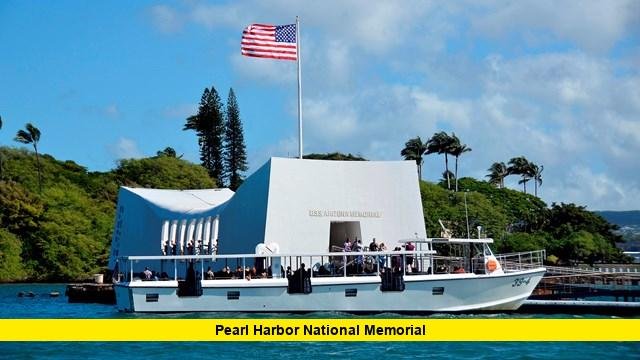
The Pearl Harbor National Memorial is a unit of the U.S. National Park System located on the island of Oahu, Hawaii. According to the National Park Service, the memorial attracted 1,534,226 visitors in 2025. Nearby attractions include the USS Missouri memorial, the USS Bowfin museum, and the Pearl Harbor Aviation Museum.
USS Arizona Memorial Reopens
After a period of essential preservation work conducted by the National Park Service and the U.S. Navy, the USS Arizona Memorial fully reopened to the public on November 1, 2025. According to pearlharbor.org, advance timed tickets are now once again available through Recreation.gov, with same-day standby tickets available at the visitor center on a first-come, first-served basis.
Operation 85: Identifying the Unknown Dead — A 2026 Milestone
Perhaps the most significant Pearl Harbor-related development in 2026 is the groundbreaking effort to identify the sailors and Marines buried as unknowns after the attack.
According to Stars and Stripes (April 2026), the Defense POW/MIA Accounting Agency (DPAA) announced in late April 2026 that the advocacy group Operation 85 — led by Kevin Kline, grandnephew of Arizona crew member Gunner’s Mate 2nd Class Robert Edwin Kline — had officially met the 60% threshold of DNA Family Reference Samples required to move forward with the identification process.
As per Stars and Stripes, DPAA now plans to formally request the disinterment of approximately 88 unknown sailors associated with the USS Arizona buried at the National Memorial Cemetery of the Pacific (known as the “Punchbowl”) in Honolulu, along with 52 additional Pearl Harbor dead with no confirmed ship affiliation. Remains will be exhumed in groups of eight, every two to three weeks, and sent to laboratories for potential DNA-based identification.
According to DPAA Director Kelly McKeague, the disinterment is expected to begin in November or December 2026 — timed to coincide closely with the 85th anniversary of the Pearl Harbor attack on December 7, 2026.
Operation 85’s goal, as stated on their official site, is to remove the word “Unknown” from over 140 graves by or before the 85th anniversary, giving closure to the families of those who gave their lives in service to their country.
Pearl Harbor’s Legacy
The Pearl Harbor date — December 7, 1941 — is more than a historical footnote. It fundamentally altered the course of the 20th century, bringing the United States into the deadliest conflict in human history and ultimately shaping the post-war world order. The attack demonstrated the vulnerability of even well-defended military installations to surprise assault — a lesson that has continued to influence American defense strategy and foreign policy ever since.
As per the National WWII Museum, the lessons, legacies, and memory of Pearl Harbor continue to influence contemporary politics, diplomacy, and military strategy to this day. With the 85th anniversary approaching in December 2026, and the historic effort to identify the attack’s unknown fallen now in active motion, Pearl Harbor remains as relevant and significant as ever.
FAQs
Q: What is the exact date of the Pearl Harbor attack? A: The attack on Pearl Harbor took place on Sunday, December 7, 1941. The first Japanese planes appeared over Pearl Harbor at 7:55 AM local Hawaiian time.
Q: Why is December 7 called “a date which will live in infamy”? A: The phrase comes from President Franklin D. Roosevelt’s speech to Congress on December 8, 1941, in which he requested a declaration of war against Japan. The phrase has since become one of the most famous lines in American presidential history.
Q: How long did the Pearl Harbor attack last? A: The attack lasted approximately 75 minutes to under two hours, spanning two waves — the first beginning at 7:55 AM and the second at 8:54 AM, with Japanese planes departing by around 10:00 AM.
Q: How many people died at Pearl Harbor? A: More than 2,400 Americans were killed in the attack, including approximately 68 civilians. Over 1,178 people were wounded. The USS Arizona alone accounted for 1,177 deaths.
Q: How many ships were sunk or damaged at Pearl Harbor? A: Nearly 20 American naval vessels were sunk or damaged, including eight battleships. Over 300 aircraft were also destroyed or damaged.
Q: Did the Japanese aircraft carriers participate directly in the attack? A: Yes. Six Japanese aircraft carriers launched the attacking planes from a point approximately 230 miles north of Oahu. The carriers themselves did not enter the harbor. Ironically, the U.S. Pacific Fleet’s own aircraft carriers were absent from Pearl Harbor on the day of the attack.
Q: What is National Pearl Harbor Remembrance Day? A: National Pearl Harbor Remembrance Day is observed every year on December 7. It was officially designated by the U.S. Congress on August 23, 1994. Ceremonies are held at the Pearl Harbor National Memorial in Hawaii, and American flags are flown at half-staff.
Q: Is the USS Arizona Memorial open in 2026? A: Yes. The USS Arizona Memorial reopened on November 1, 2025, following completion of essential preservation work. Advance timed tickets are available through Recreation.gov, and same-day standby tickets are available at the Pearl Harbor Visitor Center.
Q: What is Operation 85 at Pearl Harbor? A: Operation 85 is a grassroots advocacy effort led by families of USS Arizona crew members to identify unknown sailors buried at the National Memorial Cemetery of the Pacific in Honolulu. As of April 2026, the required DNA threshold has been met, and the DPAA plans to begin disinterment of remains in late 2026, ahead of the 85th anniversary of the attack on December 7, 2026.
Q: Did the United States win World War II after Pearl Harbor? A: Yes. After entering World War II following the Pearl Harbor attack, the United States played a decisive role in the Allied victory. Japan formally surrendered in August 1945, less than four years after the attack on Pearl Harbor.
As the 85th anniversary of Pearl Harbor approaches in December 2026 — and the historic effort to finally name the unknown fallen moves closer to reality — we’d love to hear from you: Do you have a family connection to Pearl Harbor, or are you planning to visit the memorial? Share your thoughts in the comments below.