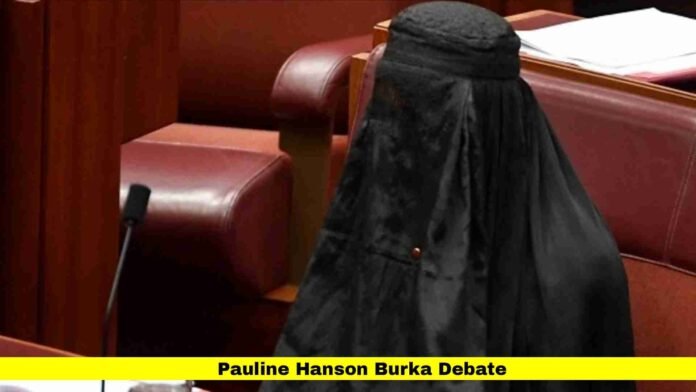

The phrase pauline hanson burka continues to spark strong reactions across Australia and abroad, especially as discussions about religious expression, political theatre, and national identity remain relevant today. Her decision years ago to enter the Australian Senate wearing a full-face covering still stands as one of the most memorable political moments in the country’s modern history. It also left a lasting imprint on public debate, government policy conversations, and global reactions to visual political protest.
A Defining Moment in Australian Politics
When Pauline Hanson stepped into the Senate chamber wearing a burka, she delivered a political message that instantly spread worldwide. Her action was meant to ignite a discussion about national security and the wearing of full-face coverings in public settings. The moment did more than start a conversation — it brought international attention to Australia’s internal cultural debates.
Her appearance was a calculated statement, and the shock factor achieved its goal. For supporters, it raised concerns about security and social integration. For critics, it crossed a line and misunderstood the religious and cultural significance of the garment.
Why the Burka Became a Political Flashpoint
The burka has long been a subject of intense debate in Western countries. Hanson’s stunt placed it front and center in Australia, merging concerns about cultural diversity, public safety, and personal freedom into a single national conversation.
Several key themes define the ongoing relevance of the incident:
- Concerns about identity in multicultural societies
- Tension between cultural expression and national security
- The power of symbolic acts in legislative spaces
- Political branding through dramatic gestures
Her choice amplified a debate that was already present and ensured it would receive lasting attention from both sides of the political aisle.
Reactions From Political Figures and Communities
After the stunt, lawmakers, community leaders, and religious groups voiced strong responses. Some viewed her move as a troubling example of using a religious garment as a prop to make a political point. Others felt she was addressing a topic that many were reluctant to discuss openly.
What stood out was the emotional weight of the reactions. Muslim community members expressed frustration, saying that the garment carries spiritual and cultural meaning. Many Australians outside those communities also felt discomfort with the stunt, seeing it as divisive and unnecessary.
Those who defended Hanson saw her act as a push for greater debate on public safety, identity, and cultural expectations.
Why the Conversation Still Matters Today
Even years later, the pauline hanson burka moment remains relevant because the larger issues surrounding it have not gone away. Topics such as integration, cultural expression, and public policy continue to shape national dialogues worldwide.
The gesture became symbolic in discussions about:
- How democracies balance respect for cultural practices with security concerns
- The limits of political theatre in legislative bodies
- The effects of highly visual protests by elected officials
- Public perceptions of Muslim communities in Western nations
The lasting nature of the event demonstrates how a single image can influence discourse long after the moment has passed.
Understanding the Broader Social Impact
Hanson’s decision highlighted deep social divides. It showed how a garment worn by some Muslim women can become a political symbol far beyond its cultural meaning. The burka, in this context, became a stand-in for debates about migration, cultural identity, and the role of religion in public spaces.
The episode also sparked ongoing discussions about representation — specifically, how minority groups feel when their cultural symbols are used as political tools. Many argued that the stunt overlooked the voices of the women who actually wear the garment.
How the Incident Influenced Public Debate
While the stunt did not result in legislative changes, it did leave a significant imprint on national dialogue. Media outlets dissected the moment for weeks. Community forums held discussions on cultural expression and public safety. Politicians were asked to clarify their views on religious garments.
This level of conversation demonstrates how powerful symbolism can be. Even without producing new laws, symbolic actions can shape public opinion and force political parties to articulate clear positions on controversial issues.
Australia’s Approach to Cultural Clothing Today
Australia does not have a national law banning full-face coverings. Debates around the issue remain active, but the country generally allows individuals to wear religious garments freely. Some security measures exist in limited settings, such as identity checks, but no broad-style ban is in place.
Hanson’s stunt did not shift the legal landscape, yet it did shape the public’s understanding of the issue. It highlighted the contrast between security-focused arguments and the value placed on personal and religious freedom.
Why the Story Resonates With U.S. Readers
For American readers, the pauline hanson burka incident offers a lens into how other democracies manage complex cultural debates. The U.S. has its own historical conversations about religious dress, personal expression, and the limits of political theatre.
This Australian episode serves as a reminder that:
- Symbolic political acts can create long-term national discussions
- Clothing can carry deep cultural and religious significance
- Security and freedom debates often overlap in emotionally charged ways
It also shows how political leaders use visually striking moments to attract attention, shape narratives, and mobilize supporters.
Looking Ahead
The incident remains a reference point whenever discussions about religious garments or symbolic political actions arise. It continues to spark debate because the themes it touches — identity, freedom, representation, and security — are universal.
Though the moment has passed, its influence persists, shaping how Australians and global audiences discuss clothing, meaning, and political expression.