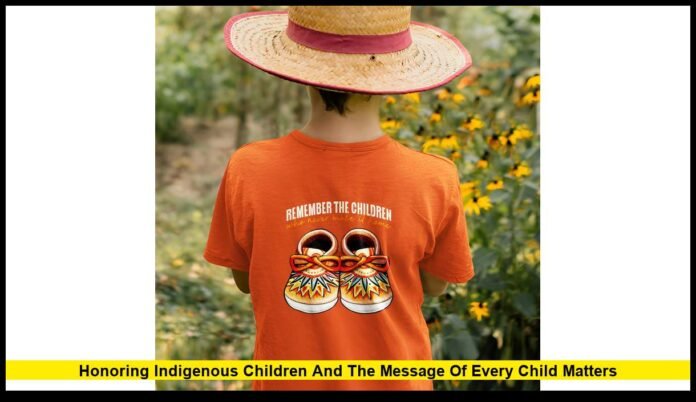

Every year on September 30, communities across North America observe Orange Shirt Day, a commemoration built around the message Every Child Matters. The day remembers children taken from their homes to attend residential and boarding schools, many of whom never returned. It also uplifts survivors who continue to live with the scars of those experiences.
In 2025, the event is more visible than ever. From classrooms and workplaces to cultural centers and tribal lands, people are gathering to reflect, learn, and take action. The observance is no longer just about wearing orange—it has become a movement to acknowledge painful histories and support healing for generations to come.
The Story Behind the Orange Shirt
The origins trace back to the childhood of Phyllis Webstad, a Northern Secwepemc woman. When she arrived at a residential school, her brand-new orange shirt—given by her grandmother—was confiscated. That single act became a symbol of how Indigenous children were stripped of identity, family connection, and dignity.
Years later, Phyllis shared her story publicly, sparking a movement. What began as a grassroots initiative has grown into a nationally recognized day of remembrance, embraced not only in Canada but also in Indigenous communities across the United States.
September 30, 2025: A Day of Reflection and Action
This year’s observance falls on Tuesday, September 30, 2025. Across North America, the date has become a focal point for memorials, cultural events, and educational programming.
- In schools: Students participate in lessons about Indigenous history, language, and culture.
- In workplaces: Employees wear orange and join awareness discussions.
- In communities: Tribal nations host walks, ceremonies, and cultural showcases.
The collective message is one of remembrance and renewal—acknowledging what happened while committing to a better future.
The Meaning of ‘Every Child Matters’
At the heart of this movement is a simple but powerful phrase: Every Child Matters.
- It honors children who never returned from residential or boarding schools.
- It validates survivors and acknowledges their stories.
- It emphasizes the rights of all children today to safety, culture, and belonging.
- It calls for society to learn from history rather than repeat it.
Wearing orange or joining a community event is not just symbolic—it is a declaration that the lives of Indigenous children hold value, both past and present.
How the Day Is Observed in 2025
Across the U.S. and Canada, the day is marked with both solemn reflection and cultural celebration.
- Memorial walks and healing ceremonies bring communities together in remembrance.
- Art exhibits and installations highlight resilience through visual storytelling.
- Storytelling sessions allow survivors to share their experiences with younger generations.
- Educational workshops bring Indigenous voices into schools and community halls.
- Public acknowledgments by governments, cities, and businesses affirm commitment to reconciliation.
The orange shirt itself has become a visible, unifying symbol. But the deeper meaning lies in the conversations and actions that surround the day.
Relevance for the United States
Although the day originated in Canada, it has deep resonance south of the border. For decades, Native American children were sent to Indian boarding schools in the U.S., where they faced similar assimilation policies. Children were separated from their families, punished for speaking their languages, and stripped of cultural traditions.
By embracing this observance, U.S. communities:
- Recognize the shared history of trauma across North America.
- Stand with survivors of American boarding schools.
- Promote cross-border solidarity for Indigenous rights.
- Strengthen awareness of intergenerational impacts that continue today.
For many tribes, September 30 is now both a day of mourning and a celebration of resilience.
Themes of the 2025 Observance
This year, several themes are at the forefront:
- Truth-telling: Acknowledging the reality of residential and boarding schools without minimizing their impact.
- Education: Using classrooms and public forums to share Indigenous perspectives.
- Healing: Creating safe spaces for survivors to speak and for communities to listen.
- Reconciliation: Encouraging respectful relationships between Indigenous and non-Indigenous peoples.
- Resilience: Celebrating the endurance of Indigenous languages, traditions, and cultural practices.
Together, these themes extend the message of Every Child Matters beyond one day into a year-round movement.
Education and Curriculum Changes
Schools play an especially important role in keeping the message alive. Across North America, teachers are incorporating lessons not just on September 30 but throughout the academic year.
Students learn:
- The stories of survivors and their families.
- The historical function of residential and boarding schools.
- The importance of Indigenous languages and traditions.
- The modern contributions of Indigenous peoples to culture and society.
By starting these conversations early, the next generation grows up with a deeper understanding of history and empathy for survivors.
Challenges That Remain
While recognition is growing, challenges persist:
- Uneven awareness: Many Americans are still unfamiliar with the history of boarding schools.
- Tokenism: Wearing orange without engaging in deeper learning risks reducing the observance to a trend.
- Limited resources: Smaller Indigenous communities often struggle to fund large-scale commemorative events.
- Emotional weight: Survivors and families face the emotional burden of reliving trauma each year.
The movement calls for more than symbolic gestures—it demands consistent support for healing and systemic change.
Ways to Participate Meaningfully
Individuals and communities can honor the day in meaningful ways:
- Wear orange and share why it matters.
- Attend local ceremonies or cultural events.
- Support Indigenous-led organizations focused on education and healing.
- Teach children and peers about the history and meaning of the observance.
- Advocate for stronger government and institutional commitments to reconciliation.
The goal is to transform remembrance into ongoing action.
Beyond a Single Day
Although observed on September 30, the principles of the movement apply every day. Survivors carry their experiences year-round, and families continue to seek healing and justice. For allies, the challenge is to extend awareness beyond one day into sustained learning, support, and advocacy.
Looking Ahead: The Future of the Movement
As awareness grows, the future of this observance may include:
- Greater recognition across U.S. states and school districts.
- Stronger survivor-led initiatives supported by government funding.
- Cross-border collaborations between Canadian and American Indigenous nations.
- Expanded public education campaigns to close awareness gaps.
In 2025, the trajectory is clear: what began as a grassroots initiative is becoming an international movement for justice and reconciliation.
Final Thoughts
In 2025, Orange Shirt Day stands as both a reminder of painful histories and a celebration of Indigenous resilience. It honors children who were taken, uplifts survivors, and affirms the belief that Every Child Matters.
By wearing orange, listening to stories, and supporting Indigenous-led initiatives, each of us can contribute to healing and reconciliation.
How will you recognize September 30 this year? Share your reflections in the comments below.