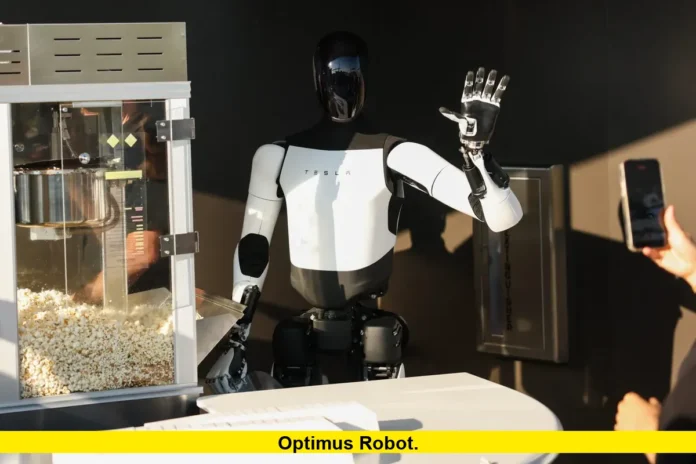

The Optimus robot is at the center of one of the most closely watched technology developments of the decade. Once a futuristic concept, this humanoid machine has now entered a decisive phase of development as 2026 unfolds. Built to perform physical tasks in industrial and eventually everyday environments, Optimus represents a major shift in how artificial intelligence is moving from screens into the physical world.
Behind the scenes, massive resources are being redirected toward making humanoid robotics a core pillar of long-term growth. Factory space, engineering talent, and AI infrastructure are increasingly aligned around the goal of bringing general-purpose robots into real-world use.
The transition signals more than a product launch. It reflects a broader transformation in how automation, labor, and intelligent machines may coexist in the coming years.
Why Optimus Has Become a Central Focus
Optimus was introduced with a clear mission: create a humanoid robot capable of handling repetitive, physically demanding, or hazardous tasks. The long-term vision extends beyond factories, aiming for environments such as warehouses, service facilities, and eventually homes.
By early 2026, development has progressed into a new generation of hardware. The latest design focuses on improved dexterity, balance, and energy efficiency, with particular attention on hand articulation and motion control. These improvements are essential for manipulating tools, parts, and everyday objects with human-like precision.
After years of concept videos and demonstrations, the program has now shifted into a phase centered on real-world usability rather than visual showcases.
Start following the progress closely if you want to understand how AI is moving from theory into physical action across U.S. industries.
From Prototype to Production Planning
One of the most significant developments is the reallocation of manufacturing capacity specifically for robot production. Space once dedicated to premium electric vehicles is being repurposed to support large-scale assembly of humanoid machines. This strategic move highlights how robotics is no longer a side project but a core business direction.
The manufacturing roadmap focuses on low-volume initial production, followed by gradual scaling as reliability, safety, and cost targets are met. Early units are expected to remain within controlled industrial environments, where conditions can be standardized and performance closely monitored.
This controlled rollout is designed to refine software, mechanics, and autonomy before broader deployment.
Teaching Robots to Learn Like Humans
Training is one of the most complex aspects of humanoid robotics. In 2026, Optimus is being trained using a combination of human demonstration and machine learning. Workers perform tasks while wearing camera systems that record movement, grip, and body mechanics. These recordings become training data that allows robots to imitate and generalize actions.
This method accelerates learning compared to traditional programming, enabling robots to adapt to variations in object shape, placement, and environment. Tasks such as carrying components, sorting items, and navigating factory floors form the foundation of this learning process.
The goal is to build a system that can understand physical context, not just follow scripted routines.
Power Systems and Hardware Integration
Energy efficiency and battery performance play a crucial role in humanoid robots. Compact, high-density power systems are required to support hours of movement, balance, and computation without excessive weight.
Advancements in battery technology, motor efficiency, and thermal management are being integrated into the Optimus platform to ensure sustained operation. Lighter materials and improved joint actuators also contribute to smoother motion and reduced energy consumption.
These engineering improvements are essential for moving beyond short demonstrations toward practical, continuous use.
Implications for U.S. Manufacturing
For American industry, humanoid robots could help address persistent labor shortages in physically demanding roles. Assembly lines, logistics centers, and distribution hubs may eventually deploy robots to handle lifting, transport, inspection, and repetitive assembly.
Rather than replacing entire workforces, early applications are expected to focus on supporting human teams, increasing throughput, and reducing injury risk. Robots can operate in environments designed for people, which gives humanoid form factors an advantage over fixed automation in certain settings.
The ability to work with existing tools and layouts could lower the barrier to adoption across older facilities.
Beyond Factories: The Long-Term Vision
While industrial use comes first, the long-term ambition extends into everyday environments. A general-purpose humanoid robot could eventually assist with household tasks, maintenance, and caregiving support. Achieving this requires major advances in perception, safety systems, and decision-making.
Navigation in cluttered spaces, safe interaction with people, and understanding of unstructured situations remain among the toughest challenges in robotics. Progress in these areas will determine how quickly such machines can transition from controlled facilities to public and private spaces.
The roadmap remains gradual, with reliability and safety taking priority over speed of deployment.
AI as the Brain Behind the Body
At the heart of Optimus lies a rapidly evolving artificial intelligence system. Vision models interpret surroundings, motion planners calculate stable movement, and neural networks learn from experience. This combination allows the robot to perceive, decide, and act in real time.
The same AI infrastructure being developed for autonomous vehicles and large-scale computing is being adapted for humanoid control. This shared technology base accelerates progress by allowing improvements in perception and decision-making to benefit multiple platforms.
As these systems mature, the boundary between software intelligence and physical capability continues to blur.
Economic and Workforce Considerations
The rise of humanoid robots inevitably raises questions about employment and productivity. In the near term, robots are more likely to fill gaps where labor is scarce rather than displace large numbers of workers. Maintenance, supervision, and training roles may expand as robotic systems become part of daily operations.
Over time, new job categories related to robot management, AI oversight, and human-machine collaboration are expected to grow. The transition mirrors earlier waves of automation, where technology reshaped tasks rather than eliminating entire professions.
Education and reskilling will play a key role in adapting to this shift.
What 2026 Represents for Humanoid Robotics
This year marks a turning point where humanoid robots move from experimental showcases to structured production planning. The focus is now on durability, learning efficiency, and integration into real workflows.
The Optimus robot stands as a symbol of this transition. It reflects a broader industry push to bring AI out of virtual environments and into the physical world, where it can interact with objects, tools, and people.
How quickly these systems mature will shape the future of automation across manufacturing, logistics, and eventually daily life.
What role do you think humanoid robots will play in your everyday world—share your thoughts and keep watching as this technology continues to evolve.