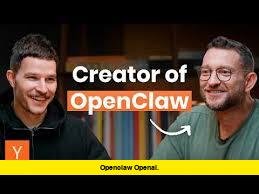

OpenClaw creator Peter Steinberger joining OpenAI marks a major moment in the rapidly evolving field of artificial intelligence as one of the most talked-about AI developers in recent months takes a central role at one of the industry’s leading labs. OpenClaw, the autonomous AI agent that captured widespread attention, will remain available as an open-source project while Steinberger transitions to OpenAI to help build the next generation of personal agents.
If you’re curious how this shift could shape the future of AI tools and services for consumers and businesses alike, keep reading — the developments are significant and unfolding now.
Don’t miss the latest on what Steinberger’s move means for AI developers and users — continue below.
Artificial intelligence is at a pivotal moment, and the tech world is watching closely as Peter Steinberger—the developer behind OpenClaw, a viral AI assistant platform—is officially joining OpenAI. Sam Altman, CEO of the research and deployment company, announced the move with a clear mission: accelerate development of intelligent personal agents that go beyond basic text responses to perform real-world tasks for users.
OpenClaw has become one of the most talked-about open-source AI projects of late, known for its ability to autonomously complete tasks such as managing calendars or interacting with services. The project will continue to live on in its open-source form, supported by a newly created foundation backed by OpenAI as Steinberger steps into his new role.
Who Is Peter Steinberger and Why It Matters
Peter Steinberger isn’t a newcomer to software innovation. Prior to creating OpenClaw, he founded and led other successful tech initiatives. His return to active AI development in late 2025 with OpenClaw quickly captured developer attention thanks to its practical take on autonomous AI agents—software that can carry out complex commands without constant human direction.
OpenClaw, originally known as Clawdbot and briefly renamed Moltbot, became popular in part because it embraced open-source coding and community contributions. It amassed a large following on platforms like GitHub shortly after its release, driven by a growing interest in personal AI assistants that feel more like tools than chatbots.
OpenAI’s decision to bring Steinberger into its ranks reflects not only his technical expertise but also the company’s broader pivot toward developing AI systems capable of autonomous action on behalf of users. These “personal agents” are expected to become a core part of how AI products are delivered and utilized in the coming years.
OpenClaw’s Rise and Viral Impact
OpenClaw made waves shortly after its launch due to its innovative design and wide functionality. Unlike typical conversational AI tools, it was built from the beginning to perform actual tasks—like organizing email, booking travel plans, and interfacing with external services—rather than just generating responses.
This hands-on capability elevated OpenClaw’s profile, contributing to the explosive attention it received from users, developers, and media outlets across the tech community. The platform demonstrated for many what the next generation of AI assistants could look like: autonomous agents that think and act on users’ behalf.
While its popularity soared, OpenClaw also faced scrutiny. Because the software can access sensitive systems and data, security experts raised concerns about potential risks if misconfigured or left exposed. These discussions underline the complexity of introducing powerful autonomous AI tools into everyday workflows.
OpenAI’s Strategic Shift Toward Multi-Agent Systems
OpenAI’s work historically centered on developing powerful language models and general AI research. With Steinberger’s arrival, the company is signaling a shift toward a vision that includes more dynamic autonomous agents—systems that can carry out a wider array of tasks with minimal supervision.
Sam Altman emphasized that Steinberger’s role will focus on building “the next generation of personal agents,” suggesting that OpenAI views multi-agent architectures as an essential part of future AI products. This push could influence everything from productivity tools integrated across devices to enterprise systems designed to assist at scale.
At the same time, OpenAI intends to maintain OpenClaw’s open-source status through a foundation structure, which allows the broader community to continue contributing and using the platform independently. This hybrid approach—bringing talent on board while preserving community-driven projects—is notable in an era when many tech companies internalize acquired technologies.
What This Means for Users and Developers
For end-users, the most visible outcome of this shift could be smarter, more capable assistant technologies. Rather than simple voice or text response bots, future AI systems may act more like digital helpers that can manage tasks, schedule meetings, handle communications, and integrate with a variety of digital services seamlessly.
Developers in the open-source community are also watching closely. OpenClaw’s transition into a foundation supported by OpenAI suggests that collaborative innovation may continue to play a major role even as larger AI labs expand their influence. Projects that start in community repositories could gain both wider impact and deeper integration with advanced AI research.
However, as these tools become more capable, security and privacy will remain key considerations. Ensuring that autonomous agents operate safely without exposing user data or systems to risk is an ongoing challenge that developers and companies alike must address.
Broader Industry Implications
Steinberger’s hiring is part of a trend where leading AI labs compete for specialized talent that can deliver unique innovations. By acquiring expertise in autonomous agent development, OpenAI is positioning itself to lead in the next wave of AI evolution.
The company now seems committed to pushing both internal research and open collaboration on agent technology, a strategy that could influence how AI is built, distributed, and regulated in the years ahead.
As the AI landscape continues to evolve, the integration of community-driven platforms like OpenClaw into broader research initiatives may shape how users interact with machines—transitioning from passive question-answering models to active, task-oriented digital agents.
Share your thoughts in the comments below — how do you see autonomous AI agents changing everyday tech?