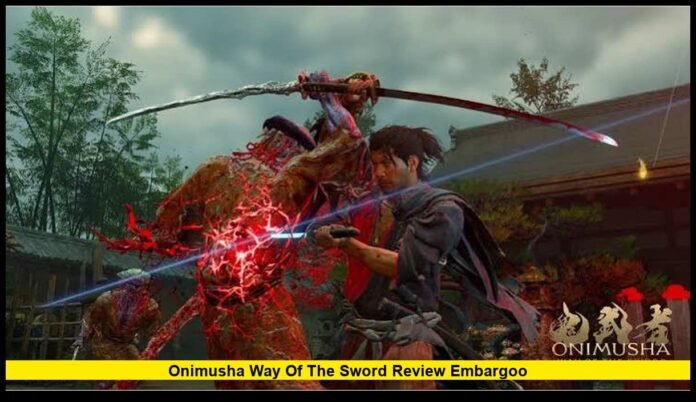

The onimusha way of the sword review embargo has lifted, giving players a much clearer picture of Capcom’s long-awaited return to its classic samurai action series. The first wave of reviews points toward a strong comeback, with critics especially impressed by the sword combat, cinematic presentation, boss encounters, and Miyamoto Musashi’s role as the new protagonist.
After roughly two decades without a new mainline entry, Onimusha: Way of the Sword arrives with considerable expectations. Capcom has rebuilt the franchise using modern technology while retaining several of the characteristics that made the original games distinctive: supernatural enemies, intense close-quarters combat, Japanese historical settings, and a straightforward single-player adventure.
The early reception suggests the publisher has largely found the right balance between nostalgia and modernization. At the same time, reviews have identified some weaknesses, particularly around pacing and repeated encounters.
Key Points Summary
╔════════════════════════════════════════════════════════════════════╗
║ – Reviews for Onimusha: Way of the Sword went live on August 31, 2026. ║
║ – The early critical response is strongly positive, particularly for combat and boss encounters. ║
║ – Critics have praised the game’s cinematic visuals, atmosphere, characters, and swordplay. ║
║ – Miyamoto Musashi serves as the central protagonist in a supernatural interpretation of Edo-period Japan. ║
║ – Some reviews criticize uneven pacing, repetitive encounters, and occasional old-fashioned design choices. ║
║ – The game is scheduled to launch September 4, 2026, for PS5, Xbox Series X|S, PC, and Nintendo Switch 2. ║
╚════════════════════════════════════════════════════════════════════╝
Reviews Give Onimusha a Strong Early Reception
Several critics have awarded the game scores in the 8/10 and 9/10 range, with the strongest praise centered on how satisfying the combat feels. The overall reception places the game among Capcom’s better-reviewed releases of 2026, although the final aggregate scores can still move as more outlets publish their assessments.
The response is particularly encouraging because Onimusha has been absent from the mainline gaming scene for so long. The last numbered-style mainline release, Onimusha: Dawn of Dreams, arrived on PlayStation 2 in 2006.
Rather than simply remastering the old formula, Capcom has attempted to rebuild the series for modern audiences.
That means faster technology, more detailed environments, sophisticated character animation, cinematic presentation, and a combat system designed around the physicality of sword fighting.
The Review Embargo Reveals Combat as the Biggest Strength
Combat is easily one of the most frequently praised aspects of the game.
Musashi’s sword is not treated as a generic action-game weapon. Encounters are built around timing, positioning, parrying, deflecting attacks, dodging and identifying openings in enemy defenses.
That approach gives battles a deliberate rhythm.
Players are encouraged to pay attention to what enemies are doing rather than simply attacking continuously. A poorly timed strike can leave Musashi vulnerable, while a well-executed defensive maneuver can create an opportunity to turn the fight around.
The system also gives boss encounters their own identity. Instead of making every major opponent feel like a larger version of an ordinary enemy, the game uses powerful adversaries as tests of the player’s understanding of its combat mechanics.
That distinction is important in a market filled with samurai-themed action games.
It Is Not Simply Another Soulslike
One of the more interesting aspects of the critical discussion is the game’s relationship with the Soulslike genre.
At first glance, Way of the Sword could appear to belong in the same conversation as Sekiro: Shadows Die Twice, Nioh, or other difficult sword-based action games.
There are enemies, parries, precise timing, supernatural abilities and challenging encounters.
But the game takes a considerably more accessible approach.
Death is not designed to produce the same level of punishment associated with many Soulslike games, and the overall structure remains focused on delivering a cinematic action adventure rather than building a massive interconnected world around repeated deaths and exploration.
This makes Way of the Sword potentially appealing to players who enjoy skill-based swordplay but do not necessarily want the extreme difficulty or complexity associated with traditional Soulslike experiences.
Boss Battles Could Be the Game’s Standout Feature
If combat is the foundation, boss battles appear to be the biggest showcase for Capcom’s design.
Reviewers have repeatedly highlighted the major encounters as some of the game’s most memorable sequences.
Boss fights combine spectacular animation with mechanics that require players to understand attack patterns and respond at the right moment. The result is closer to a dramatic samurai duel than a conventional hack-and-slash encounter.
The cinematic presentation also helps these fights feel important.
Large-scale attacks, dramatic camera work and carefully choreographed animations give major battles a sense of spectacle without completely taking control away from the player.
For fans who enjoy games built around memorable boss encounters, this could become one of the biggest reasons to play Way of the Sword.
Miyamoto Musashi Is at the Center of the Story
Capcom’s choice of protagonist is another major part of the game’s appeal.
Way of the Sword places the legendary swordsman Miyamoto Musashi at the center of its story. Rather than presenting a strictly historical interpretation, Capcom places the famous warrior inside the supernatural world of Onimusha.
The result is a version of Musashi who can fight both human opponents and Genma demons.
The game takes place in a dark fantasy interpretation of Kyoto during the Edo period. That setting gives the developers an opportunity to combine recognizable Japanese history with supernatural horror and fantasy.
The story is also designed as a new starting point for the franchise.
Players do not need extensive knowledge of the previous Onimusha games to understand the new adventure. That makes the title considerably more accessible to people discovering the franchise for the first time.
A New Beginning for the Onimusha Series
Capcom has effectively positioned Way of the Sword as a fresh entry point.
The game does not require players to have completed the earlier PlayStation 2 titles, and its narrative is separate from the previous mainline adventures and the animated adaptation.
That decision could be important for the franchise’s future.
A direct continuation of a 20-year-old storyline would risk making the game feel inaccessible to younger players. Instead, Capcom has retained familiar concepts while introducing a new protagonist and new story.
Longtime fans can recognize the supernatural mythology and Oni-related mechanics, while newcomers can approach the game without needing to understand years of established lore.
The Visual Presentation Is a Major Upgrade
The return of Onimusha also benefits enormously from Capcom’s modern technology.
The game is built using the RE Engine, which has become one of Capcom’s most recognizable technical foundations.
That technology allows Way of the Sword to present detailed environments, realistic character animation, atmospheric lighting and elaborate combat sequences that would have been impossible for the original games to deliver at the same level.
The Edo-period setting also gives the art team plenty of opportunities to create visually distinctive locations.
Traditional architecture, temples, forests, streets and supernatural environments help establish the game’s identity. The contrast between historical Japanese scenery and Genma creatures is central to the atmosphere.
The presentation is especially effective during story sequences and major battles, where the game can lean heavily into its cinematic ambitions.
The Game Remains Focused Instead of Becoming an Open-World RPG
Another notable decision is the game’s structure.
Way of the Sword is not attempting to compete with enormous open-world adventures by giving players hundreds of hours of optional activities.
Instead, it is built around a more focused single-player experience.
The main adventure is expected to take roughly 20 hours, depending on how players approach exploration and difficulty.
That shorter length may actually benefit the game.
A concentrated campaign allows Capcom to place greater emphasis on set pieces, boss encounters and carefully designed combat scenarios rather than filling a massive map with repetitive activities.
For players who have grown tired of enormous open-world games, this could be an attractive alternative.
Pacing Is One of the Biggest Criticisms
The critical response is not entirely positive.
Several reviews have identified pacing as one of the game’s weaker areas.
While the combat and boss encounters can be highly engaging, some sections between major battles reportedly do not maintain the same level of momentum.
That creates an uneven rhythm.
A dramatic sword fight can be followed by a quieter sequence that takes longer than expected to reach the next major encounter. For some players, those transitions may feel like necessary breathing room. For others, they could interrupt the momentum that makes the combat so effective.
This criticism is particularly relevant because the game’s biggest selling point is its action.
When the swordplay is excellent, players naturally want to keep fighting. Sections that slow that momentum therefore become more noticeable.
Repetition Could Affect the Overall Experience
Another criticism appearing in reviews concerns repeated enemies and encounters.
Reusing enemies is normal in action games, but repetition becomes more obvious when the overall campaign is relatively compact.
Some critics have suggested that the game occasionally relies too heavily on familiar encounters, particularly outside its strongest boss battles.
This does not appear to undermine the entire experience, but it is one of the areas where the game may feel less polished than Capcom’s strongest modern releases.
It also highlights the challenge of reviving an older franchise.
Capcom has successfully modernized the combat, graphics and presentation, but certain structural elements still carry traces of traditional action-game design.
Does Onimusha Still Feel Like Onimusha?
Despite the modernization, Capcom has not completely abandoned the identity of the original series.
The Oni and Genma mythology remains important. The Oni Gauntlet continues to play a significant role, while supernatural abilities and soul-related mechanics remain connected to the classic formula.
The difference is that these ideas are now presented through a modern third-person action framework.
That balance could be crucial to the game’s success.
A revival that changed everything might lose what made Onimusha special. A game that changed nothing would risk feeling outdated.
Way of the Sword attempts to occupy the middle ground.
Release Date and Platforms
Onimusha: Way of the Sword is scheduled to launch on September 4, 2026.
The game is coming to:
- PlayStation 5
- Xbox Series X|S
- PC
- Nintendo Switch 2
The multi-platform release gives the revival a much broader audience than the original PlayStation-focused entries.
The Nintendo Switch 2 version is particularly interesting because it brings Capcom’s modern RE Engine technology to Nintendo’s newer hardware. Early impressions indicate that the port retains the core experience while making some technical compromises in areas such as visual detail.
How the Early Reviews Affect Expectations
The onimusha way of the sword review embargo has ultimately delivered the kind of response Capcom likely wanted from its revival.
The game is not being presented as flawless, but its strongest qualities are exactly the areas that matter most for an action title.
The combat needs to feel good.
The bosses need to be memorable.
The protagonist needs to carry the story.
And the world needs to make players want to keep exploring.
Based on the early reviews, Way of the Sword appears to accomplish those goals more often than it misses them.
The complaints about pacing and repetition are worth considering, particularly for players expecting a completely modernized experience. However, they do not appear to outweigh the game’s strengths for most reviewers.
Is Onimusha: Way of the Sword Worth Playing?
For fans of samurai action games, the answer looks increasingly positive.
Players looking for a focused, cinematic adventure with demanding sword combat should find plenty to like. The game also offers a more approachable alternative to extremely punishing Soulslike titles.
Longtime Onimusha fans have an additional reason to be interested: this is the franchise’s first major new mainline adventure in approximately two decades.
For newcomers, the game offers a fresh introduction to the series without requiring extensive knowledge of previous entries.
The biggest question is whether the pacing and repetition will become more noticeable once thousands of players experience the entire campaign.
Final Verdict
Onimusha: Way of the Sword is shaping up to be one of Capcom’s most interesting franchise revivals.
It combines the company’s modern technical strengths with an action formula that still feels distinctly rooted in the original Onimusha identity. Miyamoto Musashi provides a strong central character, while the supernatural Edo-era setting gives the game an atmosphere that separates it from more conventional historical samurai adventures.
The swordplay is the star of the show, and the boss encounters appear to deliver some of the most exciting moments in the campaign.
The weaker pacing and occasional repetition prevent the game from receiving universal acclaim, but the overall critical response remains encouraging.
For a franchise that spent years away from the spotlight, Way of the Sword has made a convincing case for why Onimusha still deserves a place among Capcom’s major action series.
Are you excited to return to the world of Onimusha, or will you wait for the full player response before buying? Let us know what you think and stay tuned for the latest gaming updates.