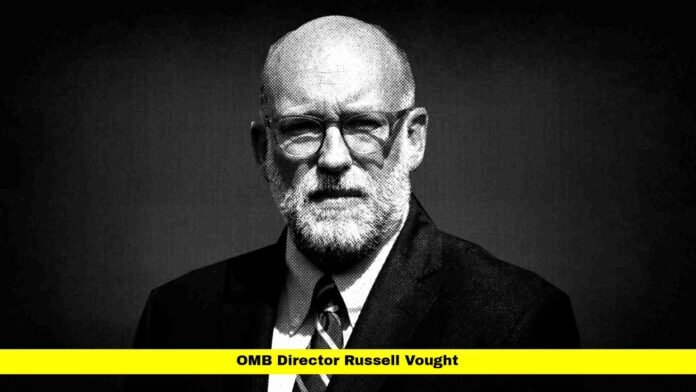

OMB Director Russell Vought has become one of the most watched figures in Washington as the U.S. government enters a shutdown. From leading aggressive funding freezes to planning mass layoffs, Vought’s actions are reshaping federal policy in dramatic ways.
Who Is OMB Director Russell Vought?
Russell Thurlow Vought, born March 26, 1976, serves as the 44th Director of the Office of Management and Budget. He was confirmed by the Senate on February 6, 2025, by a 53–47 party-line vote. As a veteran of the Trump era, Vought previously led the OMB from mid-2020 through early 2021.
Vought is closely tied to Project 2025, a conservative blueprint for aggressive downsizing of the federal government and increased executive power. Many see his current maneuvers as direct execution of that ideology.
In August 2025, his portfolio expanded when Secretary of State Marco Rubio handed over control of USAID’s closeout to Vought. He now oversees winding down that agency’s remaining functions.
What’s Driving the 2025 Government Shutdown?
On October 1, 2025, the federal government shut down after Congress failed to pass appropriations for the new fiscal year.
The core disagreements were over budget levels, foreign aid cuts, and extensions of health insurance subsidies. Republicans and Democrats remain deadlocked despite public pressure to restore services.
As many as 803,000 federal workers have been furloughed, and about 700,000 remain working without pay in “essential” roles.
It is in this environment of operational freeze that Vought has taken a central role in pushing bold cuts and structural changes.
Vought’s Shutdown Moves: Freeze, Fire, and Fund Cuts
Mass Layoff Threats
One of Vought’s first major actions was to warn of “reduction in force” (RIF) plans—effectively mass firings of federal workers—if Congress did not relent.
He briefed House Republicans that firings could begin in “a day or two” following the start of the shutdown.
Labor unions quickly responded, filing a lawsuit against OMB and other agencies, arguing that threatening firings during a funding lapse violates federal law.
Targeted Budget Cuts & Funding Freezes
Simultaneous to layoff threats, Vought halted approximately $18 billion in infrastructure funds allocated to New York, citing objections to DEI (diversity, equity, inclusion) requirements.
He also announced the cancellation of $8 billion in climate-related projects across 16 states—mostly those that voted for Democrats.
According to reports, Trump and Vought met to decide which “Democrat Agencies” to cut and whether those cuts would be permanent or temporary.
These moves are interpreted by many as using the shutdown as cover to push through structural policy changes that might otherwise face resistance in Congress.
Dismantling Independent Oversight
Another bold step: Vought has ordered defunding of the Council of the Inspectors General on Integrity and Efficiency (CIGIE). Without funding, internal watchdog functions across multiple agencies may halt.
Critics argue this undermines governmental checks and balances and weakens transparency. Some even suggest the move could provoke legal challenges or congressional pushback.
Legal and Institutional Pushback
Vought’s aggressive posture has not gone unchallenged.
- Labor unions have sued OMB, claiming the White House’s layoff threats are illegal.
- They argue that during a shutdown, federal employees are legally entitled to furlough status, not termination.
- The legal complaint invokes the Antideficiency Act, which forbids authorizing expenditures without appropriations.
Additionally, some Republican lawmakers have privately expressed concerns about Vought’s approach, warning the political fallout could hurt the party’s standing.
Vought and USAID: Closeout Authority
Back in August 2025, Vought’s responsibilities grew when USAID’s closure was formally transferred to him. Rubio, who had been overseeing several portfolios, handed the agency over, stating that most of USAID’s core functions had been redistributed.
This move signals that Vought is not only reshaping domestic spending but also foreign-aid policy under the Trump agenda.
Why Vought’s Role Matters
Because OMB traditionally sits behind the scenes, it’s rare for its director to be so publicly prominent. But Vought is front and center now—for a few reasons:
- Policy Execution via Shutdown
The current impasse gives him the chance to act unilaterally on policies (cuts, freezes) that may face roadblocks in Congress. - Project 2025 Blueprint
Many of his moves mirror proposals in Project 2025: shifting power to the executive branch, retrenching the federal bureaucracy, and reshaping agencies. - Political Leverage
By wielding threats of layoffs and aggressive cuts, Vought is turning fiscal politics into a direct weapon in negotiations. - Institutional Impact
Defunding watchdogs or dissolving oversight bodies could leave long-term structural consequences, weakening checks inside the government.
What to Watch in Coming Days
- Resolution or escalation of the shutdown: Will Congress relent, or will Vought’s pressure campaign push Democrats toward acquiescence?
- Actual layoffs: Will terminations go forward, and if so, how many, and which agencies?
- Court rulings: The union lawsuit and any legal challenges to Vought’s maneuvers will be pivotal.
- Congressional response: Some Republicans may balk if they see political damage from mass firings or visible service disruptions.
- Foreign policy shifts: As head of USAID’s closeout, Vought may influence how U.S. aid is extended or cut abroad.
OMB Director Russell Vought is not a background official today—he’s the central architect in a clash over federal power, spending, and the future role of government. His moves during this shutdown may leave legacy consequences for years to come.
Do you think his aggressive strategy will succeed—or will the pushback unravel his initiatives? Share your thoughts below.