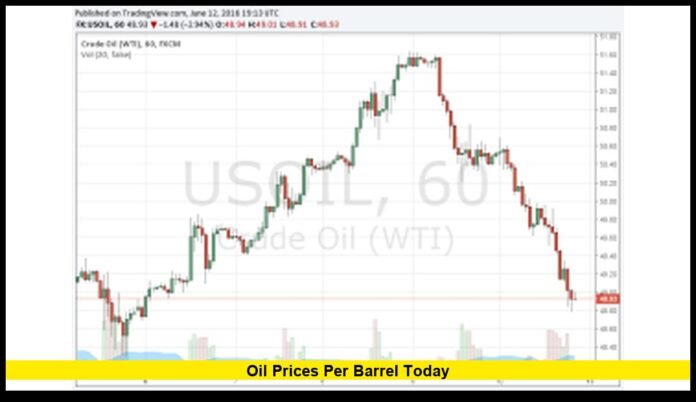

Oil prices per barrel today are rising sharply as escalating Middle East tensions fuel fresh concerns about global crude supply and shipping security. As of March 1, 2026, both major oil benchmarks are trading higher, reflecting renewed geopolitical risk in one of the world’s most critical energy regions.
Latest Crude Benchmarks
Current trading levels show steady upward pressure:
- WTI Crude (U.S. benchmark): Around $67 per barrel
- Brent Crude (global benchmark): Near $73 per barrel
These prices represent one of the strongest weekly moves in months. Brent has reached its highest point since mid-2025, while WTI has advanced from the mid-$60 range seen earlier this year.
Markets remain volatile, with intraday fluctuations driven by breaking geopolitical developments and supply concerns.
What Is Driving Oil Prices Higher?
Several confirmed factors explain the latest surge.
Heightened Middle East Tensions
Recent military developments involving Iran have intensified fears of oil supply disruption. Energy traders quickly responded by adding a geopolitical risk premium to crude futures contracts.
Oil markets tend to react immediately to instability in major producing regions. Even the possibility of prolonged disruption can shift pricing rapidly.
Shipping Risks in a Critical Oil Corridor
Attention has focused on the Strait of Hormuz, a narrow waterway through which roughly 20% of global oil shipments pass. Rising tensions have caused precautionary shipping delays and increased security measures.
Any sustained interruption in this corridor could restrict supply flows to Asia, Europe, and North America. Traders view that risk as a key driver behind rising oil prices per barrel today.
OPEC+ Production Response
The oil-producing alliance known as OPEC+ has announced a modest output increase of about 206,000 barrels per day beginning in April 2026.
While the move signals an attempt to stabilize markets, the additional supply remains relatively small compared to potential disruptions in the Persian Gulf. Investors are now watching for further adjustments if tensions continue.
Recent Price Momentum
Crude benchmarks have gained steadily in recent sessions:
| Benchmark | Current Level | Direction |
|---|---|---|
| WTI Crude | ~$67 | Trending higher |
| Brent Crude | ~$73 | Strong upward momentum |
Earlier this winter, both benchmarks traded at lower levels. The recent climb reflects shifting risk sentiment rather than a dramatic change in global demand.
Oil traders are positioning defensively, preparing for a range of outcomes.
How Higher Oil Prices Affect the United States
Rising crude prices carry direct and indirect consequences for American households and businesses.
Gasoline Prices
Crude oil is the primary input for gasoline and diesel. When crude rises, refiners face higher costs. Those increases often reach consumers within weeks if elevated prices persist.
Drivers across the country may see gradual increases at the pump if current levels hold or climb further.
Inflation and Consumer Spending
Energy costs influence transportation, logistics, manufacturing, and agriculture. Higher oil prices can raise shipping rates and production expenses. Companies may pass those costs on to consumers.
If crude remains elevated, inflation pressure could strengthen, particularly in fuel-dependent sectors.
Market Volatility
Energy stocks typically benefit from rising crude prices, but broader markets can experience volatility. Investors weigh higher corporate profits in the energy sector against potential pressure on consumer spending.
Wall Street closely tracks oil prices as a leading economic signal.
Is This a Temporary Spike?
Oil markets often react quickly to geopolitical headlines. However, price direction depends on how events unfold in the coming weeks.
Several factors will shape the trajectory:
- Duration of regional conflict
- Stability of shipping routes
- Further OPEC+ production decisions
- U.S. domestic output levels
- Global demand growth
Historically, oil spikes tied to geopolitical risk ease once tensions subside. If shipping lanes remain open and supply flows continue, prices may stabilize.
On the other hand, prolonged disruption could push crude benchmarks higher.
U.S. Production and Global Balance
The United States remains one of the world’s top oil producers. Domestic output provides some insulation from global shocks, yet U.S. prices still track international markets.
Oil is globally traded. Even strong American production cannot fully offset disruptions in a region that supplies a significant share of exports worldwide.
That interconnected structure explains why oil prices per barrel today respond immediately to events overseas.
Industry and Consumer Impact
Industries that rely heavily on fuel are monitoring developments closely.
Airlines, trucking companies, and delivery services often adjust pricing when energy costs rise. Agricultural operations also feel pressure when diesel prices increase.
For households, higher fuel expenses can reduce discretionary spending. The overall impact depends on how long current pricing levels last.
Energy Market Sentiment
Trading activity has intensified as volatility increases. Futures contracts show heightened risk awareness among investors.
Market participants are considering multiple scenarios:
- Rapid diplomatic de-escalation
- Continued tension with limited supply disruption
- Broader regional instability affecting exports
Risk premiums can unwind quickly if geopolitical pressure eases. Conversely, new disruptions could accelerate gains.
The Bigger Economic Picture
Oil prices influence more than just gasoline costs. They shape global trade flows, impact currency markets, and affect monetary policy decisions.
Central banks watch energy prices because they contribute to inflation trends. Persistent oil price increases may complicate efforts to maintain stable economic growth.
At present, crude remains below the extreme highs seen during past global crises. Still, the recent climb marks a meaningful shift from earlier 2026 trends.
Where Oil Prices Stand Now
To summarize the current landscape:
- Brent crude trades near $73 per barrel
- WTI crude trades around $67 per barrel
- Geopolitical tension drives risk premiums
- Shipping concerns amplify volatility
- OPEC+ output adjustments remain limited
Energy markets remain sensitive to developments in the Middle East. Traders are reacting to confirmed geopolitical events, not speculation.
The coming weeks will determine whether this surge represents a short-term spike or the start of a sustained upward trend.
Oil prices per barrel today remain one of the most important indicators for the U.S. economy—stay informed and join the conversation as markets continue to evolve.