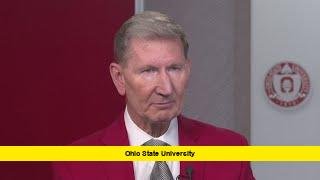

Ohio State University is making national headlines today, and not for the reasons its leadership had hoped. In a stunning development that caught the campus community completely off guard, the university’s president has resigned effective immediately, setting off a wave of questions about what comes next for one of the largest and most influential public universities in America.
Stay informed — drop a bookmark on this page now for updates as they happen.
A Presidential Resignation That Shook the Campus
President Walter “Ted” Carter Jr. stepped down on Saturday, March 8, 2026, after voluntarily disclosing to the Board of Trustees that he had an inappropriate relationship with a person who had been seeking public university resources to support her personal business. Carter offered his resignation immediately upon making that disclosure, and the board accepted it.
In a personal statement, Carter acknowledged making a mistake by allowing that individual improper access to university leadership. He expressed pride in the progress made during his two-plus years in office and wished the university well, saying that the students, faculty, and staff at Ohio State are among the very best in the world. His wife, Lynda Carter, will be departing with him.
Carter had served as the university’s 17th president. He was hired after his predecessor, Kristina Johnson, also resigned after roughly two years in the role — making this the second consecutive abrupt presidential departure at Ohio State in a short span of time.
What the Board Is Saying
The chair of the Ohio State University Board of Trustees issued a formal statement accepting the resignation and acknowledged Carter’s role in advancing several key institutional goals. Those included the rollout of the Education for Citizenship 2035 strategic plan, growth in research expenditures, improved national rankings, and the launch of multiple new scholarship programs.
No interim president was announced as of the morning of March 9, 2026. A university spokesperson indicated that the board is finalizing a transition plan and will share additional details in the coming days. For now, the leadership structure remains in flux, and the campus community is waiting for clarity.
A University With Serious Momentum — and Serious Questions
Despite the turmoil at the top, Ohio State enters this transition period on a strong academic and financial footing. The athletics department posted record revenue of more than $336 million in fiscal year 2025, well above the previous record set just two years earlier. The university also climbed to 12th place nationally for total research expenditures and moved up to 6th place in industry-sponsored research — a ranking that reflects the growing number of partnerships between Ohio State and major corporate partners.
The university was also recognized as the nation’s top producer of Fulbright U.S. Scholars, a prestigious distinction that highlights the depth of its academic talent pipeline. These accomplishments don’t disappear with a leadership change, but sustaining them requires stable, focused leadership — and that’s exactly what the campus is now missing.
On the AI front, Ohio State has been making bold moves. The university launched an AI Fluency Initiative designed to prepare students and faculty for a workforce increasingly shaped by artificial intelligence. New research guidelines around AI use have been introduced, and partnerships with platforms like Google and Coursera have been established to offer structured AI learning paths to the broader campus community.
Dorms, Dollars, and Controversy
Just days before Carter’s resignation, the Board of Trustees held a regularly scheduled full meeting in which they approved raises for both Carter and Provost Ravi Bellamkonda. Carter’s base salary was not increased, but his fringe benefit package was raised from $50,000 to $75,000 annually. The timing of those compensation decisions, coming days before his resignation, will likely draw continued scrutiny.
At that same meeting, trustees approved plans to demolish Jones Tower, a dormitory that had been damaged by a major plumbing failure. Taylor Tower and Drackett Tower are now scheduled to be available for students two years ahead of the original timeline, in fall 2028. The university plans to use master lease agreements with nearby University District apartments to handle student housing in the interim.
Campus Tensions Running High
The resignation did not occur in a vacuum. Ohio State has been navigating a series of controversies that have kept campus politics at a boil for months. Protesters have repeatedly gathered — most recently at the Oval — to demand that the university remove billionaire donor Les Wexner’s name from campus buildings. Those calls stem from Wexner’s longtime personal and professional relationship with convicted sex offender Jeffrey Epstein. Wexner has publicly denied any knowledge of Epstein’s crimes and says he cut ties with him in 2007.
His name currently appears on three major university facilities: the Wexner Medical Center, the Wexner Center for the Arts, and the Les Wexner Football Complex. The university has not announced any plans to remove those names.
Outside a recent board meeting, survivors of sexual abuse by former Ohio State team physician Richard Strauss also staged a protest. Those survivors said their request to formally address the board was denied, and that trustees did not publicly acknowledge the demonstration.
What Happens Next
The road ahead for Ohio State depends heavily on how swiftly the board moves to fill the leadership vacuum. The university’s strategic plan, research initiatives, and student experience programs are all well-established, but institutional momentum can stall quickly without clear leadership at the top.
Ohio State is a $7 billion public institution that serves nearly 60,000 students and employs tens of thousands of faculty and staff. The stakes of this transition could not be higher — both for the people on campus and for the state of Ohio, which looks to the university as a major driver of economic growth, workforce development, and public health innovation.
The story of Ohio State University in 2026 is still being written — and the decisions made in the next few weeks will shape the university’s course for years to come. What are your thoughts on this leadership shake-up? Share them in the comments below.