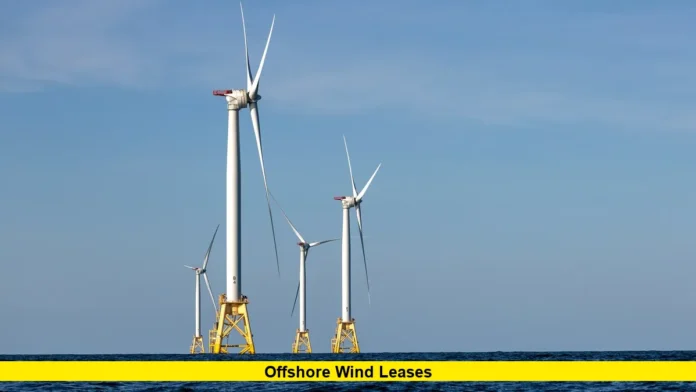

A sweeping federal decision to pause several high-profile Offshore Wind Leases has triggered one of the most consequential moments yet for America’s clean energy ambitions. Announced in late December 2025, the action halts work on multiple large offshore wind projects already underway along the U.S. East Coast, introducing uncertainty for developers, state governments, and energy planners who had counted on these projects to play a central role in the nation’s power supply.
Federal officials say the move is driven by national security considerations that require further evaluation. Industry leaders and state officials counter that the projects had already cleared extensive reviews and warn the pause could disrupt investment, employment, and long-term energy planning.
What the Federal Pause Means in Practice
The federal government’s action temporarily suspends activity tied to five major offshore wind developments located in federal waters on the Outer Continental Shelf. These projects were approved through the Bureau of Ocean Energy Management and had progressed beyond the planning stage, with construction already underway at several sites.
The pause affects construction, installation, and related offshore activities. While the leases themselves have not been revoked, developers cannot proceed with work until the federal review concludes. Officials have not announced a timeline, stating only that the suspension will remain until identified concerns are addressed.
This distinction matters. Unlike policy decisions that affect future leasing rounds, this pause intervenes in active projects, creating immediate consequences for contractors, port operators, and energy markets.
Projects Caught in the Middle
The halted developments are among the largest offshore wind initiatives ever approved in the United States. Located off the coasts of Massachusetts, Rhode Island, Connecticut, Virginia, and New York, these projects were designed to deliver power to densely populated regions with growing electricity demand.
Collectively, they represent tens of billions of dollars in investment and were expected to generate enough electricity to serve millions of homes once completed. Some projects had already installed turbines or foundations, while others were in advanced construction phases.
With work paused, specialized vessels have been pulled back, port operations have slowed, and supply chains that span multiple states now face uncertainty.
National Security at the Core of the Decision
Federal officials say the suspension stems from concerns raised by the Department of Defense related to radar and surveillance systems. Large offshore wind turbines can reflect radar signals, potentially creating interference that complicates the detection and tracking of aircraft or maritime activity.
Defense analysts have warned that dense turbine fields near strategic coastlines could introduce radar clutter, reducing situational awareness in regions critical to national defense. The government has emphasized that the pause is precautionary, allowing agencies time to assess risks and determine whether mitigation measures are sufficient.
Officials have stressed that protecting defense readiness outweighs all other considerations, even when projects support broader policy goals such as clean energy expansion.
Why Developers and States Were Surprised
Industry leaders argue that the concerns now driving the pause were already examined during the original permitting process. Offshore wind projects typically undergo years of environmental and operational review, including consultations with military, aviation, and maritime authorities.
Developers say they relied on those approvals when committing capital and beginning construction. From their perspective, revisiting core issues after work has started undermines regulatory certainty and increases financial risk.
State governments echo those concerns. Many states invested public funds in port upgrades, workforce training, and grid planning specifically tied to offshore wind development. Officials say the lack of advance notice complicates budgeting and economic forecasts.
Economic Impact Along the East Coast
The pause has immediate economic implications for coastal communities. Offshore wind had become a cornerstone of economic development strategies in several states, supporting jobs in manufacturing, shipbuilding, logistics, and marine construction.
Ports that were modernized to handle turbine components now face reduced activity. Workers trained for offshore wind operations may experience layoffs or reduced hours if the pause extends for months.
Local businesses that support construction crews, from equipment suppliers to transportation services, also feel the ripple effects. For regions that had positioned offshore wind as a long-term growth engine, the uncertainty is particularly disruptive.
Energy Planning Faces New Challenges
Beyond local economies, the suspension complicates regional and national energy planning. Several of the affected projects were integrated into long-term electricity forecasts, helping states meet renewable energy targets and reduce reliance on fossil fuels.
If offshore wind generation is delayed, utilities may need to turn to alternative sources to meet demand. Those alternatives could include increased natural gas generation, imported electricity, or accelerated development of land-based renewables, each with its own cost and regulatory implications.
Energy analysts note that uncertainty can drive up costs over time, as utilities factor risk into planning and procurement decisions.
A Political Flashpoint
The pause has quickly become a political flashpoint. Supporters argue that national security must come first and that infrastructure with potential defense implications deserves the highest level of scrutiny.
Critics contend that the decision reflects shifting political priorities rather than new evidence. They question why issues deemed manageable during earlier reviews now justify halting projects already under construction.
The debate highlights broader divisions over energy policy, federal authority, and the pace of the clean energy transition.
Legal Questions and Possible Challenges
Legal experts say the pause could face court challenges from developers or states. Potential arguments include claims that the federal government acted arbitrarily or failed to follow established procedures when intervening in approved projects.
Any legal action could take months or longer to resolve, extending uncertainty for the industry. The outcome may also influence how future offshore wind projects are reviewed and approved, particularly regarding coordination between energy and defense agencies.
Regardless of the legal path, the situation underscores the importance of clear and consistent regulatory frameworks for large infrastructure investments.
Implications for Future Offshore Wind Development
The current situation does not end offshore wind development in the United States, but it may reshape how future projects are planned. Developers may be required to incorporate additional mitigation technologies or design changes earlier in the process to address defense concerns.
Federal agencies may also adjust how they coordinate reviews, ensuring that national security considerations are fully resolved before construction begins. These changes could lengthen development timelines but may reduce the risk of future disruptions.
The broader lesson for investors and policymakers is that offshore wind now operates within a more complex landscape, where energy goals intersect with security, economics, and politics.
Looking Forward
As federal agencies continue their review, the offshore wind industry waits for clarity. The duration of the pause will determine whether projects can resume without major financial damage or whether long-term plans must be reworked.
What happens next will influence not only the fate of these projects but also the credibility of the U.S. as a destination for large-scale clean energy investment.
Do you think this pause will strengthen oversight or slow progress toward a cleaner energy future? Share your thoughts and stay engaged as this story develops.