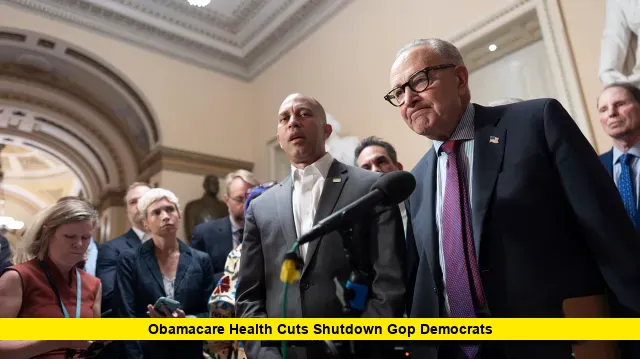

The growing clash over Obamacare health cuts shutdown GOP Democrats is threatening to push the federal government into crisis. As the September 30 deadline looms, the fight over health funding has emerged as the central sticking point in negotiations, highlighting how deeply divided Republicans and Democrats remain over the Affordable Care Act (ACA) and Medicaid.
For millions of Americans, this is not a distant political squabble—it’s a battle that could directly affect their insurance premiums, access to doctors, and ability to keep coverage. With both sides refusing to back down, Washington is bracing for a high-stakes showdown.
Why Health Cuts Are Fueling a Shutdown Fight
At the core of the dispute is whether the federal government will maintain the ACA’s enhanced premium subsidies, which were expanded during the pandemic to make coverage more affordable. Those subsidies are set to expire at the end of 2025, but Republicans are pushing for a budget that leaves them out. Democrats say dropping the subsidies will lead to double-digit premium hikes for millions of working families.
Medicaid has also become a flashpoint. GOP leaders are proposing tighter eligibility rules and work requirements that could significantly reduce enrollment. Democrats argue these changes would strip coverage from vulnerable communities, including children, seniors, and people with disabilities.
Both issues strike at the heart of the ACA, a law Democrats see as their defining healthcare achievement—and Republicans see as an expensive entitlement program.
The Republican Position
House and Senate Republicans are coalescing around a short-term funding bill designed to keep the government open until late November. The proposal holds spending levels steady but excludes provisions to extend ACA subsidies or protect Medicaid from cuts.
Republican leaders insist that fiscal discipline demands tough choices. They argue that healthcare subsidies are unsustainable and that Medicaid needs structural reform to ensure only eligible individuals receive benefits. Some conservatives go further, portraying the ACA as government overreach that must be rolled back.
For GOP lawmakers, allowing subsidies to lapse is not just about saving money—it’s also about reshaping federal health policy. They see the current negotiations as an opportunity to reassert control over programs they believe ballooned during the pandemic.
The Democratic Response
Democrats, however, see the situation very differently. Party leaders have called the Republican plan a “non-starter,” insisting that any funding bill must protect both ACA subsidies and Medicaid coverage.
They argue that stripping these provisions would trigger financial pain across the country. Premium increases could make insurance unaffordable for middle-class families, while Medicaid restrictions would push low-income households off coverage entirely.
Democrats are also framing the fight as a moral issue. For them, the debate is not only about budgets but about protecting access to healthcare. They’ve accused Republicans of prioritizing ideology over people’s lives.
Stakes for Everyday Americans
The fight over Obamacare health cuts shutdown GOP Democrats isn’t just political theater—it carries very real consequences for households across the nation.
- Higher Premiums: Without subsidies, marketplace insurance plans could become far more expensive. Some families may see costs jump by hundreds of dollars each month.
- Coverage Losses: Medicaid restrictions could force millions to drop coverage, especially in states that rely heavily on federal healthcare funding.
- Hospital Strain: Safety-net hospitals that serve low-income patients could face an increase in uncompensated care if fewer people are insured.
- Economic Impact: Families already struggling with inflation may find themselves unable to balance healthcare costs with other essentials.
This looming crisis underscores how closely tied the budget fight is to the everyday health and financial security of Americans.
A Familiar Battlefield
The ACA has been politically contentious since its inception in 2010. Republicans have repeatedly tried to repeal or dismantle it, while Democrats have worked to expand it. Each budget cycle brings renewed clashes over how much funding should support the program.
What makes this year’s showdown especially tense is the timing. The enhanced subsidies expanded during the pandemic were meant to stabilize coverage in an uncertain economy. With those protections expiring, the risk of sudden premium hikes is very real—and lawmakers know voters will feel the consequences.
What Happens if the Government Shuts Down?
If a deal isn’t reached by September 30, large portions of the federal government will shut down. Hundreds of thousands of federal workers could be furloughed, public services disrupted, and financial markets rattled.
While health programs like Medicaid and the ACA marketplaces would not shut down entirely, the political signal would be damaging. A shutdown would highlight just how dysfunctional Washington has become, with healthcare once again at the center of the storm.
For Republicans, a shutdown could draw public anger if voters blame them for rising premiums or lost coverage. For Democrats, holding the line on healthcare protections is risky too—if the government closes, they could share in the blame.
The Political Calculus
Both parties are weighing not just the policy implications but also the political fallout. Republicans believe standing firm on spending cuts will please their conservative base. Democrats think protecting healthcare programs will resonate with independents and swing voters.
Moderate lawmakers in both parties, however, are worried. They fear voters will punish anyone perceived as contributing to a shutdown, especially if families begin receiving notices of higher premiums or losing Medicaid coverage.
The political chessboard is complex, but the stakes are simple: healthcare affordability and access for millions of Americans.
What to Watch in the Coming Days
The final weeks before the deadline will be critical. Several key factors could shape the outcome:
- Senate Dynamics – Because of filibuster rules, a funding bill needs bipartisan support in the Senate. That gives Democrats leverage.
- Public Opinion – If voters become vocal about premium hikes or coverage losses, pressure may mount on Republicans to compromise.
- Negotiation Deadlines – Lawmakers often strike deals at the last possible moment, meaning the days leading up to September 30 will be pivotal.
- Impact on 2026 Elections – Both parties are positioning themselves for next year’s races, making this fight a preview of campaign messaging.
The Road Ahead
The debate over Obamacare health cuts shutdown GOP Democrats highlights how healthcare remains one of the most polarizing issues in U.S. politics. It is not just a fight about numbers on a spreadsheet but about the values that guide the country’s healthcare system.
Will lawmakers find common ground to keep the government open while protecting coverage, or will ideological battles push the nation into another costly shutdown? The answer will shape not only the immediate budget outcome but also the future of American healthcare.
As the deadline approaches, the nation waits for clarity. And for millions who depend on the ACA and Medicaid, the stakes could not be higher.