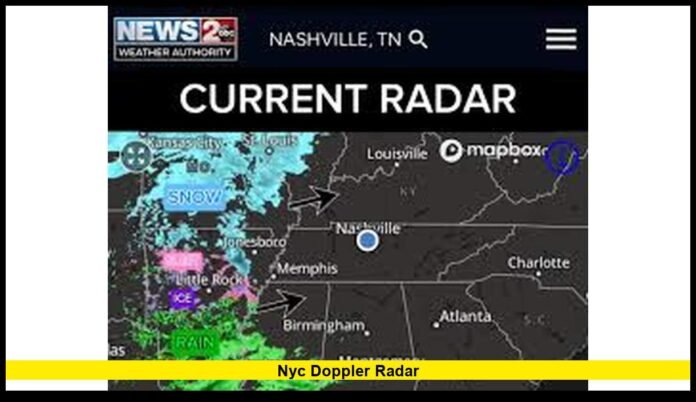

New York’s weather monitoring system has become one of the most relied-upon tools for commuters, emergency managers, and residents who depend on accurate, real-time information. The nyc doppler radar network, which includes long-range regional radars and powerful airport-based scanners, is fully active today and supplying continuous data for tracking rain, snow, wind, and storm development. Its readings are guiding local forecasts, supporting aviation safety, and helping millions of people make informed decisions during a day shaped by a coastal disturbance and shifting precipitation bands.
This report takes a deep look at how the radar system works, what today’s scans show, and why this network matters more than ever as New York enters the winter season.
How the Radar Network Covering New York City Functions
The Primary Radar for the Region: NEXRAD at Upton
At the center of New York’s radar ecosystem is the NEXRAD WSR-88D radar located in Upton on Long Island. This radar sweeps the atmosphere in multiple height levels, scanning for precipitation, wind motion, and storm structure. Every few minutes, it produces updated reflectivity imagery showing where and how intensely precipitation is falling.
Unlike basic weather apps that depend on blended data, this radar delivers raw, high-resolution scans used for:
- Identifying heavy rain and snow bands
- Detecting rotation within thunderstorms
- Tracking wind direction and speed inside storm cells
- Monitoring developing coastal lows and frontal systems
- Pinpointing the rain–snow line during winter storms
Its long-range reach covers New York City, Long Island, northeastern New Jersey, the Hudson Valley, the Connecticut coastline, and portions of the Atlantic waters.
The Crucial Role of Airport Radar Systems
While the Upton radar serves the full region, three Terminal Doppler Weather Radars—located at JFK, Newark, and LaGuardia—provide low-level scans focused on airfield safety and coastal wind patterns.
These TDWR units offer shorter-range but far more precise detail close to the surface. They are specifically designed to detect:
- Microbursts
- Sudden wind shifts
- Dangerous wind shear
- Sharp gust fronts
- Rapidly evolving thunderstorms
This data is vital to aviation operations, especially during busy morning and evening hours when large aircraft enter or leave congested airspace over New York Harbor, Jamaica Bay, and the surrounding boroughs.
Why the Network Is So Effective
Together, the NEXRAD and terminal radars create layered atmospheric coverage. The long-range radar captures the big picture, while airport radars fill gaps near the surface. This design ensures minimal blind spots in a region with complex coastal geography and dense population.
It also allows forecasters to validate real-time conditions during fast-changing weather—an essential capability today given the ongoing coastal system bringing periods of precipitation and fluctuating temperatures.
Current Status and Recent Maintenance Across the Network
Full Operational Status Today
All radars serving New York City and the surrounding region are functioning normally today. This includes the long-range Upton NEXRAD and every terminal radar at the major airports. Radar loops are updating on schedule and showing consistent readings across the metro area.
Recent Maintenance Activity
In recent months, airport radars underwent routine service windows. These short maintenance periods are standard ahead of the winter season, during which radar demand increases due to frequent storms, lower cloud ceilings, and greater wind variability.
Tasks typically performed during these cycles include:
- Calibration of low-level wind detection
- Signal processor checks
- Replacement of aging control components
- Fine-tuning antenna alignment
- Ensuring optimal performance under heavy coastal humidity
Meanwhile, the NEXRAD site continues to be supported by national life-extension upgrades. These improvements keep the nearly three-decade-old radar system functioning with modern reliability. Work includes inspections of the radome, replacement of rotating pedestal parts, new power modules, and mechanical refinements that keep the antenna sweeping smoothly during high wind events.
All upgrades are designed to reduce downtime and preserve consistent coverage during critical weather periods.
What Radar Is Showing Today Across the New York Region
A Day Dominated by a Coastal System
Today’s radar signatures reflect a coastal disturbance sliding near the region. The system has produced rain across New York City and Long Island, with a sharp gradient forming inland where colder temperatures allow snow to mix in.
Radar scans highlight several key features:
- A band of steady rain sweeping northeast through the metro area
- Mixed precipitation in the lower Hudson Valley
- Heavier snow pockets in elevated terrain north and west of the city
- Coastal wind patterns influencing rainfall direction
- A dynamic precipitation shield shifting slightly during the late morning
These observations support active winter weather advisories for inland counties, where snow accumulation is more likely.
Why Temperature Gradients Matter Today
The radar shows the precipitation shield clearly, but interpreting it alongside surface temperatures paints a more complete picture. Today, New York City remains just warm enough for rain. However, the radar is helping forecasters track the exact locations where cold air is shallow, allowing for a switch from rain to wet snow.
This difference is significant because even minor temperature shifts can rapidly change travel conditions.
Monitoring Wind and Low-Level Patterns
Doppler velocity products today indicate steady coastal winds influencing the movement of rain bands. Airport radars, which monitor wind behavior closest to the ground, are capturing the subtle shifts that affect runway operations and approach paths.
These wind readings help determine:
- Aircraft arrival spacing
- Runway configuration changes
- Temporary ground stops
- Approaches altered by visibility or shear
Radar feeds are central to these operational decisions.
How Radar Supports Forecasting, Alerts, and Public Safety
Identifying Snow Bands and Rain Intensity
One of radar’s most valuable capabilities is pinpointing intense snow bands during winter storms. A narrow but persistent band can drop multiple inches of snow, while nearby areas see much less. Today’s radar shows light to moderate precipitation, but if future bursts develop, forecasters will see them immediately.
Rainfall intensity is tracked in a similar way. When heavier pockets form, Doppler reflectivity helps determine whether localized flooding risks may arise, especially in low-lying or poor-drainage neighborhoods.
Confirming Advisory and Warning Conditions
Radar isn’t only used for issuing alerts—it’s used to confirm them. During events like today’s, radar helps monitor whether snow accumulation in advisory areas is matching expectations. If precipitation intensity increases or temperatures drop faster than anticipated, radar trends drive quick updates from meteorologists.
Supporting Emergency Response
Emergency departments and city agencies use radar data during:
- Flood response
- Coastal storm planning
- Snow and ice operations
- Road treatment decisions
- Aviation emergencies
Its accuracy allows agencies to deploy resources efficiently and anticipate conditions before they become hazardous.
A Practical Guide for New Yorkers Using Radar
Reading Reflectivity Maps
Most radar maps available to the public use color shading to show precipitation:
- Green and yellow indicate rain
- Orange and red show heavy rain or strong convection
- Light blue indicates snow
- Pink signals a mix of sleet or freezing rain
This color system helps the public quickly understand whether conditions will affect travel, visibility, or commuting times.
Checking Time Stamps to Track Movement
Radar imagery updates every few minutes. That timestamp is essential for determining whether precipitation is intensifying, drifting east, or weakening. During a storm, even a 10-minute update can reveal important changes.
Using Radar to Plan Travel
Whether commuting by subway, bus, vehicle, or air, radar helps plan around:
- Periods of intense rain
- Shifts from rain to snow
- Visibility drops
- Coastal wind surges
- Potential airport delays
For airport travelers, radar movement often explains why flights slow down or runway changes occur.
Why the NYC Radar Network Matters Most During Winter
New York’s coastal position means winter weather often arrives with a mix of rain, snow, and ice. Radar becomes the most reliable real-time tool during these events, giving forecasters insight into:
- Precipitation type transitions
- Areas where snow may accumulate quickly
- Bands capable of producing low visibility
- Changing wind patterns along the coast
- Storm system evolution as it moves offshore
Without these tools, winter storm forecasting would be significantly less precise in a region where small shifts can produce big impacts.
Today’s Key Takeaways
New York’s radar network—both the long-range NEXRAD site and the airport TDWR systems—is fully operational today. These radars show a coastal system pushing rain across New York City and Long Island, with wintry precipitation inland. Winds along the coast continue to shape the motion of the precipitation field, and current advisory areas remain focused northwest of the city.
The radar network continues to guide aviation safety, commuter planning, emergency preparation, and daily forecasts. Its consistent and high-quality data ensures New Yorkers have reliable insight into changing conditions, particularly during active winter weather periods.