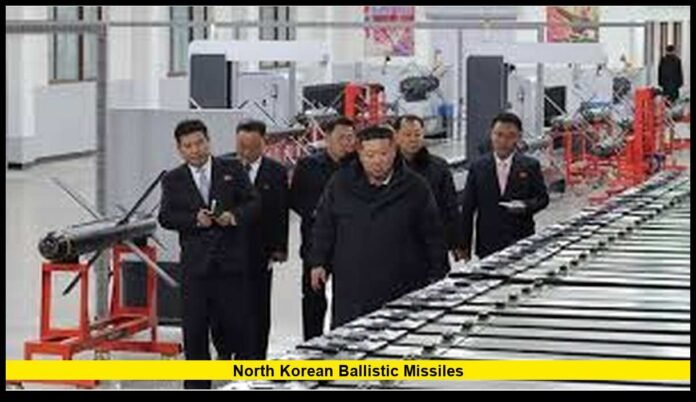

North Korean ballistic missiles moved back into the global spotlight in January 2026 after confirmed launches off the country’s eastern coast signaled renewed momentum in Pyongyang’s weapons testing program. The activity marked the first ballistic missile launches of the year and immediately drew attention from the United States and its regional allies.
The tests underscored a reality that has shaped security planning in Northeast Asia for years: ballistic missiles remain central to North Korea’s military posture and strategic messaging. As the new year began, the launches reinforced concerns about stability, deterrence, and the challenges of managing regional tensions.
January 2026 Launches Reignite Regional Alert Levels
The January launches were detected by allied monitoring systems shortly after liftoff. Multiple missiles were fired toward waters east of the Korean Peninsula, following trajectories consistent with previous medium-range tests.
South Korea and Japan confirmed the launches through independent tracking systems, while U.S. forces in the region coordinated closely with both governments. Officials emphasized that the missiles did not threaten populated areas, but the launches triggered heightened alert measures across allied defense networks.
This marked the first confirmed ballistic missile activity by North Korea since late 2025, signaling the start of a new testing cycle.
Why Ballistic Missiles Remain Central to North Korea’s Strategy
Ballistic missiles serve several critical functions for North Korea. They act as a deterrent, a demonstration of technological capability, and a tool for strategic signaling. Unlike other weapons systems, ballistic missiles generate immediate international attention due to their range and potential payload capacity.
For Pyongyang, missile launches offer a way to project strength without direct confrontation. Each test sends a message to external audiences while reinforcing internal narratives of military advancement and national resilience.
This dual purpose helps explain why ballistic missiles continue to play a dominant role in North Korea’s defense planning.
Technical Characteristics of Recent Missile Activity
Although North Korea did not release detailed technical data following the January launches, allied tracking systems provided reliable information about flight paths and performance.
The missiles traveled hundreds of miles before landing in open waters. Their trajectories indicated controlled flight and stable propulsion, consistent with established missile platforms already known to regional defense planners.
These characteristics suggest ongoing refinement rather than experimentation, pointing to operational confidence in existing missile systems.
Strategic Timing and Diplomatic Sensitivity
The timing of the January launches drew immediate scrutiny. The tests occurred during a period of active diplomatic engagement among major regional powers, amplifying their impact.
North Korea has a long history of conducting missile launches during moments of heightened political activity. Such timing increases visibility and ensures that security issues remain central to diplomatic discussions.
In early 2026, the launches achieved exactly that effect, placing missile activity back at the center of regional security conversations.
U.S. Military Response and Assessment
U.S. defense officials confirmed that the launches were monitored closely and assessed in coordination with allied forces. The evaluation concluded that the missiles posed no immediate threat to U.S. territory or personnel.
Nevertheless, the tests reinforced the importance of maintaining forward-deployed capabilities and integrated defense systems in the Indo-Pacific. U.S. forces remained on alert, with intelligence teams analyzing launch data for performance indicators.
For Washington, the launches served as a reminder that North Korea’s missile program continues to evolve.
South Korea’s Defense Posture
South Korea responded swiftly to the launches, confirming detection and strengthening readiness measures. Military leaders emphasized that surveillance operations were intensified following the tests.
Joint coordination with U.S. and Japanese forces remained a priority. South Korea’s response highlighted the importance of real-time information sharing and combined defensive planning.
Officials reiterated that preparedness remains essential given North Korea’s ability to conduct rapid follow-up launches.
Japan’s Security Concerns
Japan also condemned the missile activity, emphasizing its implications for regional stability. Defense officials confirmed that the missiles did not enter Japanese airspace or territorial waters.
The launches reinforced Japan’s focus on missile defense readiness and early-warning coordination with allies. Japan continues to view ballistic missile activity as a direct security concern requiring constant vigilance.
Evolution of Missile Mobility and Survivability
One of the most significant trends in North Korea’s missile program is the emphasis on mobility. Mobile launch platforms allow missiles to be relocated quickly and concealed across varied terrain.
This mobility complicates detection and targeting efforts. It also reduces the vulnerability of missile systems to preemptive strikes.
The January launches aligned with this trend, demonstrating continued reliance on mobile deployment concepts.
Rapid Launch Readiness and Reduced Warning Time
North Korea has also focused on reducing the time between deployment and launch. Faster readiness challenges traditional early-warning timelines and places pressure on continuous surveillance systems.
Solid-fuel propulsion and streamlined launch procedures support this approach. These capabilities allow missiles to be launched with little preparation visible to external observers.
As a result, allied forces must maintain constant monitoring rather than relying on periodic alert cycles.
Implications for U.S. Missile Defense Planning
For the United States, ballistic missile activity shapes both near-term readiness and long-term investment decisions. Missile defense systems, sensor integration, and command coordination remain top priorities.
Each launch provides new data that informs defense planning. Even when tests do not involve new systems, they reinforce assumptions about readiness and operational intent.
The January 2026 activity reaffirmed the importance of layered defense strategies in the Indo-Pacific.
Historical Pattern of Missile Testing
North Korea has consistently linked ballistic missile testing to key political and military milestones, using launch activity as a calculated response to external and internal developments. Missile tests frequently coincide with periods of diplomatic engagement, leadership meetings, allied military exercises, or shifts in regional security posture, ensuring that such actions receive immediate international attention.
This recurring pattern indicates deliberate timing rather than routine or random testing. Ballistic missile launches function as strategic signals, allowing Pyongyang to assert military capability, influence diplomatic dynamics, and reinforce deterrence without direct confrontation. The timing of these tests often amplifies their impact, shaping regional threat perceptions and prompting adjustments in allied defense planning.
The missile activity observed in early 2026 fits squarely within this established behavior. By conducting launches during a sensitive diplomatic period, North Korea once again demonstrated how missile testing remains an integrated component of its broader political and security strategy rather than a standalone technical exercise.
Military Readiness Going Forward
Following the January launches, allied forces maintained elevated readiness levels across the region, reflecting heightened concern over the pace and unpredictability of North Korea’s missile activity. Joint surveillance and early-warning systems continue to operate continuously, integrating space-based sensors, radar networks, and maritime monitoring assets to detect any signs of follow-up launches. Information sharing among the United States, South Korea, and Japan remains a central element of this posture, enabling faster assessment and coordinated response planning.
Although no additional launches were confirmed immediately afterward, defense officials emphasized that conditions remain fluid and subject to rapid change. North Korea has repeatedly demonstrated the ability to conduct successive ballistic missile launches with little advance notice, often using mobile platforms that complicate detection and shorten response timelines. This capability has reinforced allied emphasis on persistent monitoring, flexible response options, and real-time decision-making frameworks.
The continued focus on readiness reflects a broader recognition that missile activity may resume without warning. As a result, allied forces remain committed to sustained vigilance, close coordination, and disciplined crisis management to reduce the risk of miscalculation while maintaining credible deterrence throughout 2026.
Diplomatic Impact Across the Region
The missile launches added further complexity to ongoing diplomatic efforts aimed at easing tensions across Northeast Asia. Ballistic missile tests conducted during periods of active dialogue tend to harden negotiating positions, narrow diplomatic flexibility, and erode trust among regional actors attempting to stabilize the security environment.
While communication channels among the United States, its allies, and neighboring powers have remained open, renewed missile activity has underscored the difficulty of advancing durable agreements without directly addressing North Korea’s core security objectives and strategic calculations. Each launch introduces additional pressure on diplomatic initiatives by reinforcing threat perceptions and shifting attention back toward deterrence and defense planning.
Throughout early 2026, ballistic missiles remained a central topic in regional discussions, shaping the tone of diplomatic engagement and influencing how governments balance dialogue with preparedness as they navigate an increasingly strained security landscape.
Why This Matters to U.S. Readers
For audiences in the United States, ballistic missile activity in Northeast Asia carries direct and practical relevance beyond regional headlines. These developments influence U.S. defense priorities, alliance commitments, and long-term strategic planning across the Indo-Pacific. Missile tests by North Korea factor into decisions on force posture, deployment of missile defense assets, and coordination with allies such as South Korea and Japan.
Missile activity also shapes military readiness planning, including early-warning integration, intelligence sharing, and joint response procedures designed to address shorter warning timelines. At the policy level, repeated launches affect diplomatic strategy by reinforcing the need to balance deterrence with engagement, while ensuring the credibility of U.S. security guarantees.
Understanding these dynamics helps explain why North Korea remains a consistent focus for U.S. policymakers, defense planners, and strategic analysts as the United States navigates an increasingly complex security environment in 2026.
Broader Security Environment in 2026
The January missile launches unfolded within a rapidly evolving security environment across Northeast Asia, where regional militaries are adjusting to increasingly complex and dynamic threat profiles. The continued development of more mobile, responsive, and survivable missile systems has reduced warning times and placed greater emphasis on persistent surveillance and rapid decision-making.
In response, allied forces have strengthened coordination across air, maritime, and space-based domains to improve early detection and real-time information sharing. Integrated command structures and joint monitoring efforts have become central to managing potential escalation, particularly as missile activity intersects with regional military exercises and diplomatic engagement.
Ballistic missile activity remains a defining factor in this environment, shaping defense planning, alliance coordination, and strategic calculations throughout 2026 as regional actors seek to balance deterrence, readiness, and stability.
Looking Ahead
As 2026 progresses, future missile activity is expected to be shaped by a combination of political developments, regional military exercises, and internal decision-making within North Korea’s leadership structure. Past patterns indicate that missile tests often coincide with moments of heightened diplomatic engagement or military coordination among neighboring states, keeping ballistic missile activity closely tied to broader security dynamics.
Defense planners across the region continue to monitor a range of indicators, including changes in launch site activity, shifts in military posture, and official messaging from Pyongyang. Surveillance efforts remain continuous, reflecting the shortened warning timelines associated with mobile and rapidly deployable missile systems.
This sustained monitoring posture reflects an understanding that missile activity may occur with limited advance notice, reinforcing the need for readiness and coordination as Northeast Asia navigates evolving security conditions throughout 2026.
The Bigger Picture
The missile launches in January 2026 confirmed that North Korea’s ballistic missile program remains active, intentional, and strategically central to its national security posture. The tests demonstrated continued operational confidence in existing systems and reinforced Pyongyang’s reliance on ballistic missiles as a primary means of deterrence and strategic signaling. Despite sustained diplomatic engagement and international pressure, missile testing continues to function as a core instrument of state policy rather than an isolated military activity.
Recent launch patterns suggest a focus on readiness, visibility, and timing, ensuring that missile activity remains closely linked to regional political and security developments. By conducting tests during sensitive diplomatic periods, North Korea keeps its weapons program at the forefront of international attention while shaping the security calculations of neighboring states and the United States.
Each launch underscores the persistent need for vigilance, close coordination among allies, and disciplined crisis management. As Northeast Asia navigates an increasingly uncertain security environment in 2026, ballistic missile activity continues to influence military planning, diplomatic engagement, and long-term stability across the region.
North Korean ballistic missiles continue to shape security calculations for the United States and its allies, ensuring the issue remains at the center of global attention.