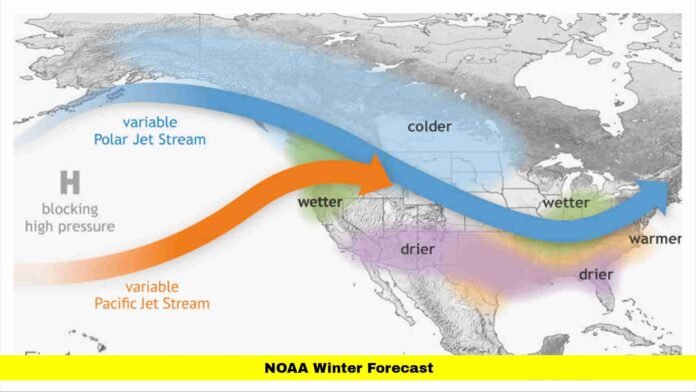

The NOAA winter forecast for 2024–2025 predicts significant impacts across the United States, with La Niña conditions shaping temperatures and precipitation patterns. This seasonal outlook provides guidance for residents, farmers, and industries in planning for the months ahead, highlighting areas that may experience colder, wetter conditions or warmer, drier weather.
La Niña Returns and Its Impact on Weather
La Niña, a climate pattern marked by cooler-than-average sea surface temperatures in the central and eastern Pacific Ocean, is expected to persist through the winter. This phenomenon influences the jet stream, which in turn affects temperature and precipitation across the country. Northern states are likely to experience colder conditions, while the southern U.S. may see warmer, drier weather. La Niña also increases the chances of extreme weather events, including snowstorms in the north and drought conditions in parts of the south.
Temperature Outlook: Colder North, Warmer South
The NOAA winter forecast indicates that northern regions, including the Midwest and Great Lakes, can expect colder-than-average temperatures. These areas may experience frequent cold snaps and below-normal averages, leading to higher heating needs and potential travel disruptions. In contrast, southern states, such as Texas, Florida, and much of the Southeast, are expected to experience warmer temperatures than usual, reducing heating demands but increasing the risk of dry conditions and water shortages.
Precipitation Patterns Across the U.S.
Precipitation is expected to vary significantly by region. Northern areas, including the Pacific Northwest and parts of the Midwest, are likely to see above-average precipitation, which could mean heavier snowfall and more frequent winter storms. These conditions may benefit winter recreation but also increase challenges for transportation and infrastructure. Conversely, the southern U.S. is expected to experience below-average precipitation, heightening the risk of drought and stressing water supplies in already vulnerable regions.
Effects on Winter Sports and Outdoor Activities
The NOAA winter forecast suggests favorable conditions for winter sports in northern states. Ski resorts and snow-based recreation areas may see consistent snowfall and longer seasons, attracting tourists and benefiting local economies. However, extreme weather events, such as heavy snow or ice storms, could disrupt travel and daily life. In southern regions, milder conditions may limit winter outdoor activities but provide safer and more comfortable weather for general outdoor pursuits.
Energy Demand and Preparedness
Colder northern temperatures will likely increase energy demand for heating, potentially leading to higher costs for households and businesses. Residents are advised to ensure heating systems are maintained and that homes are insulated properly to retain warmth. In southern regions, warmer conditions may reduce heating energy use, but water conservation and preparedness for dry conditions remain important. Communities should monitor local weather advisories and prepare for variable conditions depending on their geographic location.
Preparing for the Winter Season
The NOAA winter forecast highlights the importance of preparation. Residents in northern regions should stock up on winter supplies, including salt for de-icing, emergency kits, and backup heating options. Southern communities should focus on water conservation, monitoring drought conditions, and adjusting agricultural practices if needed. Staying informed about updates throughout the season can help reduce the impact of unpredictable weather and keep families and communities safe.
Conclusion
The NOAA winter forecast for 2024–2025 points to a season influenced strongly by La Niña, with colder, wetter conditions expected in the north and warmer, drier conditions in the south. By understanding these patterns and preparing accordingly, individuals and communities can navigate winter safely and efficiently. Staying alert to changes in the forecast ensures readiness for everything from snowstorms to drought conditions.