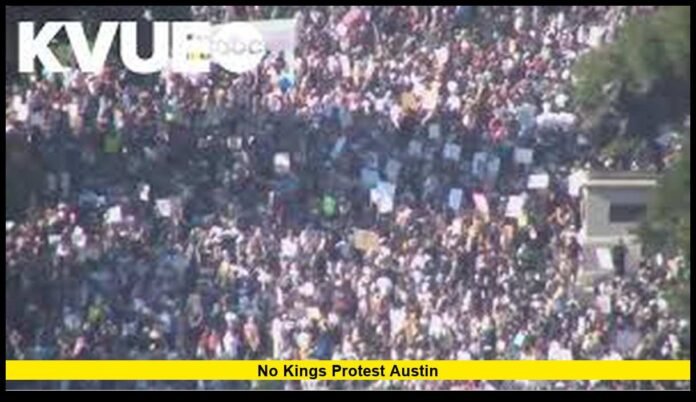

Latest Developments on No Kings Protest Austin
The no kings protest austin movement is building momentum ahead of a major nationwide day of demonstrations set for March 28, 2026. Organizers across the United States have coordinated thousands of protests, signaling one of the most expansive waves of civic action in recent years.
Austin is expected to play a prominent role once again. Known for its strong culture of activism, the city has consistently participated in past “No Kings” protests. Local groups have been mobilizing residents, planning gatherings, and preparing for a significant turnout as the date approaches.
Although final event details vary depending on organizing groups, the overall structure and purpose of the demonstrations remain consistent with earlier protests. Participants in Austin are preparing to join a broader national effort centered on civic engagement and public expression.
Understanding the No Kings Movement
The “No Kings” movement is a nationwide campaign that centers on protecting democratic values and opposing the concentration of power. It began gaining traction in 2025, when coordinated protests drew large crowds across major U.S. cities.
The phrase “No Kings” reflects a core belief that leadership in the United States must remain accountable and limited by democratic systems. Demonstrators use the slogan to express concerns about governance, transparency, and public accountability.
This movement is driven by grassroots organizations, advocacy networks, and community leaders. These groups collaborate to organize events, share information, and encourage participation across different regions.
Over time, the movement has evolved into a recurring series of demonstrations tied to major political developments. Each wave of protests builds on previous efforts, creating sustained visibility and engagement.
Austin’s Role in the Movement
Austin has established itself as a key city in national protest movements. The city’s political environment, combined with an engaged population, makes it a natural gathering place for large demonstrations.
In earlier “No Kings” protests, thousands of people gathered at central locations such as the Texas State Capitol. Marches often extended through downtown streets, drawing attention from both local communities and national audiences.
Several factors contribute to Austin’s continued importance:
- A history of organized civic activism
- A large and diverse population
- Strong networks of local advocacy groups
- Proximity to state government institutions
These elements make Austin a focal point for demonstrations that aim to influence public discourse.
What Is Driving the March 2026 Protests
The upcoming demonstrations are shaped by a combination of political and social issues that have intensified in recent months. These concerns have motivated people across the country to take part in coordinated action.
Major factors behind the protests include:
- Concerns over immigration enforcement policies
- Public reaction to recent high-profile incidents
- Ongoing debates about civil liberties and individual rights
- Broader dissatisfaction with government decision-making
For many participants, these issues represent a turning point. The protests offer a platform to express concerns and demand accountability.
Some attendees are experienced activists, while others are joining their first public demonstration. This mix reflects the growing reach of the movement.
A Nationwide Wave of Demonstrations
The March 28 protests are notable for their scale. Organizers have planned thousands of events across the country, creating a synchronized national effort.
Key highlights of the nationwide movement:
- Thousands of coordinated demonstrations
- Participation expected in all regions of the U.S.
- Large turnout anticipated based on previous events
This level of coordination allows the movement to amplify its message. By holding events simultaneously, organizers create a unified national moment that draws widespread attention.
The approach also makes it easier for individuals to participate locally while contributing to a broader cause.
What to Expect at Austin Demonstrations
While each event may differ slightly, demonstrations in Austin typically follow a familiar structure.
Common elements include:
- Gathering at central public locations
- Organized marches through downtown areas
- Speeches from community leaders and organizers
- Creative expressions such as music and art
- Distribution of informational materials
These events are designed to be inclusive and accessible. Participants often include students, families, and community members from various backgrounds.
Volunteers play a key role in coordinating activities and ensuring that events run smoothly.
Commitment to Peaceful Protest
A defining feature of the “No Kings” movement is its emphasis on nonviolent action. Organizers consistently encourage participants to engage in peaceful and respectful demonstrations.
Typical guidelines for participants:
- Follow local laws and event rules
- Avoid confrontations or disruptive behavior
- Respect fellow participants and bystanders
- Focus on clear, constructive messaging
This approach helps maintain safety while ensuring that the movement’s message remains the central focus.
Past demonstrations in Austin have largely adhered to these principles, contributing to orderly and impactful events.
Impact on the City of Austin
Large demonstrations can affect daily life in the city, particularly in areas where protests are concentrated.
Possible impacts include:
- Temporary road closures in downtown areas
- Increased traffic and delays
- Adjustments to public transportation routes
- Heightened presence of law enforcement
Residents and visitors are often advised to plan ahead during major events. Despite these disruptions, protests also bring increased activity and attention to the city.
For many, these demonstrations represent an important opportunity to participate in civic life and engage with current issues.
Public Opinion and Ongoing Debate
The “No Kings” movement has sparked discussion across the country, with people expressing a wide range of perspectives.
Supporters believe:
- Protests are essential for a healthy democracy
- Public demonstrations can influence change
- Collective action strengthens civic engagement
Critics raise concerns about:
- Disruptions to daily routines
- Questions about long-term effectiveness
- The clarity of messaging
These differing viewpoints highlight the broader national conversation surrounding protest movements and civic participation.
Safety Measures and City Coordination
City officials in Austin are experienced in managing large gatherings. Preparations typically involve coordination between local agencies and event organizers.
Key safety measures often include:
- Monitoring crowd size and movement
- Ensuring emergency access routes
- Managing traffic and public safety resources
- Providing updates to the public
These steps are designed to support both participants and residents while maintaining order during demonstrations.
Participants are encouraged to stay informed and follow any guidance issued by local authorities.
Austin Within a National Movement
The no kings protest austin is part of a larger wave of civic activity unfolding across the United States. Demonstrations in other cities are expected to mirror those in Austin, creating a unified national presence.
This widespread participation reflects a broader trend of increased public engagement. People are turning to demonstrations as a way to express concerns and connect with others who share similar views.
Austin’s involvement reinforces its role as a central hub for activism in the country.
What Comes Next
The March 2026 protests are not expected to be a one-time event. Organizers view them as part of an ongoing effort to sustain public engagement.
Future actions may include:
- Additional demonstrations in the coming months
- Community meetings and outreach efforts
- Advocacy campaigns focused on specific policies
- Continued collaboration among organizing groups
These efforts aim to maintain momentum and translate public participation into meaningful outcomes.
Austin’s active community suggests that the city will continue to play a significant role in these developments.
Why This Moment Stands Out
The scale and coordination of the March protests highlight a period of heightened civic involvement in the United States.
For many participants, the demonstrations represent a chance to take part in shaping national conversations. The movement’s growth shows how quickly grassroots efforts can expand when supported by widespread public interest.
Austin’s participation underscores the city’s importance as a center for civic action and public dialogue.
Conclusion
The upcoming demonstrations show how the no kings protest austin is connected to a broader national movement that continues to gain traction. With strong participation expected and ongoing public interest, Austin is set to remain at the center of this evolving moment in American civic life.
What do you think about the growing protests in Austin? Share your thoughts and stay connected for the latest updates.