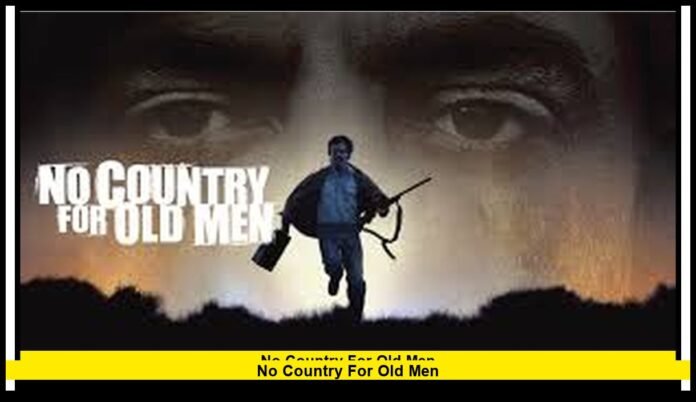

Nearly twenty years after its release, No Country for Old Men continues to hold a place among the most powerful and influential films ever made in American cinema. The 2007 thriller, written and directed by Joel and Ethan Coen, has become a modern classic, admired for its spare dialogue, haunting atmosphere, and unforgettable performances. As of 2026, the film is being celebrated anew through restored editions, film retrospectives, and continued critical study across the United States.
The Origins of a Masterpiece
No Country for Old Men began as a novel by Cormac McCarthy, published in 2005. McCarthy’s writing—known for its dark themes and minimalist style—was already revered through works such as Blood Meridian and The Road. His story of fate, greed, and morality unfolding in the desert of the American Southwest instantly caught the attention of the Coen brothers.
Drawn to McCarthy’s sharp prose and bleak worldview, Joel and Ethan Coen adapted the novel into a screenplay that preserved its tension and philosophical weight. The filmmakers’ commitment to McCarthy’s words resulted in one of the most faithful book-to-film adaptations ever made.
Principal photography began in May 2006, primarily across New Mexico and Texas, capturing the harsh beauty and emptiness of the border landscape. The setting became as much a character as any actor on screen—its silence and distance reflecting the moral desolation at the story’s heart.
Plot and Structure: Simplicity with Depth
Set in the early 1980s, the film follows Llewelyn Moss (Josh Brolin), a Vietnam veteran who stumbles upon the aftermath of a desert drug deal gone wrong. Among the corpses, he discovers a briefcase containing two million dollars in cash. Against his better judgment, Moss takes the money, triggering a deadly pursuit across Texas.
That decision unleashes Anton Chigurh (Javier Bardem), a remorseless hitman who kills without hesitation. His weapon of choice—a captive bolt pistol used for slaughtering cattle—adds a layer of symbolic menace.
Following behind both men is Sheriff Ed Tom Bell (Tommy Lee Jones), an aging lawman witnessing the collapse of the moral world he once understood. His reflection on violence, aging, and the erosion of justice gives the film its emotional core.
Performances That Defined Careers
Josh Brolin as Llewelyn Moss
Before No Country for Old Men, Josh Brolin was best known for supporting roles. The Coens’ casting of him as Moss redefined his career. His portrayal of a man who believes he can outwit fate—only to find himself consumed by it—struck audiences as both heroic and tragic.
Brolin’s Moss is determined but flawed, human rather than mythic. That realism became a hallmark of the film, grounding its violence in genuine desperation.
Javier Bardem as Anton Chigurh
The cold logic of Anton Chigurh became legendary. Bardem’s performance earned him the Academy Award for Best Supporting Actor in 2008, along with more than forty other international awards. His emotionless expression, slow cadence, and bizarre haircut all contributed to one of the most chilling villains in film history.
In 2025, Empire Magazine and Rolling Stone both reaffirmed Bardem’s Chigurh as one of the greatest villains ever put on screen. Critics often note that the character’s power lies not only in his violence but in his philosophical certainty—he represents the idea that chance, not morality, governs human life.
Tommy Lee Jones as Sheriff Ed Tom Bell
As Sheriff Bell, Tommy Lee Jones gives the story its conscience. His quiet sadness and weary perspective offer contrast to Chigurh’s merciless efficiency. Bell’s dialogues about growing older and witnessing senseless brutality frame the film’s title meaning: a recognition that the world has grown too cruel for those who still believe in order and justice.
Jones’s performance anchors the film emotionally, and his final monologue is often cited as one of the finest endings in modern cinema.
Awards and Recognition
At the 80th Academy Awards, No Country for Old Men dominated the night, earning:
- Best Picture
- Best Director for Joel and Ethan Coen
- Best Adapted Screenplay
- Best Supporting Actor for Javier Bardem
It also received nominations for Best Cinematography, Best Editing, Best Sound Mixing, and Best Sound Editing.
Beyond the Oscars, it won top honors at the BAFTA Awards, Golden Globes, and Screen Actors Guild Awards. Critics’ groups across the United States—from New York to Los Angeles—named it the best film of 2007.
Its awards success wasn’t just about craftsmanship; it marked a rare moment when mainstream audiences and critics agreed on what defined cinematic excellence.
Roger Deakins and the Visual Language of Violence
Cinematographer Roger Deakins played a central role in shaping the film’s visual identity. Known for his precision with light and texture, Deakins used the natural sunlight of the Southwest to create imagery that feels both real and mythic.
The dusty highways, the motels, and the endless desert horizon all carry a visual poetry that mirrors the film’s philosophical undercurrent. The absence of artificial lighting and the use of long takes heighten realism and suspense.
What truly sets the film apart is its near-total lack of music. The Coens deliberately eliminated a traditional score, letting ambient sound guide emotion. Every footstep, gun click, and gust of wind becomes part of the soundtrack, amplifying the film’s sense of unease.
In 2024, the Criterion Collection released a 4K UHD Blu-ray restoration of No Country for Old Men, personally supervised by Deakins and the Coens. The remaster restored every frame from original negatives, offering unprecedented clarity and color balance. Fans and film scholars praised it as the definitive version.
Themes That Continue to Resonate
Nearly two decades later, the story of No Country for Old Men remains strikingly relevant.
- The Illusion of Control: Moss believes he can outsmart both criminals and fate, yet his downfall illustrates how chaos erodes human planning.
- Moral Decline: Sheriff Bell’s reflections suggest that violence has always existed but that modern life has stripped it of meaning.
- Chance and Destiny: Chigurh’s reliance on coin tosses symbolizes randomness—the terrifying idea that morality plays no role in who lives or dies.
These themes echo throughout American society today, as audiences continue to debate the moral decay and senseless violence depicted in the film.
Cormac McCarthy’s Enduring Influence
When Cormac McCarthy passed away in 2023, film and literary communities revisited his work with renewed appreciation. No Country for Old Men is widely regarded as the most successful cinematic translation of his vision.
McCarthy’s distinct writing style—spare, unpunctuated, and morally dense—translates beautifully into the Coens’ visual storytelling. The film captures the writer’s fixation on the inevitability of death and the futility of human attempts to control it.
McCarthy’s estate and several American universities continue to study his contribution to literature, ensuring that his vision—and the Coens’ adaptation—remain essential parts of U.S. cultural education.
Cultural and Academic Impact
Film schools across the country continue to teach No Country for Old Men as a model for screenwriting and visual economy. It is used in film theory courses to demonstrate how tension can be built without heavy dialogue or background music.
Professors frequently cite the Coens’ decision to remove traditional narrative markers—such as a climactic showdown between hero and villain—as a groundbreaking choice. Instead of delivering a predictable conclusion, the film ends with a quiet reflection on life and mortality.
That ending has become a subject of essays, podcasts, and film panels across the U.S., keeping the conversation alive nearly twenty years later.
Box Office Success and Longevity
With a modest budget of $25 million, No Country for Old Men went on to gross more than $171 million worldwide. Its performance proved that thought-provoking dramas could still succeed in a market dominated by action franchises.
In home entertainment, the film continues to perform exceptionally well. The 4K Blu-ray edition released in 2024 sold strongly among collectors, while digital streaming data from 2025 confirmed it remains one of the most-watched Oscar winners of the 2000s.
It’s available on Netflix, Amazon Prime Video, Apple TV, and The Criterion Channel in the United States, maintaining steady viewership nearly two decades after its debut.
Impact on Later Films and Television
The success of No Country for Old Men reshaped the tone of American thrillers. Its mix of realism and fatalism influenced a generation of filmmakers. Works such as Hell or High Water (2016), Wind River (2017), and television series like Breaking Bad and True Detective owe clear creative debts to the film’s style and mood.
Directors and writers across the industry continue to reference its pacing, its use of silence, and its existential undertones as examples of perfect narrative control.
The Coen Brothers’ Career Milestone
For Joel and Ethan Coen, No Country for Old Men marked both an artistic and commercial peak. The brothers had already built a reputation for dark humor and genre innovation through Fargo, The Big Lebowski, and Miller’s Crossing.
But this film demonstrated their mastery of tone and restraint. They abandoned irony and embraced tragedy, crafting a story that functions as both thriller and moral fable. The film’s success expanded their influence in Hollywood, paving the way for later achievements such as True Grit (2010) and Inside Llewyn Davis (2013).
Even today, many critics regard No Country for Old Men as the Coens’ most perfect film—an achievement of total harmony between writing, acting, and cinematography.
Modern Recognition and Honors
In 2025, the American Film Institute (AFI) reaffirmed No Country for Old Men’s place among the Top 25 American Films of the 21st Century. The AFI described it as “a defining reflection of modern American morality and consequence.”
It also remains one of the highest-rated films on major databases, consistently ranking among IMDb’s top 30 of all time with an average rating above 8.2.
Film critics, including many who initially reviewed it in 2007, continue to re-evaluate its precision and restraint. Contemporary essays praise how the movie defies genre labels—it’s at once a western, a crime thriller, and a philosophical drama.
Preservation and Anniversary Screenings
In 2025, film institutions such as the Academy Museum of Motion Pictures in Los Angeles and the Museum of Modern Art in New York held anniversary screenings featuring restored 4K projections. Discussions led by film scholars highlighted the movie’s technical innovation, including its sound design and unconventional narrative.
The events drew large audiences, including younger viewers discovering the film for the first time. That continued interest underscores its enduring relevance in the American cultural landscape.
Why It Still Matters Today
Nearly twenty years later, No Country for Old Men resonates because its message remains universal. It speaks to a time of uncertainty, violence, and generational change—issues that remain deeply felt in the United States.
The film’s refusal to provide comfort or closure mirrors real life. Its depiction of justice fading against unstoppable chaos feels increasingly relevant in an age defined by unpredictability.
Whether viewed as a thriller, a morality tale, or a philosophical reflection, it remains timeless.
Conclusion
Few films capture the American spirit and its contradictions as completely as No Country for Old Men. Its quiet intensity, moral depth, and artistic precision continue to inspire audiences and filmmakers nearly two decades after its debut.
As 2026 unfolds, the film’s legacy endures—through restored editions, classroom discussions, and passionate new audiences discovering it for the first time. In every sense, No Country for Old Men remains not just a film about a changing world, but a masterpiece that changed the world of film itself.
What do you think makes No Country for Old Men such an enduring classic? Share your thoughts below and join the conversation.