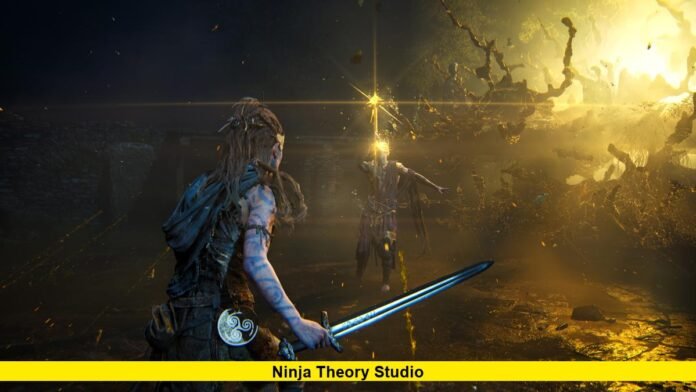

Ninja Theory has long been one of the most creatively ambitious video game studios in the world. Known for blending cinematic storytelling with intense action gameplay, the Cambridge-based developer built a devoted global fanbase through landmark titles like Hellblade: Senua’s Sacrifice and its sequel. But in June 2026, the studio finds itself at the center of a gaming industry earthquake — facing the very real threat of closure at the hands of Microsoft’s sweeping “Xbox reset.” Here is everything you need to know about Ninja Theory studio, its legacy, and what the future may hold.
The Origins of Ninja Theory: From Just Add Monsters to Cambridge’s Finest
Ninja Theory’s story begins in March 2000, when Tameem Antoniades, Nina Kristensen, and Mike Ball founded a small game development company in Cambridge, England, with just £3,000 to their name. Operating initially under the name Just Add Monsters, the fledgling studio had no money, no equipment, and no technology — only an unshakeable drive to make great games.
The studio’s early years were turbulent. After being acquired by Argonaut Games, it released Kung Fu Chaos (2003), an Xbox-exclusive brawler that showcased the team’s flair for polished, character-driven combat. When Argonaut was liquidated, the founders bought the studio back from administrators and rebranded it as Ninja Theory — a name that reflected their core philosophy: ninja-class combat, affecting character journeys, and stunning visual art.
Heavenly Sword and the Road to Recognition
Ninja Theory’s first major breakthrough came with Heavenly Sword (2007), a PlayStation 3 exclusive featuring a sweeping fantasy narrative and a groundbreaking performance-capture approach. The studio collaborated closely with actor Andy Serkis, who would go on to be a recurring creative partner. While the game earned critical admiration and multiple award nominations — including Best New IP and Best Independent Developer at the Develop Industry Excellence Awards — it struggled commercially, leaving Ninja Theory in a financially precarious position and costing the studio its in-house technology due to contractual obligations with Sony.
The experience was a hard lesson. Ninja Theory pivoted, diversifying its portfolio and taking on contract work to survive. One such project was Enslaved: Odyssey to the West (2010), another emotionally rich action-adventure with Serkis in a starring role, and then DmC: Devil May Cry (2013), a bold reimagining of Capcom’s iconic franchise that divided fans but demonstrated the studio’s range and technical prowess.
Hellblade: Senua’s Sacrifice and the “Independent AAA” Revolution
Ninja Theory’s defining moment arrived with Hellblade: Senua’s Sacrifice (2017). Developed by a small internal team while the rest of the studio took on external work, Hellblade introduced the world to Senua, a Celtic warrior battling psychosis as she journeys through a nightmarish Norse underworld. The game was revolutionary in its authentic, clinically-informed portrayal of mental illness — developed in close partnership with Cambridge neuroscientist Professor Paul Fletcher.
The studio coined a new term for their approach: “Independent AAA” — producing games with high production values on lean budgets, publishing them independently rather than relying on a major publisher. Hellblade was a resounding critical and commercial success, winning multiple BAFTA awards and sparking a wider conversation in the gaming industry about mental health representation. It proved that a small team with a clear creative vision could compete — and win — at the highest level.
Microsoft Acquisition: A New Chapter Under Xbox Game Studios
The success of Hellblade brought Ninja Theory to the attention of Microsoft. In June 2018, at E3, Xbox head Phil Spencer announced that Ninja Theory had been acquired by Microsoft and would join Xbox Game Studios alongside Playground Games, Undead Labs, and Compulsion Games. Reports later indicated Microsoft paid approximately $117 million for the studio — a figure that, even then, seemed modest given Ninja Theory’s creative pedigree.
For Ninja Theory’s founders, the deal was about creative freedom rather than commercial pressure. Studio creative director Tameem Antoniades stated at the time that the acquisition would allow the team to keep making focused, experience-driven games without the pressures of mainstream monetization. For Microsoft, Ninja Theory was seen as a studio whose output would fit naturally within the Xbox Game Pass subscription ecosystem.
Senua’s Saga: Hellblade II and Project Mara
Under Microsoft’s umbrella, Ninja Theory announced two ambitious projects: Senua’s Saga: Hellblade II, a direct sequel to the original game, and Project Mara, a psychological horror experience exploring real-world mental terror. Hellblade II was released in May 2024, showcasing stunning Unreal Engine 5 visuals and a deeply intimate narrative scope. The game pushed graphical and performance-capture boundaries and was praised for its artistry, even as some critics noted its short length.
Following Hellblade II, studio head Dom Matthews revealed that the team had made a key internal decision: to cancel Project Mara and unite the entire studio behind a single new project — a move designed to focus their energy and deliver their most ambitious work yet.
Senua Announced at Xbox Games Showcase 2026
Just one week before the crisis headlines hit, Ninja Theory delivered one of the most surprising reveals of the year. At the Xbox Games Showcase 2026 in early June, the studio unveiled Senua — a bold new action-adventure set in the Hellblade universe, but representing a dramatic evolution in scope and genre. Unlike the intimate, linear design of the previous Hellblade games, Senua features expanded combat systems, more complex puzzle-solving, and open-world exploration. It is slated for release in 2027 and is expected to launch on Xbox Series X|S, PC, and PS5 — not as a console exclusive.
Dom Matthews, speaking to Xbox Wire about the new direction, described Senua as the culmination of everything the team had built toward: a fresh kind of game made possible by the technology and talent the studio developed through Hellblade II. The reveal was met with widespread excitement from the gaming community.
The 2026 Closure Crisis: Microsoft’s “Xbox Reset” Puts Ninja Theory at Risk
The excitement surrounding Senua was swiftly overshadowed by devastating news. On June 15, 2026 — just days after the Xbox Games Showcase reveal — reports emerged that Ninja Theory was among several Xbox Game Studios facing imminent closure as part of a sweeping Microsoft restructuring effort dubbed the “Xbox reset,” led by new Xbox CEO Asha Sharma.
According to Bloomberg journalist Jason Schreier, and corroborated by multiple outlets including The Verge, VGC, and PC Gamer, Ninja Theory employees had been informed that the studio would be shutting down. The report indicated that the Cambridge studio could close unless it finds a buyer willing to keep the team operational. Studio leadership was said to be in active negotiations with Microsoft to explore the possibility of buying back independence — a path also being pursued by Psychonauts developer Double Fine and South of Midnight studio Compulsion Games.
Schreier reported that employees at the affected studios were given permission to seek new employment while the situation remained unresolved. The news sent shockwaves through the gaming community, with many pointing to the cruel irony of a studio having just unveiled an eagerly anticipated new game, only to face an existential threat days later.
A Pattern of Closures: Ninja Theory Is Not Alone
Ninja Theory’s predicament is part of a broader pattern of Xbox studio closures that has alarmed the gaming industry. Microsoft’s aggressive acquisition strategy — which peaked with the $69 billion purchase of Activision Blizzard in late 2023 — has been followed by multiple rounds of layoffs and studio shutdowns. High-profile casualties include Arkane Austin (Redfall) and Tango Gameworks (Hi-Fi Rush), both shuttered in 2024 despite one having released a critically acclaimed, award-winning title.
Critics of Microsoft’s approach note a troubling disconnect between the company’s public celebration of its studios and the quiet financial decisions that have put so many at risk. Microsoft CEO Satya Nadella has stated that Xbox needs to pursue more “economically viable” growth, adding further weight to fears that additional studios could be on the chopping block.
What Happens to Senua If Ninja Theory Closes?
One of the biggest questions hanging over the situation is what becomes of the newly announced Senua, which was being built by the full studio team. If Ninja Theory is acquired by an independent buyer, there is hope the game — and the studio’s creative vision — could survive intact. If no buyer is found and the studio is formally closed, the fate of Senua and the broader Hellblade franchise is unclear. Microsoft could theoretically assign the IP to another internal studio or hold it indefinitely.
The gaming community has rallied significantly behind Ninja Theory, with fans and industry figures calling for the studio to be saved. The combination of the recent Senua reveal, the studio’s celebrated history, and the human cost of closure has made this one of the most emotionally charged stories in gaming in 2026.
Ninja Theory’s Legacy: Why It Matters
Whatever the outcome of the current crisis, Ninja Theory’s place in gaming history is secure. The studio pioneered the Independent AAA model, showed that mental health could be explored with depth and sensitivity in interactive media, and consistently delivered experiences that treated players as intelligent, emotionally engaged adults. From the scrappy origins of Just Add Monsters to the award-winning heights of Hellblade, Ninja Theory has been one of the most meaningful creative forces in British — and global — game development.
The studio’s work has influenced countless developers and changed the conversation around representation, narrative, and production models in the games industry. Losing Ninja Theory would be a significant blow not just to Xbox, but to the art of video games itself.
FAQ
Q: Where is Ninja Theory studio located? A: Ninja Theory is based in Cambridge, England, United Kingdom. The studio moved to a new building during the development of Senua’s Saga: Hellblade II.
Q: Who founded Ninja Theory? A: The studio was founded in March 2000 by Tameem Antoniades, Nina Kristensen, and Mike Ball, initially under the name Just Add Monsters.
Q: When did Microsoft acquire Ninja Theory? A: Microsoft officially acquired Ninja Theory on June 10, 2018, at E3 2018, as part of a wider Xbox Game Studios expansion.
Q: What games has Ninja Theory made? A: Ninja Theory’s key titles include Kung Fu Chaos (2003), Heavenly Sword (2007), Enslaved: Odyssey to the West (2010), DmC: Devil May Cry (2013), Hellblade: Senua’s Sacrifice (2017), Bleeding Edge (2020), and Senua’s Saga: Hellblade II (2024).
Q: What is Ninja Theory’s new game in 2026? A: Ninja Theory revealed Senua, a new action-adventure game set in the Hellblade universe, at the Xbox Games Showcase in June 2026. It is expected to launch in 2027 on Xbox Series X|S, PC, and PS5.
Q: Is Ninja Theory closing down? A: As of June 16, 2026, reports indicate that Ninja Theory is at risk of closure as part of Microsoft’s Xbox restructuring. Studio leadership is in active negotiations to either find a buyer or achieve independence. The situation is still described as “in flux.”
Q: What is the “Xbox reset”? A: The “Xbox reset” is a restructuring initiative announced by new Xbox CEO Asha Sharma in mid-2026, aimed at cutting costs across Microsoft’s gaming division. It has resulted in multiple studios facing potential closure or spin-off negotiations.
Q: Could Ninja Theory survive as an independent studio? A: Possibly. Reports suggest studio leadership is exploring the option of buying themselves back from Microsoft, similar to what Double Fine and Compulsion Games are also pursuing. Whether the deal succeeds depends on ongoing negotiations.
Will Ninja Theory survive the Xbox reset and bring Senua to life — or is this the end of one of gaming’s most beloved studios? Drop your thoughts in the comments and follow us for the latest updates.