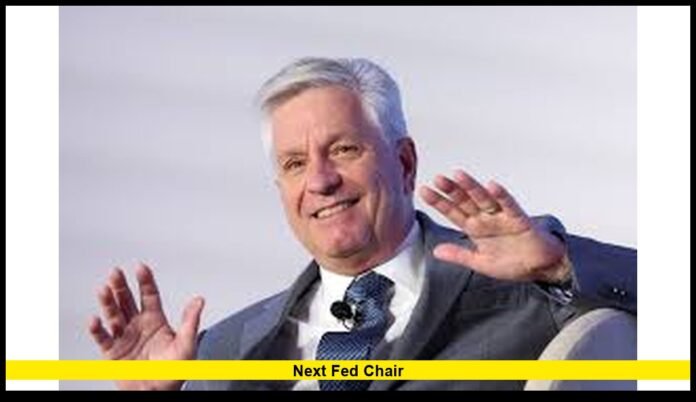

The question dominating economic and political conversations in the United States right now is simple but hugely consequential: who will be the next fed chair? With the current chair’s term scheduled to end in May 2026, attention has turned to the leadership transition at the world’s most powerful central bank and how it could shape interest rates, inflation control, and financial stability in the years ahead.
The Federal Reserve chair plays a central role in guiding U.S. monetary policy, influencing everything from mortgage rates and credit card interest to business investment and job growth. A change at the top comes at a time when markets remain sensitive to inflation trends, global economic uncertainty, and the long-term credibility of the central bank’s independence.
Why the Federal Reserve Chair Matters So Much
The chair of the Federal Reserve is not just another government official. This position sets the tone for the entire Federal Open Market Committee, communicates policy direction to the public, and serves as the face of U.S. monetary authority to global markets.
Every major interest-rate decision, every signal about inflation risks, and every statement on financial stability is closely watched. Even subtle changes in language from the chair can move stock markets, bond yields, and currency values within minutes.
Because of this influence, the choice of the next leader is viewed as one of the most important economic appointments a U.S. president can make.
Current Leadership and the 2026 Transition
As of January 2026, Jerome Powell continues to serve as Chair of the Federal Reserve. His current term as chair ends in May 2026, while his term as a member of the Board of Governors extends beyond that date.
This creates several possible paths forward. A sitting chair can be reappointed, step down entirely, or remain on the Board while a new chair takes over. Each option carries different implications for continuity, policy direction, and internal dynamics at the central bank.
The administration has indicated that a decision on the nomination is expected well before the term expiration to allow time for Senate confirmation and an orderly transition.
Political Environment Surrounding the Appointment
The upcoming nomination comes in a politically charged atmosphere. Monetary policy has been a point of contention between the Federal Reserve and the White House in recent years, particularly over the pace of interest-rate cuts and the balance between controlling inflation and supporting economic growth.
Presidential comments about central bank policy have drawn renewed attention to the importance of Federal Reserve independence. Lawmakers from both parties, along with former central bank officials, have emphasized that the credibility of U.S. monetary policy depends on decisions being guided by economic data rather than short-term political considerations.
This broader context makes the selection of the next chair not only an economic decision, but also a signal about how strongly the administration intends to protect the institution’s autonomy.
Leading Names Under Consideration
Several experienced economists and policymakers are widely viewed as serious contenders for the role. Among them, one of the most frequently mentioned is a former Federal Reserve governor with deep experience in financial markets and central banking.
This candidate has previously served at the Fed during periods of market stress and is known for a firm stance on inflation control. Analysts often describe this policy approach as cautious and disciplined, prioritizing price stability even when political pressure favors faster economic stimulus.
Another prominent name is a senior economic adviser currently serving in the White House. With a long academic background and close ties to the administration, this figure has been vocal about the need for transparency and accountability at the central bank. However, recent statements from the president suggest a desire to keep this adviser in the current role, potentially narrowing the field of candidates.
While no official nomination has yet been announced, market observers note that expectations have shifted toward a smaller group of highly experienced central banking figures rather than politically aligned newcomers.
What Markets Are Watching
Financial markets are not only focused on who will be nominated, but also on what their policy philosophy might mean for interest rates.
Investors are trying to assess:
- How aggressively the next chair will respond if inflation pressures re-emerge
- Whether the central bank will prioritize rate cuts to support growth if the economy slows
- How strongly the new leadership will defend the Fed’s independence from political influence
Even before a name is formally put forward, shifts in expectations about the future chair can affect bond yields, stock prices, and the value of the U.S. dollar.
Continuity Versus Change
One of the key questions is whether the next chair will represent continuity with current policy or a meaningful shift.
Continuity would likely mean a continued data-driven approach, careful communication, and a gradual adjustment of interest rates based on inflation and employment trends.
A shift could involve a stronger emphasis on growth-supportive policies, faster easing if inflation remains contained, or a different communication style that changes how markets interpret Federal Reserve guidance.
Both paths have supporters and critics, which is why the nomination process is being followed so closely.
The Possibility of the Current Chair Remaining on the Board
Because the current chair’s term as a governor extends beyond the end of the chairmanship, there is a realistic scenario in which a new chair takes office while the former chair remains a voting member of the Board.
This would be unusual in recent history and could create a unique leadership structure, combining institutional memory with new direction. Such an arrangement could help ensure stability during the transition, but it could also influence internal debates and the balance of views within the Federal Open Market Committee.
How the Confirmation Process Will Unfold
Once a nominee is formally announced, the process moves to the U.S. Senate. Hearings before the relevant committee will examine the candidate’s views on inflation, employment, financial regulation, and the role of the Federal Reserve in the broader economy.
Senators are expected to focus heavily on the nominee’s commitment to central bank independence, their past statements on interest rates, and their ability to communicate clearly with both lawmakers and the public.
Given the importance of the role, the confirmation process is likely to attract significant attention and debate.
Global Implications of the Appointment
The choice of the next Federal Reserve chair will not only affect the United States. Because the dollar is the world’s primary reserve currency, U.S. monetary policy has global reach.
Central banks, investors, and governments around the world closely follow signals from the Federal Reserve. A change in leadership can influence capital flows, exchange rates, and financial conditions far beyond U.S. borders.
For this reason, the announcement of the next fed chair will be a global economic event, not just a domestic one.
What Comes Next
In the weeks ahead, attention will remain fixed on any official statements regarding the nomination timeline and potential candidates. Markets will continue to adjust expectations as new information emerges, and policymakers will prepare for a transition that could shape U.S. economic policy for years.
As the decision approaches, the focus will remain on finding a leader who can balance inflation control, economic growth, financial stability, and institutional independence in a complex and evolving global environment.
Stay with us as this story develops, and share your thoughts on who should lead the Federal Reserve into its next chapter.