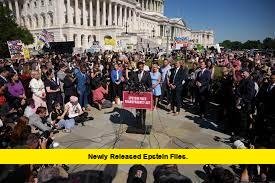

The newly released Epstein files have shaken the political and legal landscape across the United States this week. On November 12, 2025, the House Oversight Committee released a new batch of documents from Jeffrey Epstein’s estate, including several explosive emails involving Epstein, Ghislaine Maxwell, and references to high-profile individuals. These revelations have reignited national interest in the long-running case surrounding Epstein’s trafficking network and renewed demands for full public disclosure of all related materials.
Newly Released Epstein Files Reveal Damning Emails
The latest documents released to the public contain a series of 2011 emails written by Jeffrey Epstein to his associate Ghislaine Maxwell. In these exchanges, Epstein referred to a former U.S. president, claiming he “spent hours at my house” and “knew about the girls.” The statement has drawn intense scrutiny as lawmakers call for the Justice Department to verify the authenticity and context of these communications.
In addition to these communications, the files include other correspondence from 2019 in which Epstein referenced high-profile social and political figures. The emails suggest that Epstein maintained contact with several individuals years after his initial conviction in 2008, further fueling speculation about the scope of his influence and network.
These revelations mark the first major update to the Epstein investigation since the summer, when over 30,000 pages of related documents were released to Congress. Lawmakers have said this latest release is just the beginning of a broader push to make all Epstein-related materials public.
Congress Pushes for Full Release of Epstein Files
In Washington, momentum is building for a vote that could lead to the full release of every unclassified Epstein-related document. Members of the House Oversight Committee, led by several Democratic representatives, are now in a position to force a floor vote through a discharge petition.
The petition, which reached the required 218 signatures this week, aims to bypass procedural blocks and demand immediate transparency. Lawmakers argue that the American public has a right to see the complete record of Epstein’s activities, connections, and the institutions that enabled his operations.
Key Timeline of Epstein File Releases:
- July 2025: The Department of Justice confirmed that no official “client list” existed but did not release additional details.
- September 2025: Over 30,000 pages of Epstein-related materials were shared with Congress for review.
- November 2025: The Oversight Committee released three additional emails from Epstein’s estate.
- December 2025 (Expected): Congress may vote on the full declassification of Epstein files if the discharge petition advances.
Lawmakers have emphasized that the upcoming vote will be a pivotal step toward government transparency and accountability, especially regarding how Epstein was able to operate his trafficking network for so long with minimal interference.
Reactions Across the Political Spectrum
The release of the newly obtained Epstein files has triggered strong reactions in Washington and beyond.
- Democratic lawmakers have called the emails “critical evidence” that must be investigated in full, stressing that no one is above the law, regardless of political affiliation.
- Republican representatives have responded cautiously, urging against “political weaponization” of the documents before a full legal review is completed.
- Victims’ advocates have welcomed the release, calling it a long-overdue step toward justice and truth. Many survivors say these disclosures could finally expose those who protected Epstein’s operations for decades.
- Legal experts warn that while the emails are incriminating, they do not on their own prove guilt. Independent verification and context are essential before drawing conclusions about anyone mentioned in the files.
These mixed responses underscore how politically charged the Epstein case has become. Yet, across party lines, there is growing acknowledgment that full disclosure is necessary to restore public trust in federal institutions.
What the Emails Suggest About Epstein’s Network
The newly released Epstein files provide a rare glimpse into how Epstein communicated with his inner circle after his initial conviction. The tone of his emails suggests confidence and influence, even as he faced increasing public scrutiny.
Several passages reference individuals who were aware of his operations but allegedly did not intervene. While names have been redacted in some portions of the files, the documents still paint a picture of a man deeply embedded in circles of power — spanning politics, finance, and entertainment.
These communications also reinforce suspicions that Epstein continued to coordinate with others even after his release from jail in 2009. The records detail meetings, dinners, and “private gatherings” that took place at his various properties, including his residence in New York and his estate in the Virgin Islands.
Next Steps: What Happens Now
As pressure builds, Congress appears poised to move forward with a full vote on the release of all remaining Epstein files. If approved, the Department of Justice would be required to declassify and publish every unredacted record in its possession, including FBI reports, court filings, and correspondence between Epstein and known associates.
Transparency advocates believe that a complete release will finally clarify years of speculation surrounding Epstein’s network. They argue that shielding any remaining documents only deepens public mistrust and fuels conspiracy theories.
Meanwhile, victims’ legal teams are preparing for potential new lawsuits if the documents reveal evidence of additional wrongdoing or institutional negligence. Federal investigators are expected to cross-reference the newly disclosed materials with existing case files to identify any inconsistencies or new leads.
Public Response and Broader Impact
Public reaction to the newly released Epstein files has been intense, with widespread discussion across social media platforms and news outlets. Many Americans are demanding accountability and questioning how Epstein was able to maintain powerful connections even after his initial conviction.
For the broader public, these new disclosures serve as a reminder of how systemic failures allowed one of the most notorious trafficking networks in U.S. history to persist for years. The revelations also highlight the urgent need for stronger oversight of federal agencies and a reexamination of how wealthy individuals can evade justice.
As the next phase of this investigation unfolds, the outcome will likely influence both public opinion and the political landscape heading into 2026. Whether these documents bring closure or further controversy remains to be seen, but their impact on the pursuit of justice is undeniable.
The release of the newly released Epstein files marks a turning point in the long-running fight for transparency and accountability. Stay tuned and share your thoughts — this story is still unfolding, and every new detail could reshape the national conversation.