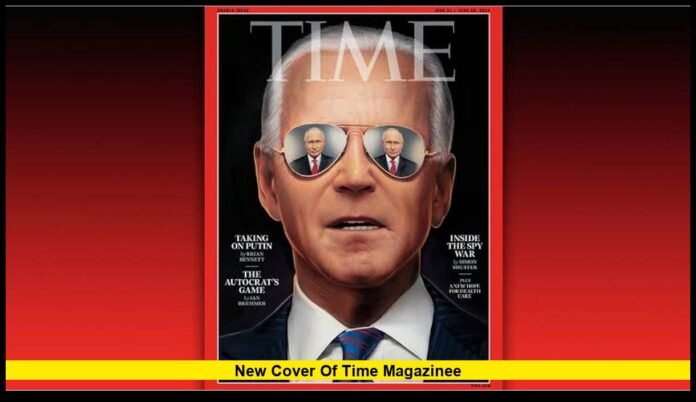

The new cover of TIME magazine has become a major talking point following the publication’s November 23, 2026, issue, which features President Donald Trump in a striking black-and-white photograph with a colorful “I Voted” sticker placed over his mouth. Revealed on November 4, the cover arrives in the aftermath of the 2026 U.S. midterm elections and accompanies a report examining how Democrats intend to use their congressional gains to challenge the Trump administration. The Daily Beast+1
The cover stands out because of its simple but provocative visual message. Rather than relying on a lengthy headline or a complicated illustration, it uses a recognizable political figure and a familiar voting symbol to invite interpretation. The placement of the sticker has become a central part of the discussion, drawing attention to questions about political speech, electoral accountability, and the relationship between the White House and its critics.
TIME’s latest cover is also connected to a broader political story. Following significant Democratic gains in the midterms, the magazine examines how party leaders are preparing to use their strengthened congressional position to pursue legislative changes, investigate the administration, and challenge policies introduced under Trump. The Daily Beast+1
For readers following American politics, the issue offers more than a memorable magazine image. It captures a moment when the election results are beginning to reshape the political debate in Washington.
Key Points Summary
– TIME revealed its November 23, 2026, cover featuring Donald Trump and an “I Voted” sticker on November 4.
– The black-and-white photograph uses a colorful voting sticker as the cover’s central visual element.
– The accompanying report examines Democratic plans following major gains in the 2026 midterm elections.
– Democratic priorities include challenging Trump administration policies, reviewing tariffs and health care subsidies, and pursuing congressional investigations.
– The cover has attracted attention because its visual design connects voting, political accountability, and the changing balance of power in Washington.
What the Latest TIME Magazine Cover Shows
The November 23 issue features Trump in a monochrome photograph, with the brightly colored “I Voted” sticker positioned over his mouth. The contrast between the black-and-white portrait and the sticker makes the voting symbol the first element many readers notice.
The design is visually direct. The photograph establishes the subject, while the sticker introduces an unmistakable connection to the democratic process. Its placement invites readers to consider the significance of voting and the limits of political power without spelling out every implication in a lengthy headline.
The image’s meaning will naturally differ among viewers. Some may interpret it as a pointed criticism of the president, while others may view it as a provocative editorial presentation tied to a major election. The cover itself is not a substitute for the reporting inside the magazine, where readers can examine the political developments in greater detail.
Why TIME Chose Donald Trump for Its Latest Cover
Trump has been a recurring subject in TIME’s political coverage for decades. His presidential campaigns, election victories, legal battles, administration decisions, and confrontations with political opponents have repeatedly placed him at the center of national debate.
In October 2026, TIME reported that Trump had appeared on its covers 56 times, surpassing former President Richard Nixon’s previous record for an individual. The milestone highlights the extent to which Trump’s political career has intersected with the magazine’s coverage of American leadership and public affairs. TIME
That history helps explain why another Trump cover attracts attention. His appearance is not simply a portrait of a sitting president. It also reflects the broader political story surrounding his administration and the public response to its policies.
The latest issue arrives at a particularly consequential moment. The midterm results have strengthened Democratic prospects in Congress, creating new opportunities for the party to challenge the administration’s agenda. The cover places Trump at the center of that changing political landscape.
How the 2026 Midterm Elections Shape the Cover Story
The 2026 midterm elections provide the essential context for understanding the November issue.
Midterm elections determine congressional representation between presidential elections. They can change which party controls the House of Representatives and Senate, affecting the legislation Congress considers, the investigations lawmakers pursue, and the degree of oversight applied to the executive branch.
The latest election results brought substantial Democratic gains. TIME’s November 4 reporting described victories across multiple competitive House districts and Senate contests, creating a significantly different political environment for the administration. TIME
For Democrats, the results offer an opportunity to pursue priorities that faced substantial obstacles when Republicans held greater congressional power. Those priorities include reviewing administration policies, advancing health care measures, and investigating executive branch actions.
For the White House, a stronger congressional opposition could complicate legislative negotiations and increase scrutiny of presidential decisions.
The cover connects these developments to the act of voting. The sticker is a familiar reminder that elections provide a mechanism through which citizens influence political representation. Its placement over Trump’s mouth makes that ordinary symbol unusually provocative.
Inside TIME’s Report on Democratic Plans
The issue’s accompanying political report examines how Democratic lawmakers and strategists intend to use their strengthened position in Congress.
One major area of focus is President Trump’s tariff policy. Democrats have discussed efforts to reverse or challenge elements of the administration’s trade agenda, which has implications for businesses, consumers, and international commerce.
Health care is another important issue. The report describes Democratic plans to restore expired Affordable Care Act subsidies and reverse Medicaid cuts totaling approximately $1 trillion. Such proposals would place health care costs, insurance affordability, and access to coverage at the center of congressional debate.
Oversight is also expected to become a significant part of the party’s strategy. With greater congressional influence, Democratic lawmakers could pursue investigations into administration decisions and the president’s business interests.
These priorities are not guaranteed to become law simply because Democrats have gained seats. Legislative proposals must still navigate congressional procedures, political negotiations, and other legal requirements. Investigations also require evidence and must follow the applicable rules.
Nevertheless, the election results create new possibilities for congressional opposition. TIME’s report examines how Democratic leaders are considering their next steps and what those decisions could mean for the administration.
Why the Cover Is Generating Public Discussion
Magazine covers often become subjects of debate when they combine a recognizable public figure with a strong visual statement. TIME’s latest design does this through the use of a political figure, a voting sticker, and the deliberate contrast between the two.
The image can be understood at several levels. At the most immediate level, it references the midterm elections. At a broader level, it invites discussion about political communication, public accountability, and the power of voters to influence the direction of government.
The image also reflects the way political journalism increasingly reaches audiences. Many readers encounter a cover through a social media post before they read the associated article. The photograph may circulate independently, encouraging discussion among people who have not yet seen the complete reporting.
That process can amplify a publication’s reach, but it can also strip away important context. A reader who sees only the cover may draw conclusions about the magazine’s argument without knowing the evidence and analysis presented in the accompanying story.
Understanding the issue therefore requires looking beyond the photograph. The political reporting provides the background necessary to evaluate the editorial presentation and the developments that inspired it.
The Importance of Authenticity When Covers Go Viral
The rapid circulation of magazine images makes it important to distinguish official artwork from altered or fabricated designs.
TIME covers are frequently reproduced in screenshots, online discussions, commentary videos, and political posts. Some images are genuine publications, while others may be digitally edited or created to resemble the magazine’s distinctive design.
The latest Trump cover is associated with TIME’s November 23, 2026, issue and was publicly revealed on November 4. Readers can verify the issue’s details through the magazine’s official publication information.
When assessing a cover circulating online, readers should consider its publication date, headline, image, and connection to an identifiable issue. A screenshot alone may not establish whether an image is authentic or whether it has been modified.
This distinction matters because a magazine cover can influence public perceptions of a political event. Sharing an altered image as though it were an official editorial statement can spread misinformation and distort the publication’s actual reporting.
How TIME Magazine Covers Influence Political Conversations
TIME has used its covers to introduce major political, cultural, scientific, and social stories since its founding in 1923. Its familiar red border and prominent cover portraits have become recognizable features of American journalism.
A successful cover can condense a complicated subject into an image that readers immediately recognize. The most effective designs do not necessarily provide every detail. Instead, they establish a central idea that encourages readers to explore the reporting.
Political covers can be particularly influential because they combine journalism with visual interpretation. The choice of subject, photograph, headline, and composition shapes how a story is presented to the audience.
The new cover of TIME magazine demonstrates how this approach can bring an election story to a wider audience. Its voting sticker provides an immediate connection to the midterms, while the accompanying report examines the political consequences of the results.
However, a cover should not be treated as proof of a political claim. Its purpose is to introduce and frame a story, while the article provides the reporting needed to understand the underlying events.
What Happens Next for Trump and Congressional Democrats?
The coming months will help determine whether Democratic gains translate into significant policy changes.
Congressional control can influence committee leadership, hearing schedules, legislative priorities, and investigations. These powers may give Democrats greater opportunities to challenge administration decisions and bring issues to public attention.
Health care, trade policy, federal spending, and executive branch oversight are likely to remain important areas of disagreement. The extent of any changes will depend on the precise composition of Congress, legislative procedures, negotiations, and the administration’s response.
Trump, meanwhile, will continue to face the challenge of governing in a political environment shaped by the midterm results. The administration’s ability to advance its priorities may depend on negotiations with lawmakers, public opinion, and developments at home and abroad.
The TIME issue offers a snapshot of this transition rather than a final judgment on its outcome. The cover captures the immediate political moment, while the accompanying reporting examines the choices facing both parties.
Final Takeaway
TIME’s November 23, 2026, cover featuring Donald Trump and an “I Voted” sticker has emerged as a striking visual representation of the political debate following the midterm elections. Its minimalist design places voting and political accountability at the center of the discussion.
The accompanying report looks beyond the image to examine Democratic plans for challenging the administration, addressing health care policies, reconsidering tariffs, and increasing congressional oversight.
As the new Congress takes shape, the consequences of the election will become clearer through legislative battles, investigations, and negotiations in Washington. The cover serves as an introduction to those developments, while the reporting provides the context readers need to understand them.
What is your interpretation of TIME’s latest Trump cover? Share your opinion in the comments and stay tuned for further updates on American politics and major news developments.